 HYGO News
 Sen. John Thune's speech in Senate Trump impeachment trial (Feb 4, 2020)
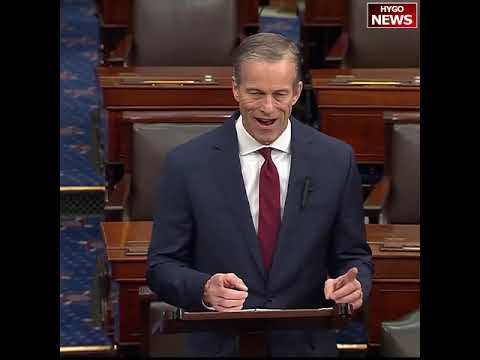
Sen. John Thune’s speech in Senate Trump impeachment trial (Feb 4, 2020)
On February 4, 2020, Senate Majority Whip John Thune of South Dakota delivered his floor speech explaining why he would vote to acquit President Trump on both articles of impeachment. Thune argued that the evidence did not meet the constitutional threshold for removal, that the proceedings were unprecedentedly partisan, and that voters in the upcoming election should decide the president’s fate.
The Founders Set a High Bar
Thune grounded his argument in the text and history of the Constitution. He noted that the founders imposed a threshold of “treason, bribery, or other high crimes and misdemeanors” and were deliberate about requiring “very serious violations of the public trust” before a president could be removed.
He cited the Constitutional Convention’s rejection of broader language: “When George Mason proposed adding the term maladministration to the impeachment clause during the Constitutional Convention, the framers rejected the proposal because, as Madison pointed out, the term was too vague and would be equivalent to a tenure during play.”
Thune argued the founders split the impeachment power between the House and Senate and required a two-thirds supermajority specifically because they “recognized that, without safeguards, impeachment could quickly degenerate into a political weapon to be used to overturn elections when one faction or another decided that it didn’t like the president.”
The Evidence Did Not Meet the Standard
Thune said he had carefully reviewed all the evidence presented during the trial, including more than 22 hours of House manager presentations, testimony from more than a dozen witnesses, over 16 hours of senator questions totaling about 180 questions, and more than 28,000 pages of testimony, evidence, and arguments.
“I considered all the evidence carefully, but ultimately I concluded that the two charges presented by the House managers — abuse of power and obstruction of Congress — did not provide a compelling case for removing the president,” Thune said.
On the abuse of power article, Thune noted that House Democrats had initially considered charging the president with bribery “believing that it polled well, but they didn’t have the evidence to prove that charge or indeed to prove any actual crime.” He argued that abuse of power was “vaguely defined and subject to interpretation” and that “I don’t believe there has been a president in my lifetime who hasn’t been accused of some form of abuse of power.”
Thune noted that during the Clinton impeachment, he had voted against the abuse of power article “precisely because I believed it did not offer strong grounds for removing the duly elected president.”
On the obstruction of Congress charge, Thune argued the House took issue with the president’s assertion of legal privileges “including those rooted in the constitutional separation of powers.” He noted that “every president in recent memory has invoked such privileges,” citing the Obama administration’s use of executive privilege to deny documents during the Fast and Furious investigation. The House could have challenged the claims in court, as was done during the Clinton impeachment, “but the House skipped that step in hopes that the Senate would bail them out.”
Thune summarized the factual record: “The facts of the case are that aid to Ukraine was released prior to the end of the fiscal year. And no investigation of the scandal-plagued firm, Burisma, or the Bidens was ever initiated.”
An Unprecedentedly Partisan Process
Thune’s second major argument focused on the partisan nature of the proceedings. He quoted Alexander Hamilton’s Federalist 65, which warned of the danger of impeachment being used by “an intemperate or designing majority in the House of Representatives.”
He drew a comparison to past impeachments: “While the Nixon impeachment proceedings in the House are held up as an example of bipartisanship, even the impeachment of President Clinton was initiated with the support of more than 30 Democrats. By contrast, in this case, House Democrats drove ahead in a completely partisan exercise.”
Thune accused Democrats of rushing through the process “at breakneck speed, rejecting a thorough investigation because they wanted to impeach the president as fast as possible” and then expecting the Senate to “take on the House’s investigative responsibility.”
He pointed to what he viewed as revealing behavior by House leadership: “The Speaker of the House distributed celebratory pens when she signed the Articles of Impeachment and then went on TV and celebrated the impeachment with a fist bump.”
Let the Voters Decide
Thune’s final argument was that the upcoming election should serve as the ultimate check on presidential power. “I believe that except in the most extreme circumstances, it should be the American people and not Washington politicians who decide whether or not a president should be removed from office,” he said, noting that presidential primary voting was already underway following the Iowa caucuses.
He warned that “removing the president from office and from the ballots for the upcoming election would almost certainly plunge the country into even greater political turmoil.”
Thune closed by expressing concern about the deterioration of congressional norms during the proceedings. He noted that a House manager had suggested “any senator who voted against them was treacherous” and that another senator had questioned whether the Chief Justice’s participation was “contributing to the loss of legitimacy” of the Supreme Court.
Despite those concerns, Thune struck a hopeful tone: “There’s no question that this partisan impeachment has been divisive. But I do believe we can move on from this and I am ready to work with all of my colleagues, both Democrat and Republican in the coming weeks and months as we get back to the business of the American people.”
Key Takeaways
- Senate Majority Whip John Thune argued the abuse of power charge was “vaguely defined” and that the obstruction charge punished the president for asserting the same legal privileges invoked by every recent president, concluding neither article met the founders’ high bar for removal.
- Thune highlighted the unprecedented partisanship of the proceedings, noting that even the Clinton impeachment was initiated with support from over 30 Democrats while the Trump impeachment was driven entirely by one party.
- He urged the Senate to let voters decide Trump’s fate in the upcoming 2020 election rather than removing him from office, warning that doing so would “plunge the country into even greater political turmoil.”