 HYGO News
Biden Signs the Law Making Juneteenth a Federal Holiday (June 17, 2021)
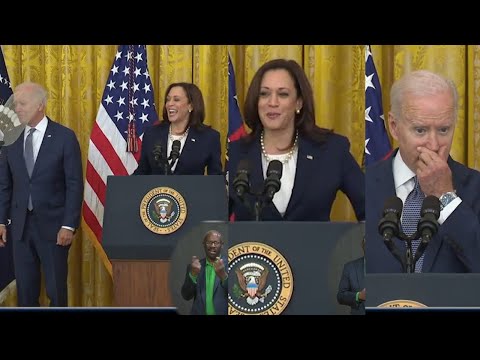
On the afternoon of June 17, 2021, in the East Room of the White House, President Joe Biden signed the Juneteenth National Independence Day Act, making June 19 a federal holiday [5]. It was the first new federal holiday since Martin Luther King Jr. Day was created in 1983. The bill had moved through Congress in two days. Biden’s remarks ran about 15 minutes, from 3:51 to 4:06 p.m. [1]. Vice President Kamala Harris spoke first. The guest of honor sat in the front row: Opal Lee, 94, the retired Texas teacher who had spent years campaigning for the holiday.
Key Moments
”June 19th, 1865”
Biden began with the history the holiday marks: on that date, “a major general of the Union Army arrived in Galveston, Texas, to enforce the Emancipation Proclamation and free the last enslaved Americans in Texas from bondage.” The general was Gordon Granger, and his General Order No. 3 informed the people of Texas that all enslaved people were free, two and a half years after Abraham Lincoln’s proclamation [4][12]. Biden quoted the Psalms: “Weeping may endure for a night, but joy cometh in the morning."
"America’s original sin”
He described Juneteenth as marking both “the long, hard night of slavery and subjugation, and a promise of a brighter morning to come,” and as a day “in which we remember the moral stain, the terrible toll that slavery took on the country and continues to take — what I’ve long called ‘America’s original sin.’”
Opal Lee, “grandmother of the movement”
The emotional center of the ceremony was Lee. Biden joked that she was “49 years old” before correcting himself to 94, called her the “grandmother of the movement to make Juneteenth a federal holiday,” and told her story: “On Juneteenth, 1939, when she was 12 years old, … a white mob torched her family home.” In 2016, at 89, she set out from Fort Worth toward Washington to build support for the holiday, walking 2.5 miles at a time in the cities she visited, one mile for each year that enslaved Texans waited to learn they were free [6][9].
”Great nations don’t ignore their most painful moments”
Biden linked the holiday to his visit to Tulsa weeks earlier for the 100th anniversary of the 1921 race massacre: “Great nations don’t ignore their most painful moments. … They embrace them.” He thanked both parties for the bill and called signing it “one of the greatest honors I will have had as President, not because I did it; you did it — Democrats and Republicans.”
From history to policy
In the second half of his remarks, Biden turned the holiday into a case for his agenda: closing the gap in home appraisals, expanding Black homeownership and access to capital for Black entrepreneurs, universal preschool, investment in historically Black colleges and universities, and voting rights, which he said “remains under attack.” He also noted that the day was the sixth anniversary of the shooting at Mother Emanuel AME Church in Charleston, South Carolina.
How the Bill Passed and Who Opposed It
The Senate passed the bill by unanimous consent on June 15, 2021, and the House approved it the next day, 415 to 14 [3]. All 14 no votes came from Republicans, and their reasons varied. Rep. Thomas Massie of Kentucky objected to calling it “National Independence Day,” saying the name would push Americans to choose between two independence days based on race. Rep. Chip Roy of Texas said he would accept a name like Emancipation Day or Freedom Day but wanted a debate and a committee hearing, which the bill skipped. Rep. Matt Rosendale of Montana called it an “effort by the Left to create a day out of whole cloth to celebrate identity politics.” Rep. Ralph Norman of South Carolina raised the cost of another paid day off for federal workers [2].
Fact Check
- “The first new national holiday since the creation of Martin Luther King Holiday nearly four decades ago.” Accurate. The law creating Martin Luther King Jr. Day was signed in 1983, 38 years earlier. Juneteenth became the 12th federal holiday [3].
- “A home owned … by a Black American family is usually appraised at a lower rate for a similar home owned by a white family.” Supported by research. A Freddie Mac study of more than 12 million appraisals from 2015 to 2020 found that 12.5% of appraisals in majority-Black census tracts came in below the contract price, compared with 7.4% in majority-white tracts, even after accounting for differences in homes and neighborhoods. A 2018 Brookings Institution study found homes in Black neighborhoods were worth an average of $48,000 less than similar homes in neighborhoods with few or no Black residents [7].
- “Free the last enslaved Americans in Texas.” Accurate as worded, with one piece of context: Granger’s order applied to Texas. Slavery remained legal in Kentucky and Delaware until the 13th Amendment took effect in December 1865 [13].
What Happened Next
- Opal Lee: In May 2024 Biden awarded her the Presidential Medal of Freedom [8]. She turned 100 on October 7, 2026, and is still campaigning, now for a National Juneteenth Museum in Fort Worth [9].
- A quieter Juneteenth in 2025: Back in office, Donald Trump, who had issued Juneteenth statements in each year of his first term, did not sign a proclamation on June 19, 2025. White House press secretary Karoline Leavitt said none was planned. That day Trump wrote on social media that there were “too many non-working holidays in America,” saying they were costing the country billions of dollars [10][11]. The holiday itself, set by law, remains in place.
Sources
- GovInfo: Remarks on signing the Juneteenth National Independence Day Act (DCPD-202100515)
- NPR: The 14 House Republicans who voted against making Juneteenth a federal holiday
- Congressional Research Service: Juneteenth fact sheet (R44865)
- National Archives: National Archives safeguards original “Juneteenth” General Order
- Public Law 117-17, the Juneteenth National Independence Day Act
- NPR: Juneteenth is now a U.S. holiday. Here’s one woman behind the decades-long fight
- NPR: Black and Latino homeowners are about twice as likely as whites to get low appraisals
- NPR: Biden gives the Medal of Freedom to 19 recipients, May 2024
- NPR: At 100, Juneteenth’s “grandmother” Opal Lee vows to “keep on walking”
- NBC News: Trump says the U.S. has “too many non-working holidays” on Juneteenth
- NPR: Trump is silent about Juneteenth on a day he previously honored as president
- National Archives: The Emancipation Proclamation
- National Archives: 13th Amendment to the U.S. Constitution: Abolition of Slavery
- HYGO News video on Facebook
Full Transcript
Read President Biden's full remarks
Remarks by President Biden at Signing of the Juneteenth National Independence Day Act JUNE 17, 2021
East Room 3:51 P.M. EDT
Biden: Thank you, thank you, thank you.
Well, thank you, Madam Vice President.
One hundred and fifty-six years ago — one hundred and fifty-six years — June 19th, 1865 — John, thanks for being here — a major general of the Union Army arrived in Galveston, Texas, to enforce the Emancipation Proclamation and free the last enslaved Americans in Texas from bondage. A day, as you all know — I’m going to repeat some of what was said — that became known as Juneteenth. You all know that. A day that reflects what the Psalm tell us: “Weeping may endure for a night, but joy cometh in the morning.”
Juneteenth marks both the long, hard night of slavery and subjugation, and a promise of a brighter morning to come. This is a day of profound — in my view — profound weight and profound power.
A day in which we remember the moral stain, the terrible toll that slavery took on the country and continues to take — what I’ve long called “America’s original sin.”
At the same time, I also remember the extraordinary capacity to heal, and to hope, and to emerge from the most painful moments and a bitter, bitter version of ourselves, but to make a better version of ourselves.
You know, today, we consecrate Juneteenth for what it ought to be, what it must be: a national holiday. As the Vice President noted, a holiday that will join the others of our national celebrations: our independence, our laborers who built this nation, our servicemen and women who served and died in its defense. And the first new national holiday since the creation of Martin Luther King Holiday nearly four decades ago.
I am grateful to the members of Congress here today — in particular, the Congressional Black Caucus, who did so much to make this day possible.
I’m especially pleased that we showed the nation that we can come together as Democrats and Republicans to commemorate this day with the overwhelming bipartisan support of the Congress. I hope this is the beginning of a change in the way we deal with one another.
And we’re blessed — we’re blessed to mark the day in the presence of Ms. Opal Lee. As my mother would say, “God love her.” (Applause.)
I had the honor of meeting her in Nevada more than a year ago. She told me she loved me, and I believed it. (Laughter.) I wanted to believe it. (Laughs.) Ms. Opal, you’re incredible. A daughter of Texas. Grandmother of the movement to make Juneteenth a federal holiday.
And Ms. Opal is — you won’t believe it — she’s 49 years old. (Laughter.) Or 94 years old, but I — (laughter). You are an incredible woman, Ms. Opal. You really are.
As a child growing up in Texas, she and her family would celebrate Juneteenth. On Juneteenth, 1939, when she was 12 years old, the white — a white mob torched her family home. But such hate never stopped her any more than it stopped the vast majority of you I’m looking at from this podium.
Over the course of decades, she’s made it her mission to see that this day came. It was almost a singular mission. She’s walked for miles and miles, literally and figuratively, to bring attention to Juneteenth, to make this day possible.
I ask, once again, we all stand and give her a warm welcome to the White House. (Applause.)
As they still say in the Senate and I said for 36 years, “if you excuse me there for a point of personal privilege,” as I was walking down, I regret that my grandchildren aren’t here because this is a really, really, really important moment in our history.
By making Juneteenth a federal holiday, all Americans can feel the power of this day, and learn from our history, and celebrate progress, and grapple with the distance we’ve come but the distance we have to travel, Jim.
You know, I said a few weeks ago, marking the 100th anniversary of the Tulsa Race Massacre, great nations don’t ignore their most painful moments. Great nations don’t ignore their most painful moments. They don’t ignore those moments of the past. They embrace them. Great nations don’t walk away. We come to terms with the mistakes we made. And in remembering those moments, we begin to heal and grow stronger.
The truth is, it’s not — simply not enough just to commemorate Juneteenth. After all, the emancipation of enslaved Black Americans didn’t mark the end of America’s work to deliver on the promise of equality; it only marked the beginning.
To honor the true meaning of Juneteenth, we have to continue toward that promise because we’ve not gotten there yet. The Vice President and I and our entire administration and all of you in this room are committed to doing just that.
That’s why we’ve launched an aggressive effort to combat racial discrimination in housing — finally address the cruel fact that a home owned, to this day, by a Black American family is usually appraised at a lower rate for a similar home owned by a white family in a similar area.
That’s why we committed to increasing Black homeownership, one of the biggest drivers of generational wealth.
That’s why we’re making it possible for more Black entrepreneurs to access — to access capital, because their ideas are as good; they lack the capital to get their fair — and get their fair share of federal contracts so they can begin to build wealth.
That’s why we’re working to give each and every child, three and four years of age, not daycare, but school — in a school. (Applause.)
That’s why — that’s why we’re unlocking the incredibly creative and innovation — innovation of the history — of our Historical Black Colleges and Universities, providing them with the resources to invest in research centers and laboratories to help HBCU graduates prepare and compete for good-paying jobs in the industries of the future.
Folks, the promise of equality is not going to be fulfilled until we become real — it becomes real in our schools and on our Main Streets and in our neighborhoods — our healthcare system and ensuring that equity is at the heart of our fight against the pandemic; in the water that comes out of our faucets and the air that we breathe in our communities; in our justice system — so that we can fulfill the promise of America for all people. All of our people.
And it’s not going to be fulfilled so long as the sacred right to vote remains under attack. (Applause.)
We see this assault from restrictive laws, threats of intimidation, voter purges, and more — an assault that offends the very democracy — our very democracy.
We can’t rest until the promise of equality is fulfilled for every one of us in every corner of this nation. That, to me, is the meaning of Juneteenth. That’s what it’s about.
So let’s make this June- — this very Juneteenth, tomorrow — the first that our nation will celebrate all together, as one nation — a Juneteenth of action on many fronts.
One of those is vaccinations. Tomorrow, the Vice President will be in Atlanta on a bus tour, helping to spread the word, like all of you have been doing, on lifesaving vaccines.
And across the country this weekend, including here in Washington, people will be canvassing and hosting events in their communities, going door-to-door, encouraging vaccinations.
We’ve built equity into the heart of the vaccination program from day one, but we still have more work to do to close the racial gap in vaccination rates. The more we can do that, the more we can save lives.
Today also marks the sixth anniversary of the tragic deaths of — at Mother Emanuel Church in Charleston, South Carolina. A killer motivated by hate, intending to start a race war in South Carolina. He joined his victims in a Bible study class, then he took their lives in the house of worship.
It’s a reminder that our work to root out hate never ends — because hate only hides, it never fully goes away. It hides. And when you breathe oxygen under that rock, it comes out.
And that’s why we must understand that Juneteenth represents not only the commemoration of the end of slavery in America more than 150 years ago, but the ongoing work to have to bring true equity and racial justice into American society, which we can do.
In short, this day doesn’t just celebrate the past; it calls for action today.
I wish all Americans a happy Juneteenth. I am shortly going to — in a moment, going to sign into law, making it a federal holiday.
And I have to say to you, I’ve only been President for several months, but I think this will go down, for me, as one of the greatest honors I will have had as President, not because I did it; you did it — Democrats and Republicans. But it’s an enormous, enormous honor.
Thank you for what you’ve done. And, by the way, typical of most of us in Congress and the Senate, I went down to the other end of the hall first and thanked your staffs because I know who does the hard work. (Laughter and applause.) They’re down there. They’re at the other end, but I thanked them as well.
May God bless you all. And may God protect our troops. Thank you. (Applause.)
Now, I’d like to invite up, while I sign, Senator Tina Smith, Senator Ed Markey, Senator Raphael Warnock, Senator John Cornyn, Whip John [Jim] Clyburn, Representative Barbara Lee, Representative Danny Davis, Chair Joyce Beatty, and Sheila Jackson Lee, and Ms. Opal.
(The act is signed.) (Applause.)
4:06 P.M. EDT