 HYGO News
 You made decision to strip a young girl of anonymity & you succeeded because you bullied her into it
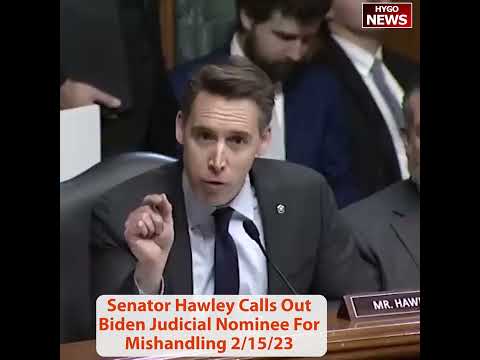
Senator Hawley Confronts Nominee: “You Made Decision To Strip A Young Girl Of Anonymity”
In February 2023, Senator Josh Hawley delivered pointed confrontation to a judicial nominee about a specific case where the nominee had worked to unmask a minor’s identity. “Her family sitting here today. They’ve already been through hell. Your motion was an attempt to put them through further hell in order to defend your client, right?” Hawley asked. The nominee responded: “Senator, I was an advocate for the school.” Hawley continued: “I understand that but as advocates — I have been too — and as advocates we make decisions, but we’re responsible for those decisions. You made a decision here. You made a decision to try to strip a young girl for anonymity and you effectively succeeded because you bullied her into it. So she unwilling to be intimidated by you, went forward and revealed her own name, which took, by the way, tremendous courage. And I just like to honor her for her courage in doing that, but you put her to that choice. You did. That was your choice. So that’s fine. You made the choice, but now you’re accountable for it. So let’s have some accountability here. You deliberately did this in a way that would put her at risk and that was your intent. Have you read the letter that she submitted to this committee?”
The Hawley Confrontation Framework
Framework:
Victim focus — Central.
Nominee decision — Emphasized.
Accountability — Demanded.
Moral — Dimension.
Sharp — Confrontation.
Hawley’s confrontation framework centered victim focus with emphasized nominee decision demanding accountability. Moral dimension through sharp confrontation about specific case handling.
”Her Family Sitting Here Today”
Presence:
Family present — In chamber.
Witness — Direct.
Emotional — Impact.
Personal — Dimension.
Substantive — Element.
Family presence in hearing chamber as direct witness created emotional impact through personal dimension. Substantive element grounding abstract legal discussion in human reality.
”They’ve Already Been Through Hell”
Characterization:
“Hell” — Strong.
Previous suffering — Acknowledged.
Sympathy — Elicited.
Context — Provided.
Emotional — Framework.
“They’ve already been through hell” strong characterization acknowledged previous suffering eliciting sympathy through provided context. Emotional framework for accountability demand.
”Your Motion Was an Attempt”
Specific:
Legal motion — Cited.
Purpose — Characterized.
Nominee action — Specified.
Professional context — Noted.
Substantive — Reference.
Hawley’s “your motion was an attempt” cited specific legal motion characterizing purpose. Nominee action specified in professional context. Substantive reference to actual case.
”Defend Your Client”
Context:
Client representation — Acknowledged.
Professional obligation — Recognized.
Legal ethics — Complex.
Advocate role — Noted.
Balance — Nuance.
“In order to defend your client” acknowledged client representation and professional obligation recognizing legal ethics complexity. Advocate role noted. Balance nuance in professional conduct debate.
”I Was an Advocate for the School”
Nominee response:
Institutional client — School.
Advocacy role — Framed.
Professional — Duty.
Defensive — Position.
Standard — Defense.
Nominee’s “I was an advocate for the school” framed institutional client advocacy role as professional duty in defensive position. Standard legal defense of controversial representation.
”I Have Been Too”
Hawley:
Personal experience — Invoked.
Attorney background — Shared.
Legitimacy — Established.
Connection — Professional.
Effective — Technique.
Hawley’s “I have been too” invoked personal attorney experience background establishing legitimacy and professional connection. Effective technique acknowledging shared profession.
”As Advocates We Make Decisions”
Framework:
Agency acknowledged — Attorneys.
Decisions theirs — Personally.
Responsibility — Created.
Shared profession — Frame.
Accountability — Setup.
Hawley’s “as advocates we make decisions” framework acknowledged attorney agency making decisions personally creating responsibility. Shared profession frame setup for accountability demand.
”Responsible for Those Decisions”
Accountability:
Personal — Responsibility.
Professional — Consequences.
Moral — Framework.
Substantive — Point.
Central — To questioning.
Hawley’s “responsible for those decisions” established personal responsibility with professional consequences in moral framework. Substantive central point to questioning.
”Strip a Young Girl for Anonymity”
Language:
“Strip” — Charged word.
Young girl — Victim emphasized.
Anonymity — Privacy right.
Aggressive — Framing.
Memorable — Phrasing.
Hawley’s “strip a young girl for anonymity” used charged “strip” word emphasizing young girl victim and anonymity privacy right. Aggressive memorable framing with moral weight.
”You Effectively Succeeded”
Consequence:
Outcome — Achieved.
Real impact — Yes.
Nominee accomplishment — Framed negatively.
Effective — Characterization.
Substantive — Point.
“You effectively succeeded” established real outcome achieved with nominee accomplishment framed negatively. Effective characterization substantive point about harm caused.
”Because You Bullied Her Into It”
Method:
“Bullied” — Strong term.
Coercive — Characterized.
Legal process — As weapon.
Moral — Critique.
Substantive — Charge.
Hawley’s “because you bullied her into it” used strong “bullied” term characterizing legal process as coercive weapon. Moral critique substantive charge about methodology.
”Unwilling to Be Intimidated”
Strength:
Girl’s courage — Honored.
Stand — Taken.
Self-outing — Result.
Resistance — Shown.
Admirable — Framed.
“She unwilling to be intimidated by you, went forward and revealed her own name” honored girl’s courage showing stand taken. Self-outing result from resistance. Admirable framing of victim.
”Took Tremendous Courage”
Honoring:
Courage — Acknowledged.
Brave act — Self-identification.
Moral — Recognition.
Victim agency — Restored.
Substantive — Tribute.
Hawley’s “which took, by the way, tremendous courage” acknowledged courage of brave self-identification act. Moral recognition restoring victim agency through substantive tribute.
”Honor Her for Her Courage”
Honor:
Direct tribute — To victim.
Recognition — Public.
Emotional — Element.
Moral — Framework.
Substantive — Message.
Hawley’s “I just like to honor her for her courage in doing that” direct tribute to victim provided public recognition. Emotional element in moral framework with substantive message.
”You Put Her to That Choice”
Responsibility:
Forced choice — Framing.
Responsibility — Nominee’s.
No alternative — Suggested.
Substantive — Moral claim.
Sharp — Accountability.
Hawley’s “you put her to that choice” forced choice framing established responsibility as nominee’s with no alternative suggested. Substantive moral claim through sharp accountability.
”That Was Your Choice”
Agency:
Nominee agency — Emphasized.
Multiple — Times repeated.
Responsibility — Inescapable.
Rhetorical — Structure.
Accountability — Absolute.
Hawley’s repeated “that was your choice” emphasized nominee agency multiple times establishing inescapable responsibility. Rhetorical structure absolute accountability through repetition.
”So That’s Fine. You Made the Choice”
Tone:
Mock acceptance — “Fine.”
Sarcastic — Element.
Building — To punchline.
Sets up — Accountability.
Effective — Technique.
Hawley’s “so that’s fine. You made the choice” mock acceptance with “fine” had sarcastic element building to punchline. Sets up accountability through effective technique.
”But Now You’re Accountable For It”
Transition:
“But” — Turning point.
Accountability — Demanded.
Now moment — Established.
Hearing purpose — Served.
Substantive — Point.
Hawley’s “but now you’re accountable for it” transition with “but” as turning point demanded accountability now. Hearing purpose served through substantive point.
”Let’s Have Some Accountability Here”
Call:
Direct — Challenge.
Hearing function — Invoked.
Accountability emphasis — Repeated.
Senate role — Performed.
Professional — Duty.
Hawley’s “so let’s have some accountability here” direct challenge invoked hearing function with repeated accountability emphasis. Senate role performed through professional duty.
”Deliberately Did This in a Way That Would Put Her at Risk”
Intent:
Deliberate — Characterized.
Risk creation — Alleged.
Intent — Claimed.
Moral — Weight.
Substantive — Charge.
Hawley’s “you deliberately did this in a way that would put her at risk and that was your intent” characterized deliberate risk creation claiming intent. Moral weight substantive charge.
”Have You Read the Letter?”
Direct:
Specific document — Referenced.
Victim letter — Implied.
Personal testimony — Available.
Preparation test — For nominee.
Substantive — Pivot.
Hawley’s “have you read the letter that she submitted to this committee” directly referenced specific victim letter as personal testimony. Preparation test for nominee substantive pivot.
The Victim Letter Significance
Significance:
Personal — Statement.
Direct — Voice.
Committee — Record.
Substantive — Evidence.
Impact — Real.
Victim letter significance as personal statement provided direct voice in committee record. Substantive evidence with real impact on nominee confirmation consideration.
The Case Background Context
Context:
Title IX — Possibly.
School case — Likely.
Sexual assault — Probably.
Legal defense — Nominee’s role.
Specific — Facts.
Case background context likely involved Title IX school case possibly about sexual assault with legal defense as nominee’s role. Specific facts required analysis.
The Professional Ethics Debate
Debate:
Attorney duties — Complex.
Client advocacy — Obligation.
Moral limits — Questioned.
Professional — Standards.
Ongoing — Discussion.
Professional ethics debate between complex attorney duties including client advocacy obligation and questioned moral limits was ongoing professional standards discussion.
The Judicial Temperament Test
Test:
Nominee actions — Examined.
Judicial fitness — Questioned.
Moral dimension — Central.
Substantive — Evaluation.
Important — Consideration.
Judicial temperament test with examined nominee actions questioned judicial fitness in central moral dimension. Substantive evaluation important consideration for lifetime judgeship.
The Hawley Personal Passion
Passion:
Moral outrage — Evident.
Victim advocacy — Strong.
Religious — Framework possibly.
Conservative — Politics.
Authentic — Engagement.
Hawley’s personal passion with evident moral outrage and strong victim advocacy had possibly religious framework in conservative politics. Authentic engagement with victim protection themes.
The Josh Hawley Political Profile
Profile:
Missouri Senator — Republican.
Conservative — Strongly.
Attorney general — Former.
Religious right — Connection.
Rising profile — Senator.
Josh Hawley’s political profile as Missouri Senator Republican strongly conservative with former Attorney General background and religious right connection had rising profile.
The Moral Framework Deployment
Deployment:
Victim protection — Central.
Nominee character — Questioned.
Religious values — Implicit.
Conservative — Base.
Effective — Political.
Moral framework deployment centering victim protection questioned nominee character through implicit religious values appealing to conservative base. Effective politically for Hawley.
The Nominee Difficult Position
Position:
Professional defense — Required.
Personal attack — Faced.
Moral charge — Defended.
Career impact — Real.
Complex — Navigation.
Nominee in difficult position with required professional defense faced personal attack and defended moral charge. Real career impact. Complex navigation of confirmation process.
The Professional Advocate Limits
Limits:
Client duty — Bounded.
Moral limits — Exist.
Professional ethics — Complex.
Judgment calls — Required.
Accountability — Real.
Professional advocate limits had bounded client duty with existing moral limits. Complex professional ethics requiring judgment calls. Real accountability for decisions.
The Victim-Centered Jurisprudence
Jurisprudence:
Privacy protection — Growing.
Anonymity rights — Respected.
Traumatic cases — Especially.
Moral — Development.
Progressive — Element.
Victim-centered jurisprudence with growing privacy protection and respected anonymity rights especially in traumatic cases represented moral development progressive element.
The Confirmation Hearing Drama
Drama:
Emotional — Moments.
Substantive — Engagement.
Memorable — Exchange.
Political — Theater.
Quality — Hearing.
Confirmation hearing drama with emotional moments and substantive engagement created memorable exchange. Political theater quality in important hearing function.
The Public Attention Extended
Attention:
Viral potential — Real.
Emotional content — Attracting.
Victim story — Central.
Political use — Inevitable.
Impact — Broad.
Public attention extended through real viral potential with emotional content attracting audiences. Victim story central to inevitable political use. Broad impact possible.
The Due Process Considerations
Due process:
Accused rights — Real.
Accuser privacy — Valued.
Balance — Complex.
Legal standards — Evolving.
Substantive — Tension.
Due process considerations between real accused rights and valued accuser privacy required complex balance with evolving legal standards. Substantive tension in legal system.
The Title IX Context
Context:
School sexual — Assault.
Federal framework — Applied.
Reporting obligations — Required.
Protection — Sought.
Controversial — Sometimes.
Title IX context addressing school sexual assault through federal framework applied reporting obligations seeking protection. Controversial sometimes in implementation balance.
The Judicial Nominee Standard
Standard:
Professional background — Examined.
Specific cases — Reviewed.
Character questions — Asked.
Temperament — Assessed.
Substantive — Review.
Judicial nominee standard involved examined professional background with reviewed specific cases. Asked character questions assessing temperament. Substantive review process.
The Political Effectiveness Real
Effectiveness:
Emotional — Appeal.
Moral — Clarity.
Memorable — Framing.
Base motivating — Clear.
Substantive — Critique.
Political effectiveness real through emotional appeal with moral clarity and memorable framing. Base motivating clearly in substantive critique. Effective Congressional oversight.
The Democratic Response Challenge
Challenge:
Professional defense — Hard.
Emotional appeal — Strong.
Victim narrative — Difficult to counter.
Substantive — Issue.
Complex — Response needed.
Democratic response challenge with hard professional defense against strong emotional appeal had victim narrative difficult to counter. Substantive issue requiring complex response approach.
The Confirmation Hearing Purpose
Purpose:
Advice and consent — Senate.
Public examination — Valuable.
Record creation — Important.
Accountability — Function.
Constitutional — Role.
Confirmation hearing purpose as Senate advice and consent through public examination was valuable record creation. Accountability function fulfilling constitutional role.
The Long-Term Legal Profession Impact
Impact:
Ethics debate — Ongoing.
Professional standards — Evolving.
Accountability — Growing.
Moral framework — Strengthening.
Substantive — Change.
Long-term legal profession impact through ongoing ethics debate with evolving professional standards had growing accountability and strengthening moral framework. Substantive change.
The Political Polarization Element
Element:
Culture war — Dimension.
Victim advocacy — Politicized.
Conservative vs. progressive — Framing.
Partisan — Divide.
Real — Issue.
Political polarization element through culture war dimension had politicized victim advocacy in conservative vs. progressive framing. Partisan divide around real issue.
The Memorable Moment Creation
Creation:
Substantive — Content.
Emotional — Power.
Political — Impact.
Viral — Potential.
Quality — Discourse.
Memorable moment creation through substantive content with emotional power had political impact and viral potential. Quality discourse in best confirmation hearings.
The Real Accountability Function
Function:
Public examination — Valuable.
Nominee record — Scrutinized.
Democratic — Process.
Substantive — Engagement.
Important — Oversight.
Real accountability function through valuable public examination with scrutinized nominee record was democratic process. Substantive engagement important oversight role.
Key Takeaways
- Senator Hawley confronted a nominee about a case involving a minor victim whose anonymity the nominee’s motion attempted to strip.
- Hawley framed: “Your motion was an attempt to put them through further hell in order to defend your client.”
- Nominee defended: “Senator, I was an advocate for the school.”
- Hawley established accountability: “As advocates we make decisions, but we’re responsible for those decisions.”
- He used strong language: “You made a decision to try to strip a young girl for anonymity and you effectively succeeded because you bullied her into it.”
- He honored the victim: “She went forward and revealed her own name, which took, by the way, tremendous courage.”
- Key challenge: “Now you’re accountable for it. So let’s have some accountability here.”
Transcript Highlights
The following is transcribed from the video audio (unverified — AI-generated from audio).
- Her family sitting here today. They’ve already been through hell. Your motion was an attempt to put them through further hell in order to defend your client, right?
- Senator I was an advocate for the school.
- I understand that but as advocates I have been too and As advocates we make decisions, but we’re responsible for those decisions.
- You made a decision to try to strip a young girl for anonymity and you effectively succeeded because you bullied her into it.
- So she unwilling to be intimidated by you Went forward and revealed her own name which took by the way tremendous courage.
- You deliberately did this in a way that would put her at risk and that was your intent. Have you read the letter that she submitted to this committee?
Full transcript: 185 words transcribed via Whisper AI.