 HYGO News
 Washington crossing the Delaware Painting. McCarthy Speech After Winning Speakership
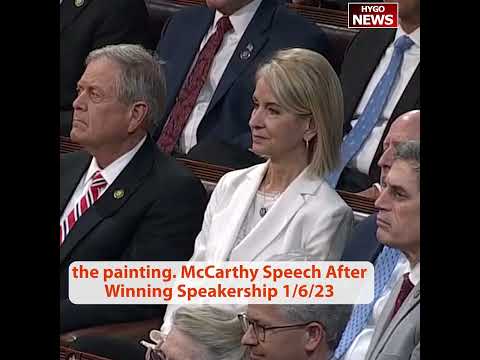
Speaker McCarthy Invokes “Washington Crossing the Delaware” Painting in Inaugural Speech — Immigrant Artist Emanuel Leutze’s 1850 Work
On 1/7/2023, in his inaugural Speaker speech, Kevin McCarthy invoked the famous “Washington Crossing the Delaware” painting. “My door will be open. I’d like you to come by. I want you to see as you walk down the hall a large portrait of Lincoln. I want you to go into that conference room. I want you to see another portrait. My members know of this. It’s of Washington crossing the Delaware,” McCarthy said. He explained the historical context: “You all know the story. It happened on Christmas 1776. There was no iPhone to take a picture. People wonder when it was painted. It wasn’t painted by someone who was there. It was painted in 1850 and 1851. He was an immigrant who lived in America, Emmanuel Lentz. You know why he painted it? Because he knew America was more than a country. America was an…”
The “My Door Will Be Open”
McCarthy promised accessibility. “My door will be open. I’d like you to come by,” McCarthy said.
The open door promise:
Speaker accessibility — To members.
Bipartisan engagement — Traditional.
Leadership approach — Personal.
Institutional openness — Promised.
Political positioning — For cooperation.
The open door tradition:
Speakers traditionally — Accessible to members.
Bipartisan meetings — Occasionally.
Leadership consultation — Expected.
Member concerns — Addressed.
Working relationships — Maintained.
McCarthy’s open door:
Would be tested — In practice.
Conservative demands — On time.
Member relationships — Required.
Leadership style — Personal.
Practical limitations — Inevitable.
The Lincoln Portrait
McCarthy directed attention to art. “I want you to see as you walk down the hall a large portrait of Lincoln,” McCarthy said.
The Lincoln portrait:
Republican identification — Through history.
Presidential tradition — Most admired.
Civil War leader — Preserving Union.
Republican Party founding — 1850s-60s.
Historical significance — Enduring.
Republicans often:
Invoke Lincoln — For legitimacy.
Reference civil rights — Historical.
Connect to founding — Republican Party.
Use Lincoln imagery — Politically.
Claim inheritance — Of Lincoln legacy.
McCarthy’s reference:
Standard Republican — Appeal.
Historical framing — For speakership.
Visible in office — Portrait.
Symbolic importance — Claimed.
Political positioning — Traditional.
The Washington Crossing Delaware Painting
McCarthy highlighted another painting. “I want you to see another portrait. My members know of this. It’s of Washington crossing the Delaware,” McCarthy said.
The painting:
Emanuel Leutze — Artist.
1850-1851 — Painted.
Massive canvas — 12 feet by 21 feet.
Multiple versions — Exist.
Famous American image — Iconic.
The historical event:
December 25-26, 1776 — Actual date.
Delaware River crossing — To attack Hessians.
Trenton battle — Christmas surprise.
Revolutionary War — Key victory.
Washington leadership — Demonstrated.
The painting:
Romantic depiction — Of historical event.
Not accurate in details — Various inaccuracies.
Artistic license — Throughout.
Symbolic rather than literal — Image.
Cultural icon — American.
”No iPhone to Take a Picture”
McCarthy’s humor. “You all know the story. It happened on Christmas 1776. There was no iPhone to take a picture,” McCarthy said.
The iPhone humor:
Modern reference — Contrasted with 1776.
Light moment — In speech.
Accessibility — Through humor.
McCarthy style — Conversational.
Audience engagement — Via anachronism.
The joke:
Worked politically — Generally.
Humanized McCarthy — Somewhat.
Acknowledged history — Implicitly.
Made speech memorable — Moment.
Typical political humor — Category.
The Painting’s History
McCarthy explained origins. “People wonder when it was painted. It wasn’t painted by someone who was there. It was painted in 1850 and 1851,” McCarthy said.
The painting’s facts:
75 years after event — Artistic interpretation.
No eyewitness account — For specifics.
Artistic imagination — Dominant.
Historical symbolism — Priority.
Inspirational intent — Clear.
Various inaccuracies:
Wrong type of boat — Used.
Wrong flag — Anachronistic.
Wrong river depth — Too broad.
Wrong soldier position — Washington would have died.
Wrong timing — Daytime shown, night crossing.
But:
Symbolism preserved — Powerfully.
American spirit — Captured.
National mythology — Built.
Cultural importance — Enduring.
Iconic status — Achieved.
Emanuel Leutze the Immigrant
McCarthy emphasized Leutze’s background. “He was an immigrant who lived in America, Emmanuel Lentz,” McCarthy said.
Emanuel Leutze:
German immigrant — To America.
Born 1816 — Germany.
Died 1868 — Washington DC.
Multiple American subjects — Painted.
Academic training — European.
The “Emmanuel Lentz” pronunciation:
Approximate — Of German name.
“Leutze” correct — Spelling.
Germanic origin — Of name.
Immigration context — Relevant.
McCarthy emphasis — On immigrant origin.
Leutze’s painting:
Created in Düsseldorf — Germany.
American subject — Despite location.
Political inspiration — For German revolutionaries.
Dual audience — American and European.
Cross-cultural — Artistic achievement.
”America Was More Than a Country”
McCarthy started explaining. “You know why he painted it? Because he knew America was more than a country. America was an…,” McCarthy said, with transcript cutting off.
The implied continuation:
“America was an idea” — Likely completion.
“America was an experiment” — Another possibility.
“America was an ideal” — Another option.
“America was a beacon” — Possible framing.
“America was freedom” — Common framing.
The “more than a country” framing:
Universal ideals — Claimed.
Beyond geography — Symbolic.
Aspiration concept — American.
Immigrant appeal — Inclusive.
Republican tradition — Shining city.
Leutze’s inspiration:
German revolutions of 1848 — Context.
Liberal ideals — Importing to Europe.
American example — For Europeans.
Democratic inspiration — Shared.
Political symbolism — Intentional.
The Speaker’s Theme
McCarthy’s choice of painting:
American mythology — Invoked.
Immigrant contribution — Highlighted.
Founding story — Centered.
Symbolic leadership — Washington model.
Inspirational framing — For speakership.
The speech theme:
American greatness — Traditional.
Historical roots — Important.
Leadership invocation — Washington-like.
Founding ideals — Reaffirmed.
Inspirational goals — For Congress.
The Republican Immigrant Framing
McCarthy’s emphasis on Leutze as immigrant:
Acknowledged immigrant contribution — To America.
Within conservative framework — Controlled.
Historical immigrant — Pre-controversy era.
White European — Immigrant type.
Cultural contribution — Emphasized.
The immigrant reference was:
Politically interesting — Given Republican positions.
Historical rather than current — Framing.
Specific person — Not general policy.
Controlled message — Safe ground.
Traditional Republican — Framing.
The Traditional Invocation
McCarthy’s traditional elements:
Lincoln portrait — Republican icon.
Washington painting — Founding father.
American mythology — Traditional.
Immigrant story — Selectively.
Historical inspiration — For present.
These elements:
Typical Speaker speeches — Include.
Safe political ground — Traditional.
American values — Universal.
Bipartisan appeal — Possible.
Institutional respect — For history.
The Art in Congressional Offices
Art in congressional offices:
Various historical pieces — Distributed.
Speaker’s office — Preferred pieces.
Committee rooms — Specific art.
Capitol generally — Extensive collection.
Member choices — Reflect priorities.
McCarthy’s choices:
Lincoln — Republican identity.
Washington Crossing — American founding.
Symbolic selections — For speakership.
Traditional emphasis — On history.
Personal preferences — Visible.
The Inaugural Speech Tradition
Speaker inaugural speeches:
Traditional moment — For new Speaker.
Policy priorities — Usually outlined.
Personal vision — Shared.
Institutional commitment — Expressed.
Public accountability — Accepted.
McCarthy’s speech:
Followed tradition — In format.
Added personal elements — Through stories.
Emphasized oversight — Policy priority.
Invoked American history — Traditionally.
Showed personal style — Accessibility.
The Post-15-Ballot Context
After the 15-ballot election:
McCarthy authority limited — By concessions.
Party divisions visible — Publicly.
Speech had weight — Of recovery.
Normal ceremony — Attempted.
Forward-looking tone — Required.
The speech:
Projected normalcy — After drama.
Established priorities — Despite weakness.
Showed unity attempt — Within caucus.
Generated coverage — Substantial.
Began speakership — Officially.
The Historical Themes
McCarthy’s historical themes:
Founding era — Washington.
Civil War era — Lincoln.
Immigration story — Leutze.
American ideals — Traditional.
Continuous narrative — Through speaker.
These themes:
Provided context — For speakership.
Established framework — For governance.
Positioned McCarthy — In tradition.
Created legitimacy — Symbolically.
Connected past and present — Politically.
The Delaware Crossing Symbolism
Washington crossing Delaware represented:
Leadership in crisis — By Washington.
Daring action — Christmas night.
Strategic risk-taking — For victory.
Inspirational example — For Americans.
Historical turning point — Of war.
For McCarthy:
Leadership inspiration — From Washington.
Challenging moment — Of own.
Historical connection — Through art.
Governance framework — Potentially.
Symbolic positioning — As Speaker.
The Immigrant Artist Choice
Highlighting Leutze’s immigrant background:
Inclusive framing — Of American identity.
Contribution recognition — For immigrants.
Historical perspective — On nation-building.
Political positioning — Carefully.
Republican variant — On immigration.
The choice reflected:
McCarthy’s personal — Sensitivity possibly.
Political messaging — Inclusive within Republican.
Historical accuracy — Leutze was immigrant.
Controllable narrative — Historical rather than current.
Speaker positioning — Broad appeal.
Key Takeaways
- In his inaugural Speaker speech on January 7, 2023, Kevin McCarthy invoked the famous “Washington Crossing the Delaware” painting.
- He mentioned Christmas 1776 as the historical date of the actual crossing and the 1850-1851 painting by Emanuel Leutze.
- McCarthy emphasized that Leutze was “an immigrant who lived in America.”
- The speech included the traditional “my door will be open” Speaker promise.
- McCarthy also directed attention to a Lincoln portrait in his offices.
- The “America was more than a country” framing suggested universal ideals beyond geography.
- The historical invocations provided traditional framework for his speakership after the difficult 15-ballot election.
Transcript Highlights
The following is transcribed from the video audio (unverified — AI-generated from audio).
- My door will be open. I’d like you to come by.
- I want you to see as you walk down the hall a large portrait of Lincoln.
- I want you to see another portrait. My members know of this. It’s of Washington crossing the Delaware.
- You all know the story. It happened on Christmas 1776. There was no iPhone to take a picture.
- It wasn’t painted by someone who was there. It was painted in 1850 and 1851.
- He was an immigrant who lived in America, Emmanuel Lentz.
Full transcript: 121 words transcribed via Whisper AI.