 HYGO News
 House Passes Gulf of America 211-206; White Smoke -- New Pope Elected; Feminists Light Pink Smoke; Vance: 'Growth Is the Way to Defeat Debt'
House Passes Gulf of America 211-206; White Smoke — New Pope Elected; Feminists Light Pink Smoke; Vance: “Growth Is the Way to Defeat Debt”
Four stories converged in May 2025. The U.S. House passed legislation renaming the Gulf of Mexico to the Gulf of America by a 211-206 vote. White smoke rose from the Sistine Chapel as the conclave elected a new pope — with Trump confirming: “They have already spoken to us, and we’ll see what happens.” Feminist activists sent pink smoke over the Vatican, declaring: “A male-only conclave is a celebration of patriarchy. God calls Catholic women to be deacons and priests.” And VP Vance made the case for the Big Beautiful Bill: “The best way to defeat our debt long term is growth. This tax bill grows the American economy in the biggest way in a generation. We’ve tried their way for 40 years — it’s led to high debt, poor citizens, young people who can’t afford homes.”
Gulf of America: 211-206
The House narrowly passed the Gulf of America Act.
“On this vote, the Yays are 211, the Nays are 206,” the Speaker announced. “The bill is passed.”
The renaming of the Gulf of Mexico — a body of water that had carried that name since Spanish exploration — to the Gulf of America was one of Trump’s signature cultural priorities. The legislation codified what Trump had already announced through executive action, ensuring that the name change would persist beyond his administration.
The narrow margin — six votes — reflected the close partisan divide in the House. Almost every Republican voted in favor; almost every Democrat voted against. The vote was more about political symbolism than about cartographic nomenclature. For Republicans, the Gulf of America name asserted American identity and sovereignty. For Democrats, the name change was characterized as unnecessary provocation.
In practical terms, the renaming affected how the body of water would be labeled on American government maps, documents, and official communications. Other nations were not bound by American naming conventions and could continue using “Gulf of Mexico” if they chose. But for most Americans, the maps they encountered — from school textbooks to weather broadcasts — would increasingly show the Gulf of America.
White Smoke
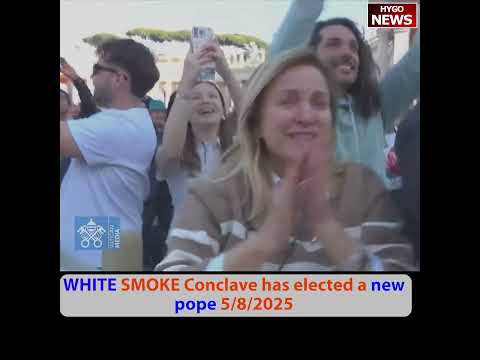
After multiple rounds of voting, white smoke finally rose from the Sistine Chapel chimney in May 2025.
The white smoke — the traditional signal since 1276 — announced that the cardinal-electors had reached the two-thirds majority required to elect a new pope. Crowds in St. Peter’s Square erupted in celebration as news spread throughout the Vatican and around the world.
Trump was asked about meeting the new pope.
“Are you planning to meet the Pope in the near future?” a reporter asked.
“I do, yes,” Trump said. “They have already spoken to us, and we’ll see what happens.”
The rapid outreach from the new papal administration to the Trump White House suggested that the Catholic Church was moving to establish productive relations with the American government. Whether this would translate into warmer Vatican-U.S. relations than had existed under Francis remained to be seen, but the early communication was a promising sign.
”Pink Smoke”
Before the white smoke, feminist activists had staged a counter-protest by releasing pink smoke over the Vatican.
“A male-only conclave is a celebration of patriarchy,” an activist declared. “A Catholic church without women has never existed and never will.”
She stated the demand: “God calls Catholic women to be deacons and priests.”
She explained the timing: “We are sending up pink smoke over the Vatican ahead of the start of the conclave. We’ve got a little window of time before the cardinals are sequestered inside that Sistine Chapel with no access to their social media and their phones — they will see the pink smoke and they will know.”
She chanted: “Smoke out sexism! A woman’s place is in the conclave.”
The pink smoke protest was a publicity stunt that attempted to insert progressive gender politics into one of the oldest continuous religious institutions in the world. The premise — that cardinals about to elect a pope would be swayed by pink smoke visible before they entered the sealed Sistine Chapel — was more theatrical than substantive.
The Catholic Church’s position on women’s ordination was grounded in two millennia of theological tradition and was unlikely to be altered by a smoke display. The activists’ assumption that the Church should change its sacramental theology because it offended modern political sensibilities revealed a fundamental misunderstanding of how the Church operated.
Vance on Growth
Vice President Vance made the strongest case yet for the Big Beautiful Bill’s economic strategy.
“What these guys underappreciate is that the best way to defeat our debt long term is growth,” Vance said.
He explained the math: “If we have an economy that’s growing at 1% a year, there is no way out of the debt problem in the United States of America. If the economy is growing at 3% or even 4% a year, that is the way that you solve the problem.”
He described the bill’s mechanism: “What this tax bill accomplishes fundamentally is that it grows the American economy in the biggest way in a generation.”
He cited the precedent: “If you go back to the first Trump administration, you had a lot of economists who said the tax bill is going to lead to a reduction in federal revenue. The tax bill is going to blow up the debt.”
He cited the reality: “What actually happened is that revenues went up. And until the COVID pandemic and then the presidency of Joe Biden, America’s financial house was in much, much better shape.”
He dismissed the critics: “We know that these guys are skeptical of restoring American manufacturing. We think they’re wrong. We’ve tried their way for 40 years. It’s led to high debt. It’s led to poor American citizens. It’s led to young people who can’t afford to buy a home in their own country.”
He stated the vision: “We’re not going to do the same old thing and expect different results. We’re going to try the Trump way. And I think it’s going to deliver long-term prosperity for the country.”
Vance’s growth argument was the most sophisticated economic case the administration had offered for the reconciliation bill. The debate over tax cuts had traditionally been framed as a choice between lower taxes (with more debt) and higher taxes (with less debt). Vance was arguing that the choice was false — that tax cuts that produced growth ultimately reduced debt through expanded revenue, while tax increases that slowed growth increased debt by shrinking the revenue base.
The 2017 Tax Cuts and Jobs Act provided the empirical basis. Despite predictions that it would reduce federal revenue and explode the deficit, actual federal revenues had increased during the Trump first term. The deficit problems that emerged were primarily attributable to spending increases — particularly pandemic relief — rather than to revenue shortfalls.
Key Takeaways
- House passed Gulf of America renaming 211-206 — codifying Trump’s executive order into law.
- White smoke rose from Sistine Chapel: new pope elected. Trump: “They have already spoken to us.”
- Feminists protested with pink smoke: “Male-only conclave is a celebration of patriarchy.”
- Vance on Big Beautiful Bill: “Growth is the way to defeat debt. 3-4% growth solves the problem. Biggest economic boost in a generation.”
- Vance: “We’ve tried their way 40 years. High debt, poor citizens, young people who can’t afford homes. We’re going to try the Trump way.”