 HYGO News
 Trump Fiery Ultimatum to Hamas: "All Hell Will Break Out" if Hostages Aren't Released Before 1/20
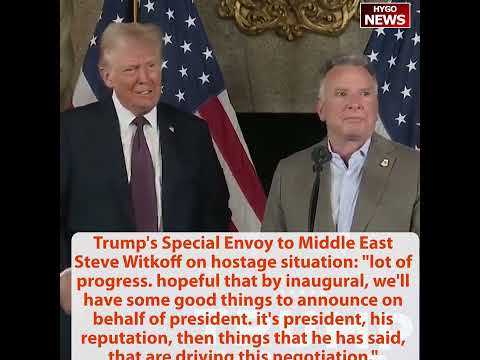
Trump Fiery Ultimatum to Hamas: “All Hell Will Break Out” if Hostages Aren’t Released Before 1/20
On January 7, 2025, President-elect Donald Trump issued a stark and unambiguous ultimatum to Hamas during a press conference at Mar-a-Lago: release the hostages held in the Gaza Strip before his January 20 inauguration, or face devastating consequences. Trump’s Special Envoy to the Middle East, Steve Witkoff, reported significant progress in negotiations taking place in Doha and credited Trump’s reputation and direct messaging as the driving force behind the movement toward a deal. The exchange underscored the incoming administration’s approach to the hostage crisis, combining diplomatic engagement with explicit threats of overwhelming force.
Trump’s Ultimatum: “All Hell Will Break Out”
Trump delivered his warning with characteristic directness, leaving no room for misinterpretation about the consequences of inaction.
“All hell will break out if those hostages aren’t back,” Trump declared. “If they’re not back by the time I get into office, all hell will break out in the Middle East. And it will not be good for Hamas. And it will not be good, frankly, for anyone. All hell will break out.”
When pressed to elaborate, Trump declined to soften the message. “I don’t have to say anymore. But that’s what it is,” he said. He then turned to the broader context of the hostage crisis, condemning Hamas’s actions from the outset: “They should have given them back a long time ago. They should have never taken them. They should have never committed the attack of October 7th. People forget that, but there was, and many people were killed.”
Trump reiterated the ultimatum a final time for emphasis: “I don’t want to hurt the negotiation. If the deal isn’t done before I take office, which is now going to be two weeks, all hell will break out in the Middle East.”
The Human Toll: Parents Begging for Their Children’s Bodies
In one of the most emotionally charged moments of the press conference, Trump described the personal appeals he had received from families of hostages. His account painted a harrowing picture of the crisis.
“I have people from Israel and others calling, begging me,” Trump said. “We had also people there from the United States. Just so you know, they’re holding some so-called hostages from the U.S.”
Trump then recounted specific conversations that conveyed the devastating human cost: “I’ve had mothers come to me and fathers crying. ‘Can I get the body of their son back? Can I get the body of their daughter back?’ That beautiful girl where they threw her in the car, pulled her by her ponytail and threw her in the car like she was a sack of potatoes. I said, ‘What happened to her?’ ‘Sir, she’s dead.’ Like a 19, 20-year-old beautiful girl. And the way they treated her.”
The graphic description served to underscore the moral urgency behind Trump’s demands and to frame the ultimatum not merely as geopolitical posturing but as a response to specific human suffering.
Steve Witkoff Reports Progress from Doha
Trump’s Special Envoy to the Middle East, Steve Witkoff, provided a detailed account of the state of negotiations. His tone was cautiously optimistic while making clear that Trump’s personal influence was the central factor.
“Well, I think we’re making a lot of progress, and I don’t want to say too much because I think they’re doing a really good job back in Doha,” Witkoff said. “I’m leaving tomorrow, back to go to Doha. But I think that we’ve had some really great progress, and I’m really hopeful that by the inaugural, we’ll have some good things to announce on behalf of the president.”
Witkoff attributed the progress directly to Trump’s standing and statements: “I actually believe that we’re working in tandem in a really good way, but it’s the president, his reputation, the things that he has said, that are driving this negotiation. And so hopefully it’ll all work out and we’ll save some lives. I believe we’ve been on the verge of it.”
He described Trump’s leadership style in the negotiations: “I don’t know anyone who delegates better than President Trump. He gives us a lot of authority to speak on his behalf. And he exhorts us to speak emphatically. And emphatically means: you better get this done.”
When asked whether Hamas might be waiting for Trump to take office before finalizing any deal, Witkoff dismissed the possibility: “No, I think they heard him loud and clear. Better get done by the inaugural.”
Trump Praises Witkoff as “A Great Negotiator”
Trump took time during the press conference to commend Witkoff’s role in the negotiations, framing his appointment as a deliberate choice of a skilled dealmaker over a regional specialist.
“Steve’s got a job to do. He’s a great guy, great negotiator, great person. They respect him over there already,” Trump said. “It’s what we need over there. We have people that know everything about the Middle East, but they can’t speak properly. They don’t know. He’s a great negotiator. That’s what I needed.”
Trump drew an analogy to underscore his point: “A great negotiator is a very rare thing. Like a great surgeon. But we have the right person.”
The comment reflected Trump’s broader philosophy of staffing critical positions with business-world dealmakers rather than career diplomats, a approach that characterized many of his appointments across the incoming administration.
The Hostage Crisis in Context
The hostages referenced by Trump had been taken during Hamas’s October 7, 2023, attack on Israel, in which approximately 1,200 people were killed and over 250 were taken captive. By January 2025, despite multiple rounds of negotiations involving Qatar, Egypt, and the United States, dozens of hostages remained in Gaza. Several were confirmed dead, while the status of others remained unknown.
The Biden administration had been involved in mediation efforts throughout 2024, but negotiations had repeatedly stalled over disagreements about ceasefire terms, prisoner exchanges, and the long-term governance of Gaza. The incoming Trump team’s approach represented a significant shift in tone, replacing the Biden administration’s emphasis on multilateral diplomatic frameworks with direct, personal pressure backed by explicit threats of military consequences.
Additional Context
The January 7 press conference took place the day after Congress certified Trump’s 2024 election victory. The timing was deliberate: Trump used the momentum of his confirmed mandate to project strength on the international stage. The two-week countdown to inauguration created a concrete deadline that both raised the stakes and provided a clear point at which the consequences Trump threatened would theoretically begin.
Witkoff’s imminent return to Doha signaled that negotiations were active and approaching a critical phase. The combination of on-the-ground diplomatic engagement and public presidential pressure represented the dual-track strategy that the incoming administration would employ in its Middle East policy.
Key Takeaways
- Trump issued a direct ultimatum to Hamas: release the hostages before January 20, 2025, or “all hell will break out in the Middle East.”
- Special Envoy Steve Witkoff reported “really great progress” in Doha and said he was “hopeful that by the inaugural, we’ll have some good things to announce.”
- Witkoff credited Trump’s “reputation” and “the things that he has said” as the driving force behind progress in negotiations.
- Trump described heartbreaking personal appeals from parents of hostages, including a father asking for the body of his daughter who was killed after being abducted on October 7.
- Trump praised Witkoff as a “great negotiator,” comparing the rarity of the skill to that of “a great surgeon,” and distinguished him from regional specialists who “can’t speak properly.”