 HYGO News
 Trump Announces JFK Files Release; Dismisses NBC Reporter: 'You're So Discredited'; Kennedy Center Overhaul
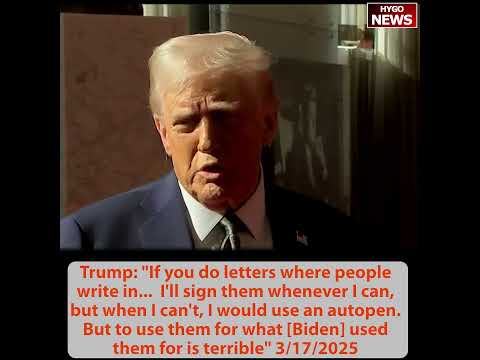
Trump Announces JFK Files Release; Dismisses NBC Reporter: “You’re So Discredited”; Kennedy Center Overhaul
President Trump made a series of news-making statements during a March 2025 press interaction at the Kennedy Center, announcing the imminent release of the long-classified JFK assassination files, dismissing an NBC reporter with “I don’t want to talk to NBC anymore — I think you’re so discredited,” drawing a line between his own limited autopen use and Biden’s, and previewing a comprehensive renovation of the Kennedy Center. Speaking from the Presidential Box, Trump also praised VP JD Vance as “the most popular vice president we’ve had in years.”
JFK Files: “People Have Been Waiting for Decades”
Trump opened with the announcement that had been anticipated by historians, researchers, and conspiracy theorists for generations.
“We are tomorrow announcing and giving all of the Kennedy files,” Trump said. “So people have been waiting for decades for this, and I’ve instructed my people that are responsible.”
He credited Director of National Intelligence Tulsi Gabbard with organizing the release: “Lots of different people put together by Tulsi Gabbard. And that’s going to be released tomorrow.”
The JFK assassination files had been one of the most enduring transparency battles in American government. The President John F. Kennedy Assassination Records Collection Act of 1992 had mandated full release by October 2017, but both Trump in his first term and Biden had approved additional postponements at the request of intelligence agencies. The agencies had argued that certain sources and methods would be compromised by disclosure — an argument that grew less credible with each passing decade as the events in question receded further into history.
Trump’s decision to release the files fulfilled a promise he had made during the 2024 campaign. The assignment of the task to Gabbard — herself a critic of intelligence community secrecy — signaled that the administration was not going to allow the agencies to negotiate further delays. The files would be released, full stop.
The significance extended beyond the specific contents of the documents. For many Americans, the continued classification of the JFK files had become a symbol of government secrecy and institutional distrust. The argument that 60-year-old documents still posed national security risks struck many as absurd, and the refusal to release them fed the very conspiracy theories that transparency was supposed to resolve.
”I Don’t Want to Talk to NBC Anymore”
In the middle of the press gaggle, Trump delivered one of his characteristic media confrontations.
When a reporter began asking a question, Trump interrupted: “Who are you with?”
The reporter answered: “NBC.”
Trump’s response was immediate: “I don’t want to talk to NBC anymore. I think you’re so discredited.”
The dismissal was notable not for its content — Trump had long expressed disdain for NBC and its coverage — but for the casual authority with which it was delivered. He did not argue with the reporter’s question or dispute a specific claim. He simply declared the network not worth engaging with and moved on.
The interaction captured the power dynamic that had shifted since Trump’s return to office. In his first term, dismissals of reporters had often been portrayed as attacks on press freedom. By his second term, the dynamic had changed. Trump’s willingness to ignore networks he viewed as hostile was treated less as shocking and more as an established feature of his governing style.
NBC’s credibility issues were, in Trump’s telling, self-inflicted. The network had been associated with coverage that Trump and his supporters viewed as consistently biased, from the Russia investigation coverage to the handling of the Hunter Biden laptop story. By declaring the network “so discredited,” Trump was not making a new argument but stating what he considered an established fact.
Autopen: “Only for Very Unimportant Papers”
When a reporter asked whether Trump himself had ever used an autopen, he gave a detailed and revealing answer.
“Yeah, only for very unimportant papers,” Trump said. He then immediately qualified what he meant by “unimportant”: “And I don’t call them unimportant — if you do letters where people write in, and you know, they’d love to have a response, or write responses, and I’ll sign them whenever I can.”
“But when I can’t, you know, we’d use an autopen,” Trump continued.
Then the contrast: “But to use them for what they’ve used them for is terrible.”
The answer was more nuanced than many of Trump’s statements. He acknowledged using the autopen — transparency that preempted any gotcha — while drawing a clear distinction between signing form letters to citizens (a volume problem that every president faced) and signing pardons, executive orders, and other consequential legal documents (which Biden’s administration had allegedly done).
The distinction reflected a principle that most Americans would intuitively understand: a president’s signature on a letter to a sick child was a gesture of acknowledgment; a president’s signature on a pardon was the exercise of a constitutional power. Using a machine for the former was a practical accommodation; using a machine for the latter was, in Trump’s framing, a dereliction of duty.
Kennedy Center: “An Important Part of the Fabric”
Speaking from the Presidential Box at the Kennedy Center — where he served as Chairman of the Board of Trustees — Trump previewed significant changes to the institution.
“We’re going to make a lot of changes, including the seats, the decor,” Trump said. “Pretty much everything. It needs a lot of work.”
When asked about the scope and cost of the renovation, Trump was characteristically direct: “We’ll look at it — whatever it is. I think, you know, it’s such an important part of the fabric of the country and of DC. So we want to do it right. We’ll do it right and we’ll do it once.”
The “do it right and do it once” philosophy was vintage Trump — the real estate developer’s instinct that it was cheaper and better to do a comprehensive renovation than to patch and repair incrementally. The Kennedy Center, as one of the nation’s premier cultural institutions, warranted the same approach Trump would have applied to any property: assess the full scope of what needed to be done, commit to doing it properly, and execute.
”The Most Popular Vice President We’ve Had in Years”
When a reporter asked about the reception JD Vance had received at the Kennedy Center, Trump offered an enthusiastic endorsement.
“I don’t know about that,” Trump said initially. “He’s the most popular vice president we’ve had in years. He’s done a great job.”
The praise for Vance reflected a relationship that had evolved significantly since the 2024 campaign. Vance had transitioned from a sometimes-controversial running mate selection into one of the administration’s most effective communicators, delivering policy arguments with an intellectual framework that complemented Trump’s more instinctive style.
The “most popular vice president in years” assessment was, characteristically, both a compliment to Vance and an implicit criticism of his predecessors — Mike Pence, Kamala Harris, and others who had held the office in recent memory.
Key Takeaways
- Trump announced the release of the JFK assassination files, organized by DNI Tulsi Gabbard: “People have been waiting for decades for this.”
- He dismissed an NBC reporter mid-question: “I don’t want to talk to NBC anymore. I think you’re so discredited.”
- On autopen use, Trump acknowledged using it “only for very unimportant papers” like citizen response letters but condemned Biden’s use for pardons and executive orders as “terrible.”
- Trump previewed a comprehensive Kennedy Center renovation: “We’re going to make a lot of changes — seats, decor, pretty much everything. We’ll do it right and we’ll do it once.”
- He praised VP JD Vance as “the most popular vice president we’ve had in years.”