 HYGO News
 To Lower Inflation: Attack On Both Fiscal And Monetary Sides?
To Lower Inflation: Attack On Both Fiscal And Monetary Sides?
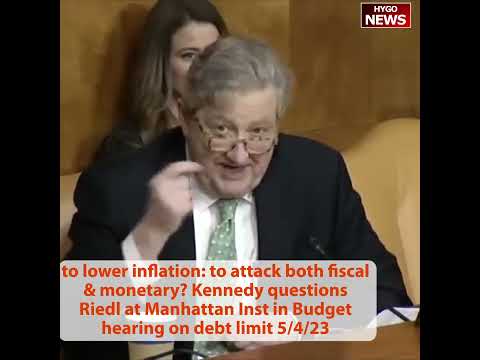
A senator working through inflation policy mechanics walked an economist witness through a step-by-step argument: that inflation must be attacked on both the fiscal and the monetary sides; that the Federal Reserve’s monetary tool is the federal funds rate; that fiscal policy’s tool is reducing the growth rate of spending and debt accumulation; and therefore that any vote against slowing federal spending growth is implicitly a vote to push interest rates higher. The witness conceded each step. The exchange compressed several months of fiscal-monetary policy debate into a single Senate hearing and tied directly into the spring 2023 debt ceiling negotiations.
The Two-Lever Framework
- Fiscal lever: Federal spending growth and debt accumulation.
- Monetary lever: Federal Reserve interest rate decisions.
- Cooperative model: Inflation is best brought down when both levers move in the same direction.
- Substitution model: If one lever does not move, the other must move further.
- Editorial reach: The framework has shaped Republican messaging on the 2023 debt ceiling fight.
The Senator’s Argument
- Step one: Inflation is best attacked on both sides.
- Step two: The Fed’s tool on the monetary side is interest rates, which slow demand by raising the cost of money.
- Step three: Fiscal policy’s tool is reducing the growth rate of spending and debt accumulation.
- Step four: Voting against slower spending growth implies voting for higher interest rates.
- Editorial line: The argument framed every spending vote as an implicit monetary policy decision.
The Witness Concession
- Step-by-step agreement: The witness conceded each step of the argument.
- Generalization caveat: The witness said “generally I would agree” on the final implication.
- Economics 101: The senator described the argument as “basic economics 101.”
- Educational framing: The senator referenced economics department instruction in framing the agreement.
- Hearing record: The full chain of concessions sits in the formal hearing record.
The Federal Reserve Tool
- Federal funds rate: The Fed’s primary policy tool is the federal funds target rate.
- Demand channel: Higher rates slow aggregate demand by raising borrowing costs.
- Unemployment channel: The slowdown typically shows up in higher unemployment.
- Time lag: Monetary policy effects operate with substantial lags, often 12-18 months.
- Editorial value: The witness emphasized unemployment as the measurement channel.
The Fiscal Tool
- Spending growth: The fiscal tool is the rate of growth of federal spending.
- Debt accumulation: Slower spending growth slows debt accumulation.
- Demand effect: Slower fiscal growth reduces aggregate demand from the federal sector.
- Inflation effect: Reduced fiscal demand contribution helps inflation moderation.
- Editorial frame: The senator emphasized that fiscal restraint substitutes for monetary tightening.
The Implicit Vote Argument
- Logical implication: If both tools must work together, withholding one forces the other.
- Vote framing: A vote against fiscal restraint is a vote for higher rates.
- Republican use: The argument has been central to Republican debt ceiling messaging.
- Democratic counter: Democrats argue the macro mechanics are more nuanced than the framing suggests.
- Hearing record: The argument now sits in the formal hearing record.
The 2023 Debt Ceiling Context
- Negotiation backdrop: The exchange occurred during active debt ceiling negotiations in spring 2023.
- Spending caps: Republicans demanded discretionary spending caps as part of any deal.
- White House posture: The White House initially refused to negotiate spending alongside the ceiling.
- Eventual deal: A deal eventually included two-year discretionary caps in exchange for ceiling action.
- Editorial line: The senator’s framing was a public-facing argument for spending caps.
The Inflation Picture
- Headline ~5%: Headline inflation in spring 2023 was approximately 5%.
- Core measures: Core inflation was running at similar levels.
- Services component: Services inflation, especially shelter, was sticky.
- Goods deflation: Goods prices were beginning to disinflate as supply chains normalized.
- Editorial line: The mix complicated the rate-path math.
The Federal Reserve Posture
- Tightening cycle: The Fed had moved aggressively from near-zero to ~5% in 14 months.
- Forward guidance: Fed officials signaled continued hikes pending data.
- Banking stress: Spring 2023 banking stresses complicated the path.
- Soft landing question: Whether the cycle could deliver a soft landing was a central debate.
- Long arc: The 2023 cycle reshaped the U.S. rate environment for years.
The Coordination Challenge
- Independent institutions: The Fed and Congress operate independently.
- Misaligned incentives: Fiscal and monetary policymakers often face misaligned political incentives.
- Communication: Public communication channels are limited and indirect.
- Editorial line: The senator’s framing made fiscal-monetary coordination explicit.
- Practical effect: The framing influenced public-facing messaging more than internal coordination.
The Republican Strategy
- Fiscal discipline: Republican messaging emphasized fiscal discipline as inflation’s best cure.
- Spending cap framing: Spending caps were framed as substituting for higher rates.
- Public posture: The argument was designed to land with voters worried about both inflation and rates.
- Hearing platform: Senators used hearings to distribute the argument.
- Long arc: The framing remained central to Republican economic messaging through 2024.
The Democratic Response
- Stimulus defense: Democrats defended pandemic-era stimulus as appropriate at the time.
- Inflation transition: They argued inflation reflected pandemic recovery dynamics rather than ongoing fiscal demand.
- Investment framing: Major IRA spending was framed as investment rather than consumption.
- Editorial counter: Democrats argued the Republican framing oversimplified macro mechanics.
- Hearing posture: Democratic senators offered alternative framings during the same hearings.
The Macroeconomic Debate
- Demand-side dominance: Some economists treated the inflation as primarily demand-driven.
- Supply-side factors: Others emphasized supply-side factors like energy prices and supply chains.
- Mixed view: Most analysts treated 2022-23 inflation as a mix of supply and demand factors.
- Policy implication: A demand-driven view supports the senator’s framing more directly.
- Editorial line: The hearing framing collapsed some of the nuance in the academic debate.
The Sacrifice Ratio Question
- Earlier exchange: A separate hearing exchange had walked through sacrifice-ratio math.
- Connection: The fiscal-monetary framing connected directly to sacrifice-ratio concerns.
- Implication: Lower fiscal demand reduces the sacrifice ratio for monetary policy.
- Editorial reach: The argument reinforced the case for fiscal restraint as cheaper than monetary tightening.
- Hearing record: Both exchanges now sit in the formal record.
The Education Reference
- Department reference: The senator referenced “the Department” as a teaching source.
- Economics 101: The senator framed the argument as introductory economics.
- Witness acknowledgement: The witness acknowledged the educational framing.
- Editorial choice: The framing was designed to make the argument seem self-evident.
- Hearing impact: The framing kept the witness from contesting the chain of reasoning.
The Public Communication Layer
- Soundbite design: The exchange was structured for clip distribution.
- Documentary value: The hearing record now contains a clean Republican economic argument.
- Media uptake: The clip moved on conservative media as a Republican economic argument.
- Audience targeting: The folksy senatorial style is built for retail political distribution.
- Long arc: The framing remained central to Republican messaging for the next election cycle.
The Fiscal Multiplier Question
- Multiplier debate: Economists debate the size of fiscal multipliers in different conditions.
- High vs. low multipliers: Multipliers are larger near zero rates and smaller in tight labor markets.
- Editorial line: The senator’s framing assumed material multiplier effects.
- Counter view: Some economists argue the fiscal effect on inflation is smaller than monetary.
- Hearing simplification: The exchange did not engage the multiplier debate directly.
The Debt Trajectory
- Debt-to-GDP: Federal debt-to-GDP remained elevated relative to historical norms.
- Long-term path: Long-term projections show continued debt-to-GDP rise.
- Interest costs: Higher rates raise interest costs on existing debt.
- Editorial reach: The interest-cost argument added urgency to the spending cap framing.
- Long arc: The fiscal trajectory will shape political economy through the next decade.
The Coordination Outcome
- Eventual deal: The 2023 debt ceiling deal included two-year discretionary caps.
- Practical effect: The caps applied modest restraint on discretionary spending.
- Mandatory spending: Mandatory spending — the bulk of the federal budget — was untouched.
- Editorial line: Republicans treated the caps as a fiscal-monetary coordination win.
- Long arc: The 2023 deal provides a template for future fiscal-monetary debates.
The 2024 Implications
- Election positioning: Both parties used inflation and rates for 2024 positioning.
- Real wage politics: Real wage growth politics surfaced as a wedge issue.
- Banking sector: Banking sector concerns remained part of the policy debate.
- Long arc: The episode will shape Fed framework reviews for the next decade.
- Hearing legacy: The hearing record will be cited in future fiscal-monetary debates.
Key Takeaways
- A senator walked a witness through a fiscal-monetary inflation argument.
- The argument: inflation is best attacked on both fiscal and monetary sides.
- Spending growth is the fiscal tool; the federal funds rate is the monetary tool.
- The witness conceded that voting against slower spending growth implies voting for higher rates.
- The argument was central to Republican 2023 debt ceiling messaging.
- The eventual 2023 debt ceiling deal included two-year discretionary spending caps.
Transcript Highlights
The following quotations are drawn from an AI-generated Whisper transcript of the hearing and should be considered unverified pending official transcript release.
- “The best way to get inflation down is to attack it on the fiscal side and the monetary side. Absolutely” — exchange
- “When you attack it on the monetary side, the Federal Reserve raises interest rates. It’s trying to slow the economy” — senator
- “When you attack it on the fiscal side, you reduce your rate of growth of spending and debt accumulation” — senator
- “Is it not the case that if you vote against slowing the rate of growth of spending and debt accumulation, you’re voting to raise interest rates even higher?” — senator
- “Generally, I would agree with that viewpoint” — witness
- “That’s just basic economics 101, right?” — senator
Full transcript: 186 words transcribed via Whisper AI.