 HYGO News
 Still haven't gotten 2021 tax return because IRS agents aren't showing up to work
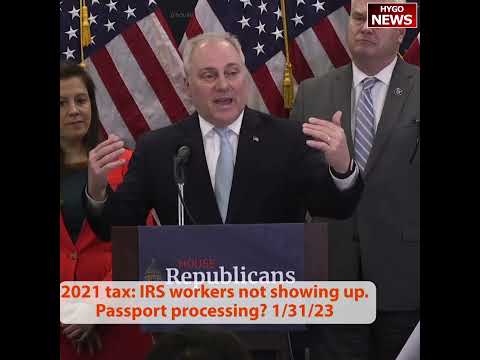
Scalise: Millions Still Waiting for 2021 Tax Returns Because IRS Agents Aren’t Showing Up — Passports Take 6+ Months
In February 2023, House Majority Leader Steve Scalise delivered damaging critique of federal worker telework practices impacting citizen services. “There’s still millions of taxpayers across the country in 2023 who still haven’t gotten their IRS return from 2021 because IRS agents aren’t showing up to work. This needs to end. People are waiting on passports for more than six months at a time because you can’t process a passport remotely from home. You need to show up at work. Families expect the federal government to do their jobs and work for them. They’re surely collecting their paychecks. It’s long past time that they show up for work as well. So we’re bringing all of these bills as well as a bill to denounce the horrors of socialism.”
The SHOW UP Act
SHOW UP Act:
Federal workers — Target.
Return to office — Mandate.
Telework ending — Sought.
Service delivery — Focus.
GOP priority — In new Congress.
The SHOW UP Act was House GOP legislation to end extensive federal telework. Focus was on service delivery for citizens rather than worker preferences. This was early GOP legislative priority.
The IRS Backlogs
IRS backlogs:
2021 returns — Still pending.
Millions affected — Claimed.
Telework blamed — By Scalise.
Multi-year — Issue.
Documented — Problem.
The IRS backlogs were documented reality. Tax returns from 2021 were still pending for some in 2023. Multiple factors caused backlogs including pandemic impact and resource limitations.
”This Needs to End”
Direct call. “This needs to end,” Scalise said.
The call:
Imperative — Clear.
Unambiguous — Position.
Problem identified — Specifically.
Solution — Through SHOW UP Act.
GOP positioning — For services.
The direct imperative established GOP positioning as advocates for federal service delivery. Not just attacking government but demanding it work for citizens.
”More Than Six Months” for Passports
Passport delays:
6+ months — Cited.
Documented reality — Partially.
Service failure — Characterized.
Impact — Real.
Voter frustration — Widespread.
Passport processing delays had been substantial and were widely reported. Voters experiencing delays firsthand were receptive to critique. This was effective political messaging based on voter experience.
”Can’t Process a Passport Remotely From Home”
The argument. “Because you can’t process a passport remotely from home. You need to show up at work,” Scalise said.
The argument:
Physical process — Required.
Remote impossible — For passports.
Office work needed — Argued.
Logical — Claim.
Solution framework — Clear.
The argument that some federal work couldn’t be done remotely was logical. Passport processing involved physical documents requiring office handling. Telework limits were legitimate concern for specific work.
The Telework Reality
Telework reality:
COVID expansion — Dramatic.
Many agencies — Continuing.
Mixed results — On service.
Return fights — Political.
Complexity — Real.
Federal telework had expanded dramatically during COVID and continued after. Agency approaches varied. Service impact mixed. Return to office was contentious across government.
”Families Expect the Federal Government to Do Their Jobs”
Populist framing. “Families expect the federal government to do their jobs and work for them,” Scalise said.
The framing:
Families — Voter proxy.
Federal government — Expected.
Service delivery — Function.
Populist appeal — Strong.
Basic expectation — Framed.
The populist framing positioned GOP as advocating for families versus bureaucracy. Families expected government service. GOP demanding it delivered. This was effective messaging.
”They’re Surely Collecting Their Paychecks”
The hypocrisy charge. “They’re surely collecting their paychecks. It’s long past time that they show up for work as well,” Scalise said.
The charge:
Paychecks collected — Fact.
Work absent — Alleged.
Hypocrisy — Implied.
Taxpayer funded — Salaries.
Value failure — Claimed.
The paycheck/work disparity was politically effective framing. Getting paid without showing up was visceral unfairness. Resonated with voters who showed up to their jobs.
”Long Past Time”
The urgency. “It’s long past time that they show up for work as well,” Scalise said.
The urgency:
Long past — Emphasis.
Delayed action — Characterized.
Overdue — Framed.
Urgency — Created.
Justification — For bill.
The “long past time” framing created urgency for GOP legislation. Situation had gone on too long. Action needed now. This justified legislative effort.
The Socialism Bill Mention
Socialism bill. “So we’re bringing all of these bills as well as a bill to denounce the horrors of socialism,” Scalise said.
The mention:
Separate bill — Referenced.
“Horrors of socialism” — Strong language.
Symbolic legislation — Essentially.
Political messaging — Purpose.
Base appeal — Continued.
The anti-socialism bill reference was symbolic legislation. No practical effect but political messaging. Base appeal continued through such symbolic measures.
The Federal Worker Perspective
Worker perspective:
Telework productivity — Often high.
Work-life balance — Improved.
Commute savings — Real.
Housing flexibility — Possible.
Mixed views — Among workers.
Federal workers had perspectives on telework that Scalise’s framing didn’t capture. Many reported higher productivity, improved work-life balance, housing flexibility. Views were mixed even among workers.
The Service Delivery Reality
Service delivery:
Varies by agency — Significantly.
Some worse — Some improved.
Multiple causes — Of problems.
Telework — One factor.
Complex picture — Overall.
Service delivery impact of telework was complex. Some agencies had problems; others improved. Multiple causes affected service including staffing, technology, processes. Telework was one factor among many.
The IRS Specific Issues
IRS issues:
Paper backlogs — From COVID.
Staffing shortages — Chronic.
Technology outdated — Legacy systems.
Pandemic accumulation — Continuing.
Multi-year — Problem.
The IRS specifically had accumulated backlogs from pandemic era. Chronic staffing shortages. Outdated technology. Multiple causes beyond telework. Problem was genuine but multifaceted.
The Passport Crisis
Passport crisis:
Post-COVID demand — Surged.
Backlogs grew — Substantially.
Processing capacity — Limited.
Administrative response — Delayed.
Traveler frustration — High.
The passport processing crisis was real. Post-COVID travel demand surged while State Department capacity hadn’t scaled. Backlogs were significant. Voter frustration widespread.
The Political Calculation
Political calculation:
Real problem — Voter-experienced.
Administrative vulnerability — Exposed.
GOP positioning — Effective.
Legislative vehicle — Available.
Media attention — Natural.
The political calculation was effective. Real voter-experienced problem. Administrative vulnerability. GOP positioning effective. Legislative vehicle provided. Media attention natural given personal impact.
The Administrative Response
Administrative response:
Return to office — Some.
Service improvements — Claimed.
Resource requests — Made.
Defense — Mounted.
Complex reality — Acknowledged.
Administration responded with partial return-to-office policies, service improvement claims, resource requests to Congress. Defense was mounted. Complex reality acknowledged.
The Return to Office Context
Return context:
Agency variations — Different.
Hybrid models — Common.
Full return — Rare.
Workforce concerns — Real.
Political pressure — Continuing.
Return to office happened variously across federal government. Hybrid models were common. Full return was rare. Workforce concerns about return were real. Political pressure continuing.
The COVID Era Changes
COVID era:
Dramatic shift — To remote.
Technology adoption — Accelerated.
Cultural change — Substantial.
Permanent shifts — Some.
Policy adaptation — Ongoing.
COVID had caused dramatic workforce shifts. Technology for remote work was adopted. Cultural changes were substantial. Some shifts were permanent. Policy adaptation was ongoing across sectors.
The Business Sector Comparison
Business comparison:
Private sector — Varies.
Some return — Mandated.
Hybrid models — Common.
Flexibility valued — By many.
Competitive pressure — Factor.
Private sector return-to-office varied substantially. Some companies mandated returns. Others embraced remote or hybrid. Competitive pressure for talent affected decisions. No single approach dominated.
The Workforce Preferences
Workforce preferences:
Remote preferred — By many.
Flexibility valued — Highly.
Office benefits — Acknowledged.
Hybrid optimal — For some.
Varied — By role and person.
Workforce preferences varied but generally valued flexibility. Remote work preferred by many. Office had benefits too. Hybrid seemed optimal for many roles. No universal preference existed.
The Management Challenges
Management challenges:
Remote oversight — Different.
Collaboration — Changed.
Training — Complicated.
Accountability — Measurable differently.
Complex adaptation — Required.
Managing remote workforces presented different challenges than office management. Oversight, collaboration, training, accountability all worked differently. Management required adaptation.
The Productivity Debate
Productivity:
Studies vary — Significantly.
Role-dependent — Clearly.
Individual variance — Large.
Measurement difficult — Often.
Real question — Unclear.
The productivity debate around remote work had mixed evidence. Role-dependent. Individual variance. Measurement difficult. Real productivity impact was unclear and contested.
The Customer Service Impact
Customer service:
Direct services — Affected.
Waiting times — Extended.
Citizen frustration — Real.
Political implications — Significant.
Real concern — Valid.
The customer service impact on citizens was real area of concern. Waiting times extended. Frustration real. Political implications significant. This was valid concern regardless of worker preferences.
The Legislative Approach
Legislative approach:
SHOW UP Act — Mandate return.
Symbolic — Perhaps.
Would face — Veto.
Political messaging — Primary.
Cultural statement — Also.
The legislative approach was as much political messaging as practical policy. Would face Biden veto. Symbolic of GOP priorities. Cultural statement about work expectations.
The Veto Threat Scenario
Veto scenario:
Expected — From Biden.
Political cost — For both.
Framing battle — Continuing.
Effects — Multi-front.
Eventual compromise — Possible.
If bill reached Biden, veto was likely. This would create political confrontation. Framing battle over whose position was right. Multi-front effects. Eventual compromise possibly through other vehicles.
The Government Effectiveness Debate
Effectiveness:
Trust declining — Generally.
Service failures — Contributing.
Telework — One factor.
Bureaucracy — Multiple issues.
Reform — Continuing need.
The broader government effectiveness debate encompassed more than telework. Declining trust. Service failures. Bureaucratic inefficiencies. Reform continuing need. Telework was one visible element.
The 2024 Political Relevance
2024:
Service delivery — Voter concern.
Government competence — Issue.
Attacks — Effective on this.
Building narrative — Of ineffectiveness.
Campaign material — Accumulating.
For 2024, service delivery and government competence were voter concerns. Attacks on government ineffectiveness could resonate. Building narrative of administrative ineffectiveness. Campaign material accumulating.
The Comparison With Private Sector
Comparison:
Private shifts — Dramatic.
Innovation — Continuing.
Efficiency — Generally higher.
Customer focus — Stronger.
Federal lag — Perception.
Perception was that private sector had adapted more effectively to new work realities. Innovation continuing. Efficiency higher. Customer focus stronger. Federal lag was perception whether accurate or not.
The Accountability Question
Accountability:
Taxpayer funded — Services.
Public service — Commitment.
Delivery required — Fundamentally.
Flexibility benefits — vs. service.
Balance needed — Genuinely.
The fundamental accountability question was real. Taxpayers funded federal workforce. Public service commitment required. Service delivery fundamental. Flexibility versus service balance genuinely needed consideration.
The Scalise Effectiveness
Scalise effectiveness:
Real issues — Addressed.
Voter experience — Connected.
Political framing — Effective.
Multiple attacks — Coordinated.
Messaging success — Measurable.
Scalise’s political effectiveness used real voter experiences. Political framing matched voter concerns. Multiple attacks coordinated. Measurable messaging success.
The Ongoing Policy Evolution
Policy evolution:
Return policies — Developing.
Hybrid models — Normalizing.
Technology — Improving.
Culture — Shifting.
Final form — Unclear.
Federal workforce policies were evolving. Return policies developing. Hybrid models normalizing. Technology improving. Culture shifting. Final form was unclear but movement was occurring.
The Base Appeals
Base appeals:
Government inefficiency — Conservative theme.
Accountability demand — Traditional.
Worker expectations — Value-laden.
Socialism connection — Rhetorical.
Coalition building — Effective.
The GOP messaging appealed to conservative base on multiple themes. Government inefficiency. Accountability demand. Worker expectations. Socialism connection. Coalition building effective.
The Democratic Counter
Democratic counter:
Worker rights — Emphasized.
Flexibility valued — For families.
COVID legacy — Acknowledged.
Complex reality — Argued.
Nuanced position — Attempted.
Democrats typically emphasized worker rights and flexibility value. COVID legacy acknowledged. Complex reality argued rather than simple framing. Nuanced position attempted but politically difficult.
The Political Positioning
Political positioning:
Pro-worker vs. pro-accountability — Framing.
Complex issue — Oversimplified.
Both sides — Claim.
Voter choice — Between frames.
Cumulative narrative — Shaping.
The political positioning on telework was really about different framings. Both sides claimed some virtue. Voters chose between frames based on priorities. Cumulative narrative shaping through sustained messaging.
The Implementation Reality
Implementation:
Agency specific — Approaches.
Resource constraints — Real.
Technology needs — Varied.
Workforce — Diverse.
One-size-fits-all — Wrong.
The implementation reality required agency-specific approaches. Resource constraints real. Technology needs varied. Workforce diverse. One-size-fits-all approach would fail. Nuance needed but political rhetoric avoided it.
The Long-Term Trajectory
Trajectory:
Hybrid — Likely future.
Some return — To office.
Technology evolution — Continuing.
Worker expectations — Set.
Policy adaptation — Ongoing.
The long-term trajectory seemed to be hybrid work future. Some return to office but substantial remote continuing. Technology evolution enabling. Worker expectations set during COVID. Policy adaptation ongoing.
Key Takeaways
- House Majority Leader Scalise delivered damaging critique of federal worker telework practices.
- Specific claim: “Millions of taxpayers across the country in 2023 who still haven’t gotten their IRS return from 2021.”
- Cause identified: “Because IRS agents aren’t showing up to work. This needs to end.”
- Passport example: “People are waiting on passports for more than six months at a time because you can’t process a passport remotely from home.”
- Framing: “Families expect the federal government to do their jobs and work for them. They’re surely collecting their paychecks. It’s long past time that they show up for work as well.”
- Symbolic legislation: “We’re bringing all of these bills as well as a bill to denounce the horrors of socialism.”
Transcript Highlights
The following is transcribed from the video audio (unverified — AI-generated from audio).
- There’s still millions of taxpayers across the country in 2023 who still haven’t gotten their IRS return from 2021 because IRS agents aren’t showing up to work.
- This needs to end.
- People are waiting on passports for more than six months at a time because you can’t process a passport remotely from home. You need to show up at work.
- Families expect the federal government to do their jobs and work for them.
- They’re surely collecting their paychecks. It’s long past time that they show up for work as well.
- So we’re bringing all of these bills as well as a bill to denounce the horrors of socialism.
Full transcript: 108 words transcribed via Whisper AI.