 HYGO News
 Scalise: Petroleum Reserve is not there to go mask your bad policies
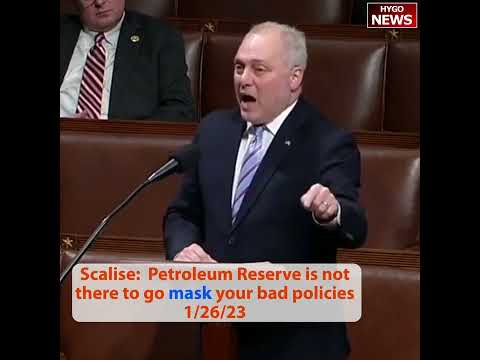
Scalise: SPR Is “America’s Piggy Bank” — Biden Raided 40% and Sold Some to China
In late January 2023, House Majority Leader Steve Scalise delivered history lesson on Strategic Petroleum Reserve and accompanying attack on Biden’s depletion of it. “The nation, back in the 1970s, said we’re going to have a strategic petroleum reserve. In essence, an American piggy bank to protect our country in case there’s some major disruption in world markets, in energy production in America. Maybe there’s a hurricane in the Gulf of Mexico that limits our ability to produce energy for a brief period of time. That’s why we have a strategic petroleum reserve. It’s not there to go mask your bad policies, and yet that’s what we’ve seen from this president,” Scalise said. He continued: “This president has rated more than 40% of America’s strategic reserve. Our piggy bank, he’s just taken it away. In some cases, he actually sold that oil to China."
"American Piggy Bank”
The metaphor:
Piggy bank — Savings image.
Collective asset — American.
Emergency savings — Purpose.
Relatable — Imagery.
Memorable — Framing.
The “American piggy bank” metaphor was effective political communication. It made abstract SPR concept concrete and relatable. Piggy banks were for emergencies, not everyday spending.
”Protect Our Country”
Protection framing:
National security — Purpose.
Major disruption — Protection.
World markets — Threat.
Energy production — Disruption.
Emergency response — Design.
The protection framing accurately described SPR’s original purpose. It was national security tool for emergency response rather than economic management.
”Major Disruption in World Markets”
Specific threats:
World markets — Disruption.
Energy production — Impaired.
OPEC embargo — Historical parallel.
War — Possible cause.
Supply crisis — Context.
The SPR had been created after 1973 OPEC embargo to handle exactly these types of disruptions. Major market disruption justified SPR use under original design.
”Hurricane in the Gulf of Mexico”
Specific example:
Gulf hurricane — Regular threat.
Production disruption — Caused.
Brief period — Typically.
Emergency use — Justified.
Historical use — Post-Katrina.
The hurricane example was well-chosen. Gulf hurricanes regularly disrupted oil production. This was clear emergency that justified SPR use. Historical precedent existed for such uses.
”That’s Why We Have a Strategic Petroleum Reserve”
The purpose statement. “That’s why we have a strategic petroleum reserve,” Scalise said.
The statement:
Purpose clear — Emergencies.
Original design — Honored.
Current use — Contrasted.
Legitimate vs. illegitimate — Use.
Normative argument — Made.
By clearly stating purpose, Scalise was setting up normative argument about whether current use matched purpose. Original design honored versus current use differed.
”Not There to Go Mask Your Bad Policies”
The accusation. “It’s not there to go mask your bad policies, and yet that’s what we’ve seen from this president,” Scalise said.
The accusation:
Direct charge — Against Biden.
“Mask” — Strong word.
“Bad policies” — Characterized.
Current use — Condemned.
Purpose violated — Claimed.
The “mask bad policies” framing was potent. It suggested SPR use wasn’t legitimate emergency response but cover for failing policies. This was normative attack on Biden’s use.
The Biden Policy Framing
Biden policy framing:
“Bad policies” — Characterized.
Energy restrictions — Alleged.
Domestic production — Limited.
Price increases — Resulting.
SPR compensation — Cover.
The framing positioned Biden as using SPR to cover for energy policies that had raised prices. This made SPR drawdown part of broader policy failure rather than standalone emergency response.
”Rated More Than 40% of America’s Strategic Reserve”
The specific data. “This president has rated more than 40% of America’s strategic reserve,” Scalise said.
The data:
40% depletion — Specific.
America’s reserve — Collective.
“Rated” — Strong word.
Historic scale — Implied.
Attack evidence — Strong.
The 40% figure was consistent across GOP messaging. Repeated use built familiarity and impact. The specific statistic was factually grounded and effective.
”Our Piggy Bank, He’s Just Taken It Away”
The personal framing. “Our piggy bank, he’s just taken it away,” Scalise said.
The framing:
Possessive — “Our.”
Personal loss — Implied.
Biden action — Taking away.
Collective victim — Americans.
Emotional appeal — Personal.
By making it personal (American voters’ piggy bank taken away by Biden), Scalise was creating emotional connection. Not just policy dispute but personal violation.
”Sold That Oil to China”
The China charge. “In some cases, he actually sold that oil to China,” Scalise said.
The charge:
Oil exports — To China.
Specific recipient — Named.
Strategic adversary — Implied.
Damaging fact — Politically.
Headline-worthy — Coverage.
Selling American strategic oil to China was politically damaging fact. Combined with U.S. energy concerns, Chinese competition narrative, and Biden family business connections, this was multi-layered attack.
The China Oil Sales Reality
China oil sales reality:
Some SPR oil — Went to China.
Broader exports — Legal.
Various companies — Bought.
Sinopec — Notable.
Documented — Publicly.
The China oil sales were documented. Some SPR oil had been exported, some to Chinese companies. The legality wasn’t question; the strategic wisdom was.
”We Came Together Last Week, Republicans and Democrats”
Bipartisan framing. “We came together last week, Republicans and Democrats,” Scalise said.
The framing:
Bipartisan action — Claimed.
Previous vote — Referenced.
Democrats joined — Notable.
Across aisle — Cooperation.
Legitimate concern — Shown.
The bipartisan framing was important. It showed SPR concerns weren’t purely partisan. Some Democrats had joined Republicans on earlier vote. This legitimized the cause.
”The Press Actually Said It Was Going to Be a Partisan Exercise”
Media prediction reference. “The press actually said it was going to be a partisan exercise. Why even waste the time?” Scalise said.
The reference:
Media assumption — Of partisanship.
GOP effort — Dismissed initially.
Actual outcome — Different.
Media wrong — Claim.
Bipartisan reality — Shown.
Pointing to media predictions that were wrong added political credit. Bipartisan success despite media skepticism was political victory on multiple fronts.
”Majority of Democrats Actually Agreed With Us”
Democrat support. “What they found out is not only did every Republican say it’s wrong to rate our piggy bank in America and sell it to China, a majority of Democrats actually agreed with us,” Scalise said.
The claim:
All Republicans — Unified.
Majority Democrats — Crossed over.
“Agreed with us” — Framing.
Victory — For Scalise.
Administrative isolation — Shown.
If majority of Democrats had voted with Republicans on SPR legislation, Biden’s veto position was isolated even within his own party. This was political vulnerability.
The Vote Reality
Vote reality:
Specific vote — Prior week.
Margins — Substantial bipartisan.
Democrat defectors — Notable.
Biden position — Weakened.
Momentum — For GOP.
The actual vote demonstrated bipartisan concern about SPR issues. This wasn’t just GOP attack — it was shared congressional concern crossing party lines.
The Rhetorical Flourish
Rhetorical style:
Piggy bank — Metaphor.
China — Named.
Specific data — 40%.
Bipartisan — Emphasized.
Emotional + factual — Balance.
Scalise’s rhetoric combined emotional metaphors (piggy bank), damaging facts (China sales), specific data (40%), and procedural validation (bipartisan). The combination was effective political communication.
The Populist Framing
Populist framing:
Collective asset — Ours.
Elite failure — Biden’s.
China betrayal — Aspect.
Working Americans — Affected.
GOP defense — Of people.
The populist framing cast issues in populist terms. American people’s asset taken away by elite for foreign benefit. Working voters were victims. GOP defended their interests.
The Political Messaging Strategy
Strategy:
Sustained messaging — Multiple speeches.
Coordinated themes — Leadership.
Memorable phrases — Created.
Bipartisan validation — Claimed.
Media coverage — Generated.
The political messaging strategy was sustained and coordinated. Leadership across speeches delivered consistent themes. Memorable phrases spread. Coverage continued. Each speech added to accumulated effect.
The Administrative Challenge
Challenge:
Counter-narrative — Needed.
Data competition — Difficult.
Bipartisan erosion — Concerning.
Political cost — Rising.
Strategic adjustment — Possibly needed.
The accumulated political cost of administrative position was rising. Counter-narrative was weak. Bipartisan support was eroding. Strategic adjustment might be needed.
The Strategic Purpose
Strategic purpose:
SPR original — Emergency.
Biden expansion — Price management.
Norm erosion — Potential.
Future use — Precedent.
Bipartisan concern — Legitimate.
Beyond current politics, there were legitimate concerns about expanding SPR’s strategic purpose from emergency to routine price management. Future administrations would inherit precedent.
The Historical Moment
Historical moment:
SPR at lows — Historic.
40% depletion — Unprecedented.
China sales — Documented.
Political fight — Intense.
Legacy implications — Real.
The current moment in SPR policy was historic. Multiple generations would be affected by how Biden’s use was resolved and future administrations responded.
The Energy Independence Narrative
Energy independence:
Trump theme — Continuing.
GOP priority — Established.
Populist appeal — Strong.
Policy implications — Specific.
Political framework — Established.
Energy independence as political theme continued from Trump era. GOP had made it priority. Populist appeal was strong. Specific policy implications. The framework was established.
The Climate Question
Climate question:
Transition needed — Per consensus.
Speed debated — Political.
Disruption managed — Required.
Politics — Vary.
Tensions — Real.
Climate transition was needed per mainstream consensus but speed and management were politically contentious. Transition disruption affected workers, consumers. Political tensions reflected genuine policy difficulty.
The Media Dynamics
Media dynamics:
Conservative — Amplifying.
Mainstream — Mixed coverage.
Fact-checking — Variable.
Social media — Spreading.
Coverage arc — Developing.
The media dynamics around SPR story were complex. Conservative outlets amplified. Mainstream covered but sometimes missed specifics. Fact-checking varied. Social media spread content. Coverage developed over time.
The Voter Impact
Voter impact:
Gas prices — Felt directly.
Energy messaging — Resonating.
China concerns — Multiplying effect.
Economic anxiety — Amplifying.
Political shifting — Possible.
Voter impact of energy messaging combined with other concerns was real. Gas prices felt directly. China concerns multiplying. Economic anxiety amplifying. Political shifts possible over time.
The 2024 Implications
2024 implications:
Energy as issue — Central.
Biden vulnerability — Growing.
GOP positioning — Strengthening.
Campaign material — Accumulating.
Strategic ground — Being won.
The 2024 implications of current messaging were significant. Energy would be central issue. Biden vulnerability growing. GOP positioning strengthening. Campaign material accumulating from every speech.
The Bipartisan Dynamics
Bipartisan dynamics:
Democrats defecting — Some.
Energy state Dems — Particular.
Moderates — Positioning.
2024 considerations — Factor.
Coalition straining — For Biden.
The bipartisan dynamics showed Democratic coalition straining on energy issues. Energy state Democrats and moderates positioning for their constituencies. 2024 considerations were factor. Biden’s position weakening.
The Historical Framing Value
Historical framing:
1970s context — Invoked.
Original purpose — Emphasized.
Conservatism — Traditional.
Norm preservation — Valued.
Educational — For voters.
Historical framing had educational value. Explaining SPR’s 1970s origins and original purpose helped voters understand why current use was controversial. Conservative respect for institutional tradition.
The Future Precedent
Future precedent:
Current use — Establishing.
Future administrations — Will reference.
Norm change — Potential.
Legislative response — Addressing.
Institutional evolution — Shaped.
The current Biden SPR use was establishing precedent. Future administrations would reference it. Legislative response like Scalise’s bill addressed precedent concerns. Institutional evolution was being shaped.
The Legislative Strategy Evolution
Strategy evolution:
Multiple bills — Over time.
Various angles — Attack.
Bipartisan coalitions — Built.
Political messaging — Sustained.
Eventual reform — Possible.
The legislative strategy was evolving over multiple bills. Different angles of attack. Building bipartisan coalitions when possible. Sustained political messaging. Eventual reform possible through continued effort.
The Public Understanding
Public understanding:
SPR — Technical topic.
Made accessible — Through metaphors.
Key facts — Conveyed.
Political implications — Clear.
Voter engagement — Developing.
Making SPR accessible to voters required technical topic translation. Metaphors (piggy bank), memorable stats (40%), and damaging facts (China sales) helped. Voter engagement was developing through sustained messaging.
The Broader Energy Debate
Broader debate:
Transition timing — Contested.
Production levels — Debated.
Climate urgency — Contested.
Voter priorities — Varied.
Political battles — Multi-front.
The broader energy debate had multiple fronts. Transition timing, production levels, climate urgency, voter priorities all contested. Political battles were multi-front and sustained.
The Administrative Strategic Position
Strategic position:
Defensive — Forced.
Data disputed — Sometimes.
Narrative control — Slipping.
Coalition strained — Internally.
Adjustment needed — Eventually.
The administration’s strategic position on energy was defensive. Data often disputed unfavorably. Narrative control slipping. Coalition strained internally. Strategic adjustment was needed but wasn’t occurring.
Key Takeaways
- Scalise described SPR origins: “Back in the 1970s, said we’re going to have a strategic petroleum reserve. In essence, an American piggy bank.”
- Purpose explained: “To protect our country in case there’s some major disruption in world markets.”
- Example given: “Maybe there’s a hurricane in the Gulf of Mexico that limits our ability to produce energy.”
- Key normative argument: “It’s not there to go mask your bad policies, and yet that’s what we’ve seen from this president.”
- Data cited: “This president has rated more than 40% of America’s strategic reserve… In some cases, he actually sold that oil to China.”
- Bipartisan validation: “A majority of Democrats actually agreed with us” on previous vote.
Transcript Highlights
The following is transcribed from the video audio (unverified — AI-generated from audio).
- The nation, back in the 1970s, said we’re going to have a strategic petroleum reserve. In essence, an American piggy bank to protect our country in case there’s some major disruption in world markets.
- Maybe there’s a hurricane in the Gulf of Mexico that limits our ability to produce energy for a brief period of time. That’s why we have a strategic petroleum reserve.
- It’s not there to go mask your bad policies, and yet that’s what we’ve seen from this president.
- This president has rated more than 40% of America’s strategic reserve. Our piggy bank, he’s just taken it away.
- In some cases, he actually sold that oil to China.
- We came together last week, Republicans and Democrats. A majority of Democrats actually agreed with us.
Full transcript: 181 words transcribed via Whisper AI.