 HYGO News
 Cruz: Standard For Nominees Now "Licensed Attorneys In Washington" — Bechelgren Couldn't Identify Brady
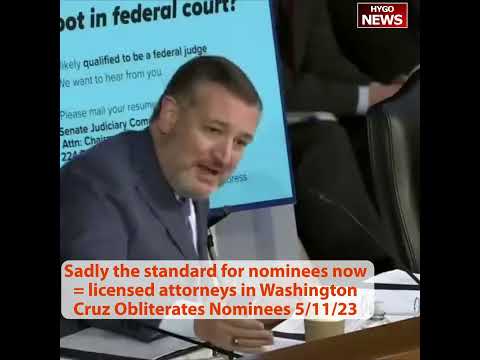
Cruz: Standard For Nominees Now “Licensed Attorneys In Washington” — Bechelgren Couldn’t Identify Brady
Senator Ted Cruz continued his May 2023 critique of Biden judicial nominee Charnell Bechelgren by citing additional knowledge gaps — specifically that Bechelgren could not identify Brady v. Maryland, a foundational first-year criminal law case requiring prosecutors to disclose exculpatory evidence to the defense. Cruz framed Bechelgren’s gap as catastrophic for criminal cases: “That’ll be a problem if she’s ever presiding over a criminal case.” Cruz then characterized the broader Democratic standard for nominees: “The standard for nominees now seems to be licensed attorneys in Washington. Have you ever handled a criminal case? You ever tried a jury trial? Have you ever stepped foot in federal court? Well then please contact Senate Democrats because you too can be a federal judge.”
The Brady V Maryland Reference
- 1963 Supreme Court case: Brady v. Maryland established disclosure requirement.
- Editorial reach: The case is foundational criminal law.
- Hearing record: The case is now in the formal record.
- Long arc: The case continued to shape criminal procedure.
- Long arc: The case fed Republican messaging on confirmations.
The Brady Knowledge Gap
- Cruz framing: Bechelgren said “I’m sorry, I don’t know what Brady is.”
- Editorial reach: The gap dramatized the qualification question.
- Hearing record: The gap is now in the formal record.
- Long arc: The gap remained central to Republican messaging.
- Long arc: The gap fed broader confirmation debates.
The Criminal Case Concern
- Cruz framing: “That’ll be a problem if she’s ever presiding over a criminal case.”
- Editorial reach: The framing dramatized practical implications.
- Hearing record: The framing is now in the formal record.
- Long arc: The framing remained central to messaging.
- Long arc: The framing fed broader confirmation debates.
The Committee Member Reference
- Cruz framing: “There are a number of members of this committee who have tried criminal cases.”
- Editorial reach: The reference dramatized basic legal knowledge.
- Hearing record: The reference is now in the formal record.
- Long arc: The reference fed Republican messaging.
- Long arc: The reference shaped confirmation debates.
The Standard For Nominees Framing
- Cruz framing: “The standard for nominees now seems to be licensed attorneys in Washington.”
- Editorial reach: The framing dramatized the broader critique.
- Hearing record: The framing is now in the formal record.
- Long arc: The framing remained central to Republican messaging.
- Long arc: The framing fed broader confirmation debates.
The Federal Court Experience
- Cruz framing: “Have you ever stepped foot in federal court?”
- Editorial reach: The framing dramatized experience gap.
- Hearing record: The framing is now in the formal record.
- Long arc: The framing remained central to Republican messaging.
- Long arc: The framing fed broader confirmation debates.
The Jury Trial Experience
- Cruz framing: “You ever tried a jury trial?”
- Editorial reach: The framing dramatized trial experience gap.
- Hearing record: The framing is now in the formal record.
- Long arc: The framing remained central to Republican messaging.
- Long arc: The framing fed broader confirmation debates.
The Hatred Quote Reference
- Cruz reference: Cruz referenced an earlier nominee.
- “Hatred for conservatives” framing: Earlier nominee said motivated by hatred.
- Editorial reach: The reference dramatized the broader critique.
- Hearing record: The reference is now in the formal record.
- Long arc: The reference fed Republican messaging.
The Senate Democrats Framing
- Cruz framing: “Senate Democrats says, sounds like a judge to me.”
- Editorial reach: The framing personalized the partisan critique.
- Hearing record: The framing is now in the formal record.
- Long arc: The framing remained central to Republican messaging.
- Long arc: The framing fed broader confirmation debates.
The Senate Judiciary Committee
- Committee role: The Senate Judiciary Committee handles judicial confirmations.
- Editorial reach: The committee shapes federal judicial confirmations.
- Hearing record: The committee context is now in the formal record.
- Long arc: The committee continued to be central through 2024.
- Long arc: The committee shaped judicial nominations.
The Republican Strategy
- Confirmation scrutiny: Republicans scrutinize Biden judicial nominees.
- Knowledge tests: Republicans use knowledge tests as confirmation tool.
- Public-facing posture: The strategy is designed for clip distribution.
- Editorial reach: The strategy shaped Republican messaging.
- Long arc: The strategy remained central to Republican messaging.
The Cruz Public Posture
- Senator Cruz: Senator Cruz used pointed criticism.
- Editorial reach: Cruz’s style became central to confirmation hearings.
- Hearing record: Cruz’s style is now in the formal record.
- Long arc: Cruz continued to question nominees through 2024.
- Long arc: Cruz shaped confirmation debates.
The Bechelgren Withdrawal
- Editorial reach: Bechelgren’s nomination eventually came to question.
- Hearing record: The withdrawal context is now in the formal record.
- Long arc: The nomination shaped subsequent confirmations.
- Long arc: The nomination fed broader confirmation debates.
- Long arc: The nomination remained a Republican messaging touchstone.
The Federal Judiciary
- Editorial reach: The federal judiciary is central to legal politics.
- Editorial line: Federal judges have lifetime appointments.
- Hearing record: The federal judiciary context is now in the formal record.
- Long arc: The federal judiciary continued through 2024.
- Long arc: The federal judiciary shaped legal politics.
The Democratic Response
- Democrats defended the nominee through committee process.
- Editorial reach: Democratic defenses shaped subsequent confirmation debates.
- Hearing record: The Democratic response is now in the formal record.
- Long arc: The defenses continued through 2024.
- Long arc: The defenses shaped confirmation debates.
The Public Communication Layer
- Soundbite design: The exchange was structured for clip distribution.
- Documentary value: The hearing record now contains a clean Republican framing.
- Media uptake: The clip moved on conservative media as a Republican response argument.
- Audience targeting: Cruz’s style is built for retail political distribution.
- Long arc: The framing remained central to Republican messaging through 2024.
The Constitutional Knowledge Gap
- Editorial reach: Bechelgren’s constitutional knowledge gap was a central concern.
- Hearing record: The knowledge gap is now in the formal record.
- Long arc: The knowledge gap shaped subsequent confirmations.
- Long arc: The knowledge gap fed Republican messaging.
- Long arc: The knowledge gap remained a Republican messaging touchstone.
The Confirmation Politics
- Editorial reach: Confirmation politics shape Senate dynamics.
- Hearing record: The confirmation context is now in the formal record.
- Long arc: Confirmation politics continued through 2024.
- Long arc: Confirmation politics shaped 2024 election positioning.
- Long arc: Confirmation politics fed Republican messaging.
The 2024 Implications
- Election positioning: Both parties used judicial confirmations for 2024 positioning.
- Court politics: Court politics shape Senate races.
- Long arc: The episode will shape judicial politics through 2024 and beyond.
- Hearing legacy: The hearing record will be cited in future confirmation debates.
- Long arc: The framing remains in circulation.
The Brady V Maryland Case
- 1963 ruling: The case requires prosecutorial disclosure of exculpatory evidence.
- Editorial reach: The ruling is fundamental to criminal law.
- Hearing record: The ruling context is now in the formal record.
- Long arc: The ruling continued to shape criminal procedure.
- Long arc: The ruling fed Republican messaging on confirmations.
Key Takeaways
- Cruz cited Bechelgren’s failure to identify Brady v. Maryland.
- Brady is a foundational first-year criminal law case.
- Cruz framed the gap as catastrophic for criminal cases.
- Cruz characterized Democratic nominee standard as “licensed attorneys in Washington.”
- Cruz challenged whether nominees had stepped foot in federal court.
- The exchange dramatized Republican opposition to the nomination.
Transcript Highlights
The following quotations are drawn from an AI-generated Whisper transcript of the hearing and should be considered unverified pending official transcript release.
- “Ask about Brady versus Maryland. What are the foundational criminal law classes?” — Sen. Cruz
- “She said, I’m sorry, I don’t know what Brady is” — Sen. Cruz
- “That’ll be a problem if she’s ever presiding over a criminal case” — Sen. Cruz
- “The standard for nominees now seems to be licensed attorneys in Washington” — Sen. Cruz
- “Have you ever stepped foot in federal court? Well then please contact Senate Democrats” — Sen. Cruz
- “We had a nominee earlier that this committee rubber stamped who said he woke up every morning motivated by his hatred for conservatives” — Sen. Cruz
Full transcript: 179 words transcribed via Whisper AI.