 HYGO News
 Q: You Gave 12 Institutions $241 Million — Penalize Candidates Espousing "Race Neutrality"
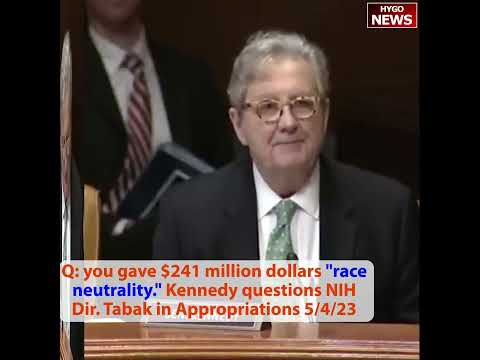
Q: You Gave 12 Institutions $241 Million — Penalize Candidates Espousing “Race Neutrality”
A senator pressed a federal agency witness on a 2020-era diversity grant program — the Faculty Institutional Recruitment for Sustainable Transformation (FIRST) — that distributed $241 million across 12 institutions to “demonstrate a strong commitment to promoting diversity and inclusive excellence” in faculty hiring. The senator alleged that two grantees — South Carolina and New Mexico — had implemented administrative rules that “punish candidates who apply for jobs with this money…who espouse, quote, race neutrality.” The exchange opened a politically charged line of oversight on federal diversity-in-hiring programs as the Supreme Court weighed the affirmative action cases that would land in June 2023.
The FIRST Program
- Program name: Faculty Institutional Recruitment for Sustainable Transformation, or FIRST.
- 2020 launch: The program was created in 2020 by an unnamed federal agency in the exchange.
- Funding scale: $241 million distributed across 12 institutions.
- Diversity goal: Funds were tied to “demonstrating a strong commitment to promoting diversity and inclusive excellence.”
- Hiring focus: The program centered on faculty hiring and recruitment.
The Race Neutrality Allegation
- South Carolina rule: The senator cited a South Carolina rule administering FIRST funds.
- New Mexico rule: The senator cited a New Mexico rule administering FIRST funds.
- Penalty framing: Both institutions allegedly imposed low scores on race-neutral candidates.
- Quoted phrase: “Punish candidates who apply…who espouse, quote, race neutrality.”
- Editorial line: The framing dramatized the disparity between federal money and stated equality principles.
The Background Of Students
- Quoted standard: Candidates were allegedly penalized for stating “an intention to ignore the varying backgrounds of their students.”
- DEI standard: The framing reflects a teaching-philosophy diversity standard.
- Race-conscious teaching: The standard rewards race-conscious teaching philosophies.
- Editorial line: The standard sits inside the broader DEI debate.
- Hearing record: The standard is now in the formal record.
The 2020 Program Origin
- Pandemic-era launch: The program launched during the 2020 pandemic and racial justice debates.
- Federal funding: $241 million represents a substantial investment.
- Editorial choice: The program reflects a policy choice during the 2020-21 racial reckoning.
- Hearing record: The origin context is now in the formal record.
- Long arc: The program will shape federal diversity-in-hiring debates for years.
The Affirmative Action Context
- SCOTUS cases: Students for Fair Admissions v. Harvard and UNC were pending at SCOTUS in 2023.
- June 2023 ruling: The Court would rule against race-conscious admissions in June 2023.
- Spillover effect: The ruling would reshape federal diversity programs.
- Editorial reach: The exchange anticipated the SCOTUS decision.
- Hearing record: The exchange is now in the formal record.
The Republican Strategy
- DEI scrutiny: Republicans have targeted federal DEI programs for oversight.
- Race-neutrality framing: The race-neutrality framing follows the SCOTUS line of argument.
- Public-facing posture: The strategy is designed for clip distribution.
- Long arc: DEI scrutiny remains central to Republican higher education oversight.
- Hearing impact: The exchange placed the program on the formal record.
The Federal Agency Role
- Grant administration: The federal agency administered the FIRST program.
- Subgrantee oversight: Institutions implemented their own administrative rules.
- Pass-through funding: The federal-to-state pass-through structure complicates oversight.
- Editorial line: The federal agency bore responsibility for ensuring constitutional implementation.
- Hearing record: The agency role is now in the formal record.
The South Carolina Rule
- Administrative implementation: South Carolina implemented its own rule administering FIRST funds.
- Penalty framing: The rule allegedly penalized race-neutral candidates.
- Public university structure: South Carolina’s public university system implemented the rule.
- Editorial line: State implementation gave the program varied execution across geographies.
- Hearing record: The South Carolina rule is now in the formal record.
The New Mexico Rule
- Administrative implementation: New Mexico implemented its own rule administering FIRST funds.
- Penalty framing: The rule allegedly penalized race-neutral candidates.
- Public university structure: New Mexico’s public university system implemented the rule.
- Editorial line: State implementation gave the program varied execution across geographies.
- Hearing record: The New Mexico rule is now in the formal record.
The Penalty Mechanic
- Low score: Candidates espousing race neutrality allegedly received “a very low score.”
- Hiring exclusion: Low scores effectively excluded candidates from consideration.
- Editorial line: The mechanic operated as de facto disqualification rather than formal exclusion.
- Hearing record: The mechanic is now in the formal record.
- Constitutional question: The mechanic raises Title VII and constitutional questions.
The Diversity Statement Debate
- Diversity statements: Many universities require diversity statements in faculty hiring.
- Statement function: Statements function as filters across teaching and research practice.
- Editorial line: The statement requirement is itself a contested practice.
- Hearing record: The statement requirement context is now in the formal record.
- Long arc: The statement debate has continued to shape university hiring practice.
The DEI Backlash
- Florida posture: Florida has limited public university DEI spending.
- Texas posture: Texas has imposed restrictions on DEI offices.
- North Carolina: North Carolina has restricted public university DEI activity.
- Editorial reach: Multiple state legislatures have moved against DEI infrastructure.
- Hearing record: The state-level moves give the federal exchange political resonance.
The Federal Funding Layer
- $241 million scale: $241 million is substantial federal investment.
- Pass-through complications: Federal-to-state pass-through complicates oversight.
- Constitutional spillover: Federal involvement raises Equal Protection questions.
- Editorial reach: Federal funding gives the exchange constitutional resonance.
- Hearing record: The federal funding context is now in the formal record.
The 2020 Racial Reckoning
- George Floyd context: 2020 saw the George Floyd-era racial justice movement.
- DEI expansion: 2020-21 saw substantial expansion of DEI infrastructure.
- Federal program response: Federal programs reflected the broader DEI expansion.
- Editorial reach: The 2020 context shaped federal program design.
- Hearing record: The 2020 context is now in the formal record.
The SCOTUS Spillover
- June 2023 ruling: The Court ruled against race-conscious admissions in June 2023.
- Spillover effect: The ruling spilled over into federal diversity programs.
- Editorial reach: Federal programs faced reformulation in light of the ruling.
- Hearing record: The exchange anticipated the spillover.
- Long arc: The ruling will reshape federal diversity programs for years.
The Constitutional Question
- Equal Protection: The Equal Protection Clause governs race-conscious government action.
- Title VII: Title VII governs employment discrimination.
- State action: Public universities are state actors subject to constitutional constraints.
- Editorial reach: The constitutional questions sit beneath the policy debate.
- Hearing record: The constitutional context is now in the formal record.
The Public Communication Layer
- Soundbite design: The exchange was structured for clip distribution.
- Documentary value: The hearing record now contains a clean Republican DEI framing.
- Media uptake: The clip moved on conservative media as a Republican DEI argument.
- Audience targeting: The senator’s style is built for retail political distribution.
- Long arc: The framing remained central to Republican messaging through 2024.
The Democratic Response
- Diversity defense: Democrats defend diversity-in-hiring as legitimate policy goal.
- Constitutional framing: Democrats argue race-conscious programs can satisfy strict scrutiny.
- Substantive engagement: Democratic senators have pushed back on Republican DEI framing.
- Editorial line: The political layer of the debate complicates substantive engagement.
- Hearing posture: Democratic senators offered alternative framings during the same hearings.
The 2024 Implications
- Election positioning: Both parties use DEI policy for 2024 positioning.
- Higher education politics: Higher education politics shape Senate races.
- Constitutional aftermath: The 2023 SCOTUS ruling shapes the 2024 policy environment.
- Long arc: The episode will shape DEI policy through 2024 and beyond.
- Hearing legacy: The hearing record will be cited in future DEI debates.
Key Takeaways
- A senator pressed an agency witness on the FIRST program — $241 million across 12 institutions.
- The senator alleged South Carolina and New Mexico imposed low scores on race-neutral candidates.
- The candidates allegedly penalized were those expressing intent to “ignore the varying backgrounds of their students.”
- The exchange opened a Republican oversight line on federal diversity-in-hiring programs.
- The exchange anticipated the June 2023 SCOTUS ruling on race-conscious admissions.
- The framing remains central to Republican higher education oversight.
Transcript Highlights
The following quotations are drawn from an AI-generated Whisper transcript of the hearing and should be considered unverified pending official transcript release.
- “In 2020, you created a program called the Faculty Institutional Recruitment for Sustainable Transformation” — senator
- “You gave 12 institutions $241 million, a lot of Jack in anybody’s book” — senator
- “Demonstrate a strong commitment to promoting diversity and inclusive excellence when you hire people” — senator quoting program
- “South Carolina and New Mexico issued rules to administer the money that you gave them” — senator
- “Punish candidates who apply for jobs with this money…who espouse, quote, race neutrality” — senator
- “An intention to ignore the varying backgrounds of their students” — senator quoting rule
Full transcript: 117 words transcribed via Whisper AI.