 HYGO News
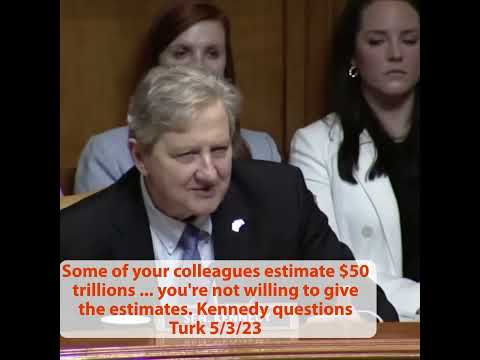
 Q: Some Colleagues Estimate $50 Trillion — You're Not Willing To Give The Estimates
Q: Some Colleagues Estimate $50 Trillion — You’re Not Willing To Give The Estimates
A senator pressed the deputy secretary of energy to provide a specific estimate of how much U.S. carbon neutrality by 2050 would actually reduce world temperatures — given that some of her colleagues had estimated the cost at $50 trillion. The witness pivoted to global emissions framing: “every country around the world needs to get its act together. Our emissions are about 13% of global emissions.” The senator pulled the witness back to the temperature reduction question. The witness pivoted again to “net cost” benefit framing. The exchange dramatized the second specificity gap in Net Zero accountability — not just cost, but the temperature impact of bearing that cost.
The 50 Trillion Marker
- Colleagues’ estimate: The senator cited “some of your colleagues” estimating $50 trillion.
- Witness disappointment: The senator expressed disappointment at the witness’s lack of specificity.
- “Whole new host of problems”: The senator framed estimate-less advocacy as a problem.
- 2050 target: The witness endorsed carbon neutrality by 2050.
- Editorial line: The exchange tightened the accountability frame.
The Temperature Question
- Direct ask: How much would $50T in U.S. spending reduce world temperatures?
- 13% framing: The witness said U.S. emissions are about 13% of global emissions.
- Global cooperation: The witness pivoted to global cooperation as the policy frame.
- Editorial line: The exchange exposed the temperature-impact gap in U.S.-only Net Zero policy.
- Hearing record: The exchange entered the formal record.
The Net Cost Framing
- Witness pivot: The witness pivoted to “net cost” benefit framing.
- Cost-saving claim: The framing follows standard climate economics positioning.
- Specific number: The witness did not provide a specific temperature impact number.
- Editorial reach: The pivot dramatized the unresolved temperature-impact question.
- Hearing impact: The exchange placed the gap on the formal record.
The U.S. Share Of Global Emissions
- 13% global share: The witness cited 13% as the U.S. share of global emissions.
- Historical share: The U.S. has been the largest historical emitter cumulatively.
- China share: China is now the largest annual emitter.
- Trajectory: The U.S. share is declining as emerging economies grow.
- Editorial reach: The 13% figure shapes the Net Zero policy debate.
The Global Cooperation Framing
- Universal action: The witness emphasized universal action as the policy frame.
- Free rider concern: The framing acknowledges the free rider problem.
- Paris Agreement: The 2015 Paris Agreement provides the cooperation framework.
- Nationally determined contributions: Each country sets its own targets and timelines.
- Editorial reach: International coordination shapes domestic cost questions.
The Temperature Impact Math
- Linear approximation: Linear approximations suggest 13% × global temperature impact.
- Climate models: Climate models include nonlinear feedbacks.
- Tipping point concerns: Tipping point concerns drive the cooperation framing.
- Distributional effects: Damages fall unevenly across regions.
- Editorial reach: Specific temperature math is contested across disciplines.
The Republican Strategy
- Specificity demand: Republicans use temperature-impact questions to expose specificity gaps.
- Cost accountability: The combination of cost and temperature questions tightens the frame.
- Free rider concern: Republicans use the global cooperation framing against unilateral action.
- Public-facing posture: The strategy is designed for clip distribution.
- Long arc: Temperature-impact questions remain central to Republican Net Zero opposition.
The Witness Posture
- General advocacy: The witness defended the 2050 target as appropriate.
- Cost framing: The witness emphasized cost of inaction over cost of action.
- Specific numbers: The witness could not produce specific cost or temperature figures.
- Editorial line: The posture reflected typical advocacy positioning.
- Hearing record: The exchange exposed the specificity gap.
The Deputy Secretary Role
- Witness identification: The witness was identified as the deputy secretary of energy.
- Department of Energy role: DoE coordinates federal energy and climate policy.
- IRA implementation: DoE coordinates much of IRA energy spending.
- Editorial weight: The deputy secretary level gives the testimony official policy weight.
- Hearing impact: The exchange placed the gap into a formal policy testimony record.
The 50 Trillion Validation
- Senator framing: The senator pressed the witness to validate or rebut the $50T figure.
- No witness rebuttal: The witness did not contest the $50T figure.
- Net cost framing: The witness pivoted to net cost benefit framing.
- Editorial value: The exchange placed a specific large number into the policy record.
- Hearing impact: The number was floated as a hypothetical, not adopted as a finding.
The Climate Economics Layer
- Integrated assessment models: Estimates rely on integrated assessment models with wide bands.
- Discount rate sensitivity: Estimates are sensitive to discount rate assumptions.
- Damage function: The damage function from inaction is itself contested.
- Net cost framing: Climate economists frequently frame transition as net positive.
- Editorial line: Wide modeling variance complicates clean political answers.
The Free Rider Problem
- Universal action need: Net Zero requires universal or near-universal action.
- Free rider risk: Free riders can capture benefits without bearing costs.
- Trade implications: Free riding has implications for international trade policy.
- Carbon border adjustments: Border adjustments aim to address free riding.
- Editorial reach: Free riding is a central tension in international climate policy.
The IRA Spending Context
- 2022 IRA: The Inflation Reduction Act included approximately $370 billion in climate spending.
- Tax credit framework: Most spending operates through expanded tax credits.
- Industrial policy: The IRA combines climate and industrial policy goals.
- Cost projections: Cost projections have risen materially since IRA passage.
- Editorial reach: The IRA represents the largest single climate investment in U.S. history.
The Energy Economy Transformation
- Scale of change: The transformation requires reshaping the entire energy economy.
- Power generation: Power generation must shift toward zero-carbon sources.
- Transportation: Transportation must shift away from internal combustion.
- Buildings: Building heating must shift away from natural gas in many contexts.
- Industrial processes: Industrial processes must shift toward zero-carbon inputs.
The Temperature Reduction Specificity
- Lukewarm models: Some climate models suggest modest temperature impact from current policy.
- Nordhaus framework: Nordhaus integrated assessment treats temperature as policy variable.
- Tipping points: Tipping point concerns complicate linear extrapolation.
- Editorial reach: Specific temperature math remains contested.
- Hearing impact: The exchange exposed the political vulnerability of advocacy without specifics.
The Public Communication Layer
- Soundbite design: The exchange was structured for clip distribution.
- Documentary value: The hearing record now contains a clean Republican accountability framing.
- Media uptake: The clip moved on conservative media as a Republican Net Zero argument.
- Audience targeting: The folksy senatorial style is built for retail political distribution.
- Long arc: The framing remained central to Republican messaging through 2024.
The Democratic Response
- Cost-of-inaction framing: Democrats lean on cost of inaction over cost of action.
- Investment framing: They frame transition spending as investment rather than cost.
- Technology optimism: They emphasize cost declines in clean technologies.
- Global cooperation: Democrats emphasize global cooperation as the policy frame.
- Hearing posture: Democratic senators offered alternative framings during the same hearings.
The Carbon Border Adjustment
- EU CBAM: The EU has introduced a Carbon Border Adjustment Mechanism.
- U.S. proposals: U.S. proposals for similar mechanisms have been introduced.
- Trade tension: Border adjustments create trade tensions with non-Net Zero economies.
- Industrial competitiveness: Border adjustments protect domestic industrial competitiveness.
- Editorial reach: Border adjustments will reshape global trade in carbon-intensive goods.
The 2024 Implications
- Election positioning: Both parties use Net Zero policy for 2024 positioning.
- Energy state politics: Energy state politics shape Senate races.
- Industrial policy framing: Net Zero spending sits inside broader industrial policy debates.
- Long arc: The episode will shape climate policy through 2024 and beyond.
- Hearing legacy: The hearing record will be cited in future climate debates.
The Witness Discipline Gap
- Specificity gap: The witness defended the goal but could not produce specifics.
- Editorial line: The gap is typical for advocacy witnesses without operational responsibility.
- Hearing impact: The exchange placed the gap on the formal record.
- Future preparation: Future witnesses are likely to come prepared with specific numbers.
- Long arc: The episode will shape future Net Zero hearing testimony.
Key Takeaways
- A senator pressed the deputy secretary of energy on $50 trillion cost estimates.
- The witness was asked how much that spending would reduce world temperatures.
- The witness pivoted to global emissions framing — U.S. share is 13%.
- The witness pivoted again to net cost benefit framing.
- The exchange dramatized the second accountability gap in Net Zero advocacy.
- Both cost and temperature impact specifics remain unsettled in policy testimony.
Transcript Highlights
The following quotations are drawn from an AI-generated Whisper transcript of the hearing and should be considered unverified pending official transcript release.
- “Some of your colleagues estimate 50 trillion and it disappoints me that you’re not willing to give the estimate” — senator
- “If it costs 50 trillion dollars…how much is that going to lower world temperature?” — senator
- “Every country around the world needs to get its act together. Our emissions are about 13% of global emissions” — witness
- “If we spend 50 trillion dollars to become carbon neutral in the United States of America by 2050…how much that is going to reduce world temperatures” — senator
- “First of all, it’s a net cost” — witness
- “I’m all for carbon neutrality, by the way” — senator
Full transcript: 179 words transcribed via Whisper AI.