 HYGO News
 Q: Is That Moral? Is That Constitutional? "Only Hire Asian Americans, Anybody Else Need Not Apply"
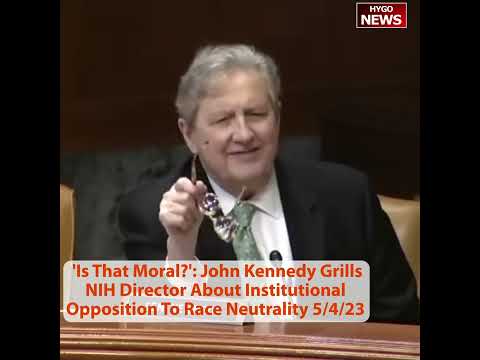
Q: Is That Moral? Is That Constitutional? “Only Hire Asian Americans, Anybody Else Need Not Apply”
A senator continued an oversight sequence on the NIH Faculty Institutional Recruitment for Sustainable Transformation (FIRST) program by escalating the constitutional and moral framing. He posed a stark hypothetical: “Can I, as an American, legally, constitutionally, morally say, I’m only going to hire Asian Americans? Anybody else of any different ethnic background need not apply. Is that moral? Is that constitutional?” The witness — disclaiming legal expertise — pivoted to faculty-hiring complexity. The senator pulled the witness back to the colorblind equality candidate and the “big old hook” hypothetical: “Do you think it’s right for an institution…to say, if you believe in racial equality and you say, you want to treat everybody the same…you’re not going to be hired?” The witness deferred again. The senator promised follow-up.
The Constitutional Hypothetical
- Direct question: “Can I, as an American, legally, constitutionally, morally say, I’m only going to hire Asian Americans?”
- Reductio framing: The framing tested the witness on a clearly impermissible hiring standard.
- “Need not apply” framing: The framing invoked the historical exclusion language.
- Editorial line: The framing dramatized the constitutional question beneath FIRST.
- Hearing record: The framing is now in the formal record.
The Witness Deflection
- “I’m not a lawyer”: The witness disclaimed legal expertise.
- “But you’re a human being”: The senator pulled the witness back to moral framing.
- Hiring complexity pivot: The witness pivoted to “multi-step” faculty hiring.
- Editorial line: The pivot avoided the constitutional and moral question.
- Hearing record: The pivot is now in the formal record.
The Moral Question
- Senator framing: The senator framed the question as moral as well as legal.
- “Is that moral? Is that constitutional?”: The senator placed both questions on the record.
- Witness response: The witness did not directly answer either question.
- Editorial line: The framing dramatized the moral dimension of the policy debate.
- Hearing record: The framing is now in the formal record.
The Big Old Hook Hypothetical
- Vivid imagery: The senator used “a big old hook comes out and around their neck and pulls them off the stage.”
- Vaudeville reference: The imagery invokes vaudeville-era stage-removal of failed performers.
- Colorblind equality candidate: The hypothetical centered on a candidate stating colorblind equality.
- “Not going to be hired” framing: The candidate is summarily disqualified under the rule.
- Editorial line: The imagery dramatized the operational impact of the rule.
The Equality Candidate
- “Believe in racial equality”: The candidate’s framing.
- “Treat everybody the same”: The follow-up framing.
- Colorblind philosophy: The framing reflects colorblind equality philosophy.
- Editorial reach: The framing aligns with mainstream civil rights tradition.
- Hearing record: The framing is now in the formal record.
The Witness Pivot
- Context need: The witness said “I would need to understand the context.”
- Future investigation: The witness offered to “find out” what institutions were saying.
- Editorial line: The pivot continued the witness’s pattern of declining specifics.
- Hearing record: The pivot is now in the formal record.
- Long arc: The pivot pattern is typical of agency oversight hearings.
The Senator Follow-Up Promise
- “I’m gonna follow up”: The senator promised follow-up oversight.
- Editorial value: The promise placed the program on continuing oversight watch.
- Hearing record: The promise is now in the formal record.
- Long arc: Continuing oversight will track institutional rule changes post-SCOTUS.
- Long arc: Republican oversight on FIRST and similar programs continues.
The Republican Strategy
- Constitutional reductio: Republicans use reductio hypotheticals to expose policy.
- Moral framing: Republicans frame the policy debate in moral as well as legal terms.
- Public-facing posture: The strategy is designed for clip distribution.
- Long arc: The approach remains central to Republican higher education oversight.
- Hearing impact: The exchange placed the constitutional question on the formal record.
The Witness Discipline
- Specifics declined: The witness declined to opine on specific institutional rules.
- Future investigation: The witness offered to investigate the rules.
- Substantive pivot: The witness pivoted to general DEI defense.
- Editorial line: The discipline reflected typical agency hearing posture.
- Hearing record: The discipline is now in the formal record.
The Asian American Reductio
- Reductio framing: The hypothetical tested the witness with a clearly impermissible standard.
- Asian American context: The choice of “Asian Americans” tracks the SCOTUS affirmative action plaintiffs.
- Editorial reach: The framing acknowledged the SCOTUS plaintiffs without naming them directly.
- Hearing record: The framing is now in the formal record.
- Long arc: The framing will be cited in future affirmative action debates.
The SCOTUS Plaintiff Context
- Students for Fair Admissions: The 2023 SCOTUS plaintiff was Students for Fair Admissions.
- Asian American plaintiffs: The plaintiff included Asian American students alleging discrimination.
- Editorial reach: The Asian American framing tracks the SCOTUS plaintiffs.
- Hearing record: The framing connects to the SCOTUS context.
- Long arc: The Asian American framing has become a central civil rights frame.
The Equal Protection Framework
- Strict scrutiny: Race-conscious government action triggers strict scrutiny.
- Compelling interest: Strict scrutiny requires a compelling government interest.
- Narrow tailoring: Strict scrutiny requires narrow tailoring.
- Editorial reach: Most race-conscious programs face high constitutional bars.
- Hearing record: The Equal Protection framework sits beneath the policy debate.
The Title VII Layer
- Employment context: Title VII governs employment discrimination.
- Public university context: Public universities are state actors subject to additional constraints.
- Editorial reach: Title VII provides federal employment discrimination remedies.
- Hearing record: The Title VII context is now in the formal record.
- Long arc: Title VII enforcement may follow SCOTUS affirmative action rulings.
The Multi-Step Hiring Process
- Witness framing: The witness pivoted to multi-step hiring complexity.
- Editorial line: The pivot avoided direct engagement with the constitutional question.
- Faculty hiring practice: Faculty hiring typically involves search committees and multiple stages.
- Editorial reach: The complexity framing is a typical defense of contested hiring practices.
- Hearing record: The complexity framing is now in the formal record.
The Affirmative Action Context
- SCOTUS cases: Students for Fair Admissions v. Harvard and UNC were pending at SCOTUS in 2023.
- June 2023 ruling: The Court would rule against race-conscious admissions in June 2023.
- Spillover effect: The ruling would reshape federal diversity programs.
- Editorial reach: The exchange anticipated the SCOTUS decision.
- Hearing record: The exchange is now in the formal record.
The Federal Funding Layer
- $241 million scale: $241 million is substantial federal investment.
- Pass-through complications: Federal-to-state pass-through complicates oversight.
- Constitutional spillover: Federal involvement raises Equal Protection questions.
- Editorial reach: Federal funding gives the exchange constitutional resonance.
- Hearing record: The federal funding context is now in the formal record.
The 2020 Racial Reckoning
- George Floyd context: 2020 saw the George Floyd-era racial justice movement.
- DEI expansion: 2020-21 saw substantial expansion of DEI infrastructure.
- Federal program response: Federal programs reflected the broader DEI expansion.
- Editorial reach: The 2020 context shaped federal program design.
- Hearing record: The 2020 context is now in the formal record.
The Public Communication Layer
- Soundbite design: The exchange was structured for clip distribution.
- Documentary value: The hearing record now contains a clean Republican constitutional framing.
- Media uptake: The clip moved on conservative media as a Republican DEI argument.
- Audience targeting: The senator’s style is built for retail political distribution.
- Long arc: The framing remained central to Republican messaging through 2024.
The Democratic Response
- Diversity defense: Democrats defend diversity-in-hiring as legitimate policy goal.
- Constitutional framing: Democrats argue race-conscious programs can satisfy strict scrutiny.
- Substantive engagement: Democratic senators have pushed back on Republican DEI framing.
- Editorial line: The political layer of the debate complicates substantive engagement.
- Hearing posture: Democratic senators offered alternative framings during the same hearings.
The 2024 Implications
- Election positioning: Both parties use DEI policy for 2024 positioning.
- Higher education politics: Higher education politics shape Senate races.
- Constitutional aftermath: The 2023 SCOTUS ruling shapes the 2024 policy environment.
- Long arc: The episode will shape DEI policy through 2024 and beyond.
- Hearing legacy: The hearing record will be cited in future DEI debates.
Key Takeaways
- The senator escalated to a constitutional reductio: hire only Asian Americans, exclude others?
- The framing tested the witness on a clearly impermissible hiring standard.
- The witness disclaimed legal expertise and pivoted to hiring complexity.
- The senator returned to the colorblind equality candidate facing summary disqualification.
- The witness deferred, citing need for context.
- The senator promised follow-up oversight on FIRST program operations.
Transcript Highlights
The following quotations are drawn from an AI-generated Whisper transcript of the hearing and should be considered unverified pending official transcript release.
- “Can I, as an American, legally, constitutionally, morally say, I’m only going to hire Asian Americans?” — senator
- “Anybody else of any different ethnic background need not apply. Is that moral? Is that constitutional?” — senator
- “Well, God knows I’m not a lawyer, but sir” — witness
- “But you’re a human being” — senator
- “If you believe in racial equality and you say, you want to treat everybody the same…big old hook comes out and around their neck and pulls them off the stage” — senator
- “I would need to understand the context, sir” — witness
Full transcript: 177 words transcribed via Whisper AI.