 HYGO News
 Q: ESG Policies, ever fired employees for religious beliefs? A: 'I personally am not aware of this'
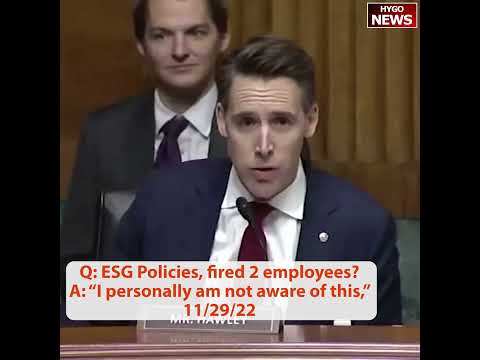
Senator: “That’s Extraordinary — You’re Being Sued by the Federal Government, You’ve Settled the Suit, and You Don’t Know About It?” — Kroger CEO Repeatedly Claims Ignorance of Own Company’s Religious Discrimination Case
On 12/4/2022, a senator pressed Kroger CEO Rodney McMullen on whether the company had ever fired employees for religious beliefs. McMullen’s answer: “Not that I’m aware of.” The senator then walked through the contradiction with facts Senator Cotton had already established — that the company had just settled an EEOC lawsuit for $180,000 after firing religious employees in Arkansas. McMullen stuck with his story: “I personally am not aware of the details of that.” The senator pressed further: “How is that possible? You’re being sued by the federal government. You’ve settled the suit and you don’t know about it?” McMullen responded: “No, I do not always know about it.” The senator’s reaction: “That’s extraordinary. Do your shareholders know about that? What else do you not know about?”
The Initial ESG Framing
McMullen opened with a defense of Kroger’s diversity practices. “In terms of diversity, equity, and inclusion. That means including everybody, and we do not make judgments on anybody in terms of any of their personal beliefs, and do not think that’s appropriate either,” McMullen said.
The framing was corporate boilerplate. “DEI means including everybody” was the standard response to any questions about whether DEI policies could conflict with specific employee groups. “We don’t make judgments on personal beliefs” was meant to reassure senators that religious employees were welcome at Kroger.
The senator tested this claim. “So that includes people of faith, I think is what you’re saying,” the senator said.
“It includes everything,” McMullen replied.
“Everything” was a broad commitment. If Kroger’s inclusion genuinely extended to everything — including religious beliefs — then specific cases of religious discrimination would contradict the claim. The senator was setting up exactly this contradiction.
”Not That I’m Aware Of”
The senator then asked the specific question. “So has your company ever fired an employee or disciplined an employee for their religious beliefs?” the senator asked.
McMullen’s response: “Not that I’m aware of.”
The answer was striking because it directly contradicted the EEOC case that Senator Cotton had just detailed extensively during the same hearing. Two Kroger employees had been fired in Arkansas for religious beliefs. The company had paid $180,000 to settle the federal religious discrimination lawsuit. These facts were a matter of public record and had been discussed at length in the hearing just minutes earlier.
Yet McMullen, CEO of Kroger, was claiming he wasn’t aware of firings for religious beliefs. Either:
He genuinely didn’t remember what had been discussed in the hearing minutes earlier — which would be remarkable for a corporate CEO testifying before Congress.
He was distinguishing between firings “for religious beliefs” (his denial) and firings “for refusing to wear the apron” (the actual facts) — a distinction without meaningful difference.
He was simply lying — providing false testimony to Congress about a matter that had been discussed earlier in the same hearing.
None of these interpretations reflected well on the CEO.
The Cotton Reference
The senator immediately confronted the contradiction. “Well, that’s interesting because Senator Cotton just read at some length into the record an EEOC lawsuit, that’s a government lawsuit, which your company just settled after an adverse ruling by a federal district court in which you apparently took disciplinary action to the extent of firing employees in Arkansas based on their religious beliefs,” the senator said.
The walkthrough was detailed and unavoidable:
“Senator Cotton just read at some length” — The facts had been discussed extensively by a colleague.
“EEOC lawsuit, that’s a government lawsuit” — The case was a federal enforcement action.
“Your company just settled” — Kroger had paid money to end the case.
“An adverse ruling by a federal district court” — The company had lost a summary judgment motion.
“Disciplinary action to the extent of firing employees” — The company had terminated employees.
“In Arkansas based on their religious beliefs” — The specific state and legal basis were established.
The senator was walking McMullen through a factual chain that was essentially undeniable. At every step, McMullen would have to either confirm or explicitly deny facts that were already on the record.
”Do You Think That’s Workplace Inclusion?”
The senator then connected the facts to McMullen’s earlier DEI framing. “Do you think that’s workplace inclusion?” the senator asked.
The question was rhetorical but devastating. McMullen had just claimed that Kroger’s DEI practices included “everything” — meaning all employees, including religious employees. The EEOC settlement demonstrated that Kroger had not included these specific religious employees; they had been fired. The question forced McMullen to either:
Defend the firings as consistent with inclusion — which would have been impossible given the $180,000 federal discrimination settlement.
Acknowledge the firings as inconsistent with inclusion — which would have contradicted his earlier testimony.
Plead ignorance again — which was the path McMullen chose.
”I Personally Am Not Aware”
McMullen’s response was a more elaborate version of his earlier non-answer. “Well, as I told Senator Cotton, I personally am not aware of the details of that,” McMullen said.
The “personally” qualifier was doing significant work. McMullen wasn’t saying Kroger didn’t know about the case — he was saying he personally wasn’t aware of the details. This was a narrower claim. It potentially allowed the company to have known about the case through other channels (legal department, HR, etc.) while the CEO himself remained personally uninformed.
But this narrower claim was still remarkable. The CEO of a major public company should personally be aware of federal civil rights lawsuits against the company, particularly ones that resulted in six-figure settlements. Corporate governance requires CEO oversight of significant legal matters. A CEO who doesn’t personally know about federal discrimination settlements is failing a basic function of the role.
”How Is That Possible?”
The senator asked the obvious follow-up. “How is that possible? You’re being sued by the federal government. You’ve settled the suit and you don’t know about it?” the senator asked.
The question captured the absurdity of McMullen’s position. Each element of the scenario made CEO ignorance less plausible:
Being sued by the federal government — Major legal event requiring executive attention.
Settling the suit — Corporate decision requiring executive approval.
Not knowing about it — Implausible given the above.
The senator’s disbelief was evident in the phrasing. “How is that possible?” wasn’t a rhetorical question; it was a genuine challenge to McMullen’s claim. If the senator believed McMullen genuinely didn’t know, the senator might not have phrased the question this way.
”No, I Do Not Always Know About It”
McMullen then made the statement that would be most damaging. “No, I do not always know about it,” McMullen said.
This was a categorical admission that went beyond the specific case. McMullen wasn’t just saying he didn’t know about the Arkansas religious discrimination case; he was saying he didn’t always know about federal government lawsuits against Kroger.
The implications were severe:
Multiple federal lawsuits exist — The “not always” implied that federal lawsuits against Kroger were common enough that systematic CEO awareness was impractical.
CEO oversight was limited — The CEO was acknowledging that he wasn’t systematically informed about federal enforcement actions.
Corporate governance gaps existed — If major legal matters didn’t reach the CEO, other governance processes might be similarly failing.
”That’s Extraordinary”
The senator’s reaction captured the gravity. “That’s extraordinary. Do your shareholders know about that? What else do you not know about?” the senator said.
“That’s extraordinary” was understatement given the stakes. A CEO of a publicly traded multi-billion-dollar corporation had just admitted he didn’t always know about federal lawsuits against the company. This was not a minor governance issue — it was a fundamental problem with CEO oversight of corporate operations.
The shareholders question was pointed. Kroger shareholders had fiduciary interests in how the company was managed. Federal lawsuits could result in significant financial liability. If the CEO wasn’t tracking federal lawsuits, shareholders weren’t getting the informed leadership their ownership presumed.
“What else do you not know about?” opened an even broader line of inquiry. If McMullen didn’t know about the Arkansas religious discrimination case despite the $180,000 settlement, what other corporate matters might he be unaware of? The question suggested that McMullen’s professed ignorance might extend far beyond this specific case.
The Testimony Implications
McMullen’s testimony created several ongoing problems:
Credibility issues — Saying “not aware” about matters that had been discussed in the same hearing undermined his overall credibility.
Governance concerns — The admission that he didn’t always know about federal lawsuits raised systemic concerns about Kroger’s oversight.
Political vulnerability — His testimony provided additional ammunition for critics of the Kroger-Albertsons merger.
Legal exposure — Congressional testimony is given under oath, and false testimony can have legal consequences.
Shareholder litigation risk — Admissions about governance gaps could support shareholder lawsuits alleging insufficient executive oversight.
Key Takeaways
- A senator asked Kroger CEO Rodney McMullen if the company had ever fired employees for religious beliefs; McMullen said “Not that I’m aware of.”
- This directly contradicted the $180,000 EEOC religious discrimination settlement that had been discussed extensively in the same hearing.
- Confronted with the contradiction, McMullen claimed “I personally am not aware of the details.”
- When the senator asked how it was possible for a CEO not to know about federal lawsuits against his company, McMullen said “No, I do not always know about it.”
- The senator called this admission “extraordinary” and asked “Do your shareholders know about that? What else do you not know about?”
Transcript Highlights
The following is transcribed from the video audio (unverified — AI-generated from audio).
- In terms of diversity, equity, and inclusion. That means including everybody.
- So has your company ever fired an employee or disciplined an employee for their religious beliefs? — Not that I’m aware of.
- Senator Cotton just read at some length into the record an EEOC lawsuit, which your company just settled after an adverse ruling by a federal district court.
- I personally am not aware of the details of that.
- How is that possible? You’re being sued by the federal government. You’ve settled the suit and you don’t know about it? — No, I do not always know about it.
- That’s extraordinary. Do your shareholders know about that? What else do you not know about?
Full transcript: 190 words transcribed via Whisper AI.