 HYGO News
 Q: did you write Christian coalition are bigots? A: I do not agree with that today. Harvard junior?
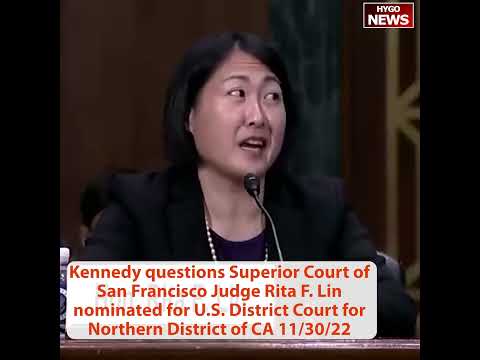
Senator Confronts Biden Judicial Nominee With Her Own Harvard-Era Writing Calling Christian Coalition Members “Bigots”
On 12/3/2022, during a Senate Judiciary Committee hearing on a Biden judicial nominee, a senator confronted the nominee with her own writing from her Harvard days characterizing Christian Coalition members as “bigots.” The nominee had written the statement at age 20, three-quarters of the way through her Harvard education. The senator read the quote back to her, asked if she wrote it, and forced her to acknowledge that she had — while also attempting to establish that she no longer held that view. The exchange highlighted how judicial nominees’ past writings, particularly those expressing hostility toward specific religious groups, became significant hurdles in Senate confirmation hearings.
The Quote in Question
The senator read from the nominee’s prior writing. “There are personal beliefs that often result from religious experiences, close parentheses, but that they are bigots. End of quote. Did I quote that correctly?” the senator asked.
The nominee confirmed the accuracy of the quote. “I believe you did,” she said.
The quote’s structure — with “close parentheses” read aloud — suggested it was a partial quotation where the senator was citing a specific phrase from within a longer passage. The complete context would have included what preceded the “but that they are bigots” conclusion, presumably some discussion of Christian Coalition members or religious conservatives broadly.
The substance of the quote was significant. Characterizing members of a specific religious organization as “bigots” was a strong statement that implied moral judgment against people who held particular religious views. For a judicial nominee — someone who would potentially rule on cases involving religious freedom, religious organizations, or laws affecting religious practice — such a statement raised questions about impartiality.
”I Did Write That”
The senator then asked if the nominee wrote the quote. “Did you write that?” the senator asked.
The nominee confirmed authorship. “I did write that when I was 18 years old. I did, or 20 years old, excuse me.”
The immediate self-correction from “18 years old” to “20 years old” was important. The nominee was attempting to position the writing as a youthful indiscretion from her teenage years. But she corrected herself because the actual age — 20 years old — was more mature. The correction suggested she was aware that 18 seemed more excusable than 20, but the accurate age was the less favorable one.
“I do want to be clear. I do not agree with that today. I wrote that before I went to law school, before I had any kind of professional…” the nominee added.
The “I do not agree with that today” disclaimer was the standard formulation used by nominees facing embarrassing prior statements. It acknowledges the writing existed while claiming evolved thinking had replaced the prior view.
”You Were a Grown Woman”
The senator pushed back on the youthful-indiscretion framing. “You were a grown woman when… I’m sorry. You were a grown woman when you wrote this,” the senator said.
The “grown woman” framing was important because it addressed the age-based excuse. Twenty years old is legally an adult in the United States. A 20-year-old is old enough to vote, to serve in the military, to enter into contracts, and to make most legal decisions. Characterizing a specific religious group as “bigots” at age 20 couldn’t be dismissed as childish immaturity the way similar statements at age 14 might be.
The nominee acknowledged her age. “I was 20 years old when I wrote it. It was before I had a professional career.”
The “before I had a professional career” qualifier attempted to create distance from the writing while acknowledging it. The argument was that her views had evolved through professional experience. But the writing came during her college years — a period typically associated with significant intellectual development and the formation of adult views. College writings aren’t typically dismissed as pre-adult thinking.
”You Were in Your Third Year at Harvard”
The senator pressed on the academic context. “You were in your third year at Harvard?” the senator asked.
The initial response attempted to characterize her as earlier in her Harvard career. “I was a… A senior at Harvard. I was a junior at Harvard. Junior,” the nominee said.
The stumbling between “senior” and “junior” was telling. The nominee was trying to place herself appropriately in her academic career while the senator was establishing that she was far enough along to have had substantial intellectual development.
“Junior” was confirmed as the correct answer. The senator then summarized: “So you were three-quarters of the way through your Harvard education, and you wrote that. That is correct, Senator.”
The “three-quarters of the way through your Harvard education” framing was devastating. This wasn’t a freshman expressing unformed views; this was a junior at one of the world’s most prestigious universities, with three years of elite education behind her, writing that members of a specific religious group were “bigots.” The educational context made the statement more, not less, significant.
”20 Years Before I Became a Judge”
The nominee attempted to contextualize with time. “It is 20 years before I became a judge. I do not agree with it today. I do want to be clear about that,” she said.
The 20-year gap was real but not fully exculpatory. Twenty years is enough time for views to evolve, but the question at a confirmation hearing isn’t whether views can evolve. The question is whether a judicial nominee’s prior views should concern senators evaluating her fitness for the bench.
A nominee who had written that a specific religious group was composed of “bigots” — even decades earlier — was a nominee who had held views suggesting possible hostility toward that religious group. The question was whether that hostility had genuinely evolved or had merely been suppressed for career reasons. Senators could reasonably wonder whether the “evolved” view was genuine or tactical.
The Broader Context: Religious Liberty and the Judiciary
The exchange reflected a broader tension in judicial nominations during the Biden era. Cases involving religious liberty were increasingly prominent in federal courts, with issues like:
- Religious exemptions from vaccination mandates
- Religious employer rights regarding employee healthcare
- Religious schools and accreditation
- LGBT issues intersecting with religious beliefs
- Abortion restrictions and religious justifications
Judges hearing these cases would make decisions that significantly affected religious communities. Nominees who had expressed hostile views toward religious groups in the past raised legitimate concerns about whether they could fairly adjudicate such cases.
The Christian Coalition specifically had been a prominent Christian conservative political organization, particularly active in the 1990s when the nominee’s writing would have been produced. Members of the Christian Coalition represented a significant portion of politically active American Christians. A future judge who had characterized this population as “bigots” was a future judge who might approach cases involving religious conservatives with pre-existing negative views.
The Confirmation Process
Judicial confirmation hearings had become increasingly adversarial over the preceding decades. Nominees faced detailed scrutiny of their writings, speeches, legal opinions, and public statements. The goal of senators from the opposing party was to identify statements that might disqualify the nominee in the eyes of colleagues or the public.
The “bigots” quote was exactly the kind of statement opposing senators looked for. It was:
- Specific — naming a particular religious group
- Strong — calling members bigots
- In writing — documented for the record
- From a mature period — written at age 20, not as a teenager
- From an educated context — written during Harvard junior year
- Addressable — something the nominee had to either defend or repudiate
The nominee’s attempt to handle the statement — confirming authorship, claiming evolved views, emphasizing the time elapsed — followed the standard playbook for such confrontations. Whether the playbook would work depended on whether senators accepted the “evolved views” framing.
The Pattern of Harvard-Era Writing Scrutiny
Similar exchanges had become common for nominees who had been intellectually active during their college years. Writings from student newspapers, law journal articles, political organizations, and academic papers were all scrutinized during confirmation processes.
The scrutiny had led some nominees to prefer less intellectual engagement during their formative years — a perverse incentive that discouraged the kind of thinking and writing that produces good judges. A 20-year-old who carefully considers religious questions and commits views to writing is often a more thoughtful future judge than a 20-year-old who avoids such engagement entirely. But the political risk of past writing had made many future nominees reluctant to express strong views publicly during their educational years.
Key Takeaways
- A senator confronted a Biden judicial nominee with her own Harvard-era writing calling Christian Coalition members “bigots.”
- The nominee was 20 years old and a junior at Harvard when she wrote the statement, not a young teenager.
- The nominee first said she was 18, then corrected to 20 — suggesting awareness that older was less excusable.
- The nominee claimed “I do not agree with that today” but confirmed she had written the quote as a mature adult during her Harvard junior year.
- The “20 years before I became a judge” framing attempted to create distance between her past views and her judicial fitness.
Transcript Highlights
The following is transcribed from the video audio (unverified — AI-generated from audio).
- That they are bigots. End of quote. Did I quote that correctly?
- Did you write that? — I did write that when I was 18 years old. I did, or 20 years old, excuse me.
- I do want to be clear. I do not agree with that today.
- You were a grown woman when you wrote this. — I was 20 years old when I wrote it.
- You were in your third year at Harvard? — I was a junior at Harvard.
- So you were three-quarters of the way through your Harvard education, and you wrote that. — That is correct, Senator.
Full transcript: 180 words transcribed via Whisper AI.