 HYGO News
 No brainer: do you want Nancy Pelosi or Kevin McCarthy to decide Federal budget?
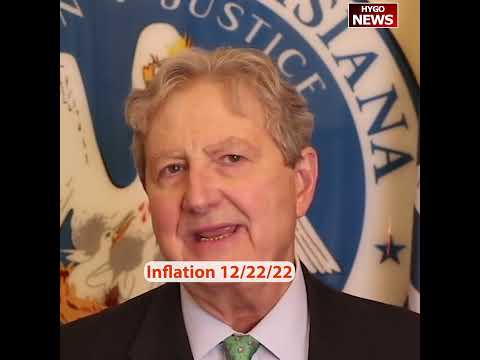
Senator Kennedy: “No-Brainer” — Wait for McCarthy as Speaker Rather Than Let Pelosi Make Federal Budget Decisions
On 12/22/2022, Senator John Kennedy of Louisiana explained his opposition to the omnibus spending bill. “Would you rather have Nancy Pelosi decide what the federal budget is going to be, or would you rather wait until he’s sworn in as Speaker of the House and have Kevin McCarthy? And that to me is a no-brainer,” Kennedy said. He identified the bill as put together by “three people. Senator McConnell in the Senate, Senator Schumer in the Senate, and Speaker Pelosi in the House.” Kennedy’s main reason for voting against the budget was inflation: “Inflation is ravaging the American dream. It’s a cancer on the American dream. And we’re not going to get control of it until Congress stops spending so much money.” He noted that “big government Republicans” also supported spending and joked they’d “take out a reverse mortgage on Alaska” if they couldn’t borrow.
The Core Question
Kennedy framed the issue in political leadership terms. “Here’s what it comes down to. Would you rather have Nancy Pelosi decide what the federal budget is going to be, or would you rather wait until he’s sworn in as Speaker of the House and have Kevin McCarthy?” Kennedy said.
The framing had specific features:
Personal choice language — “Would you rather.”
Simple binary — Pelosi or McCarthy.
Implied preference — For Republican.
Timing argument — About waiting.
“No-brainer” conclusion — Obvious answer.
The rhetorical technique:
Made audience participant — In decision.
Simplified complex issue — For clarity.
Personalized politics — Around leaders.
Assumed audience values — Fiscal discipline.
Presumed conclusion — Against current bill.
”Three People” Authorship
Kennedy identified the bill’s real authors. “This budget was basically put together by three people. Senator McConnell in the Senate, Senator Schumer in the Senate, and Speaker Pelosi in the House,” Kennedy said.
The three authors:
Mitch McConnell — Senate Minority Leader (R).
Chuck Schumer — Senate Majority Leader (D).
Nancy Pelosi — House Speaker (D).
Kennedy’s specific inclusion of McConnell was notable. Many Republican critics focused only on Democrats, but Kennedy acknowledged that the Republican Senate leader had been a partner in producing the bill. This:
Explained Republican opposition — To bipartisan Republican deal.
Called out own party leadership — Honestly.
Acknowledged deal mechanics — Realistically.
Didn’t pretend — This was pure partisan.
Maintained credibility — Through accuracy.
The “three people” formulation captured how concentrated authorship was:
Not Congress collectively — Wrote the bill.
Not committees — Produced final text.
Not rank-and-file members — Had input.
Just three leaders — Made decisions.
Staff implementation — Of leader decisions.
”Inflation Is Ravaging”
Kennedy connected the bill to inflation. “Inflation is ravaging the American dream. It’s a cancer on the American dream. And we’re not going to get control of it until Congress stops spending so much money,” Kennedy said.
The inflation framing:
“Ravaging” — Strong damage verb.
“American dream” — Aspirational concept.
“Cancer” — Disease metaphor.
Causation claim — Congress spending.
Solution prescription — Spend less.
The causal claim — that Congressional spending caused inflation — was politically powerful but economically debated:
Some economists agreed — Fiscal policy contributed.
Others disagreed — Monetary policy primary.
Reality complex — Multiple factors.
Political messaging — Simplified appropriately.
Voter resonance — With inflation concerns.
By late 2022, inflation was a major political concern. Connecting spending bills to inflation was effective political messaging regardless of economic precision.
”Slow the Rate of Growth”
Kennedy’s specific objective was moderate. “We’ve got to slow the rate of growth of spending and debt,” Kennedy said.
The “slow the rate of growth” formulation:
Not cut spending — Just reduce growth.
Modest goal — Compared to cuts.
Realistic politics — Achievable target.
Maintenance approach — Not reduction.
Incremental discipline — Not radical.
This was fiscal realism. Kennedy wasn’t demanding:
Balanced budget — Impossible immediately.
Major cuts — Politically unrealistic.
Elimination of programs — Not achievable.
Dramatic reform — Beyond current politics.
He was asking for:
Slower growth — Than current trajectory.
Fiscal discipline — Within growth.
Inflation consideration — In decisions.
Moderate restraint — Not extreme.
Achievable changes — In practice.
”Big Government Republicans”
Kennedy criticized his own party. “There are many big government Republicans as well. And their attitude is we can’t possibly spend enough money,” Kennedy said.
The “big government Republicans” framing:
Cross-party criticism — Beyond partisan.
Internal party division — Acknowledged.
Spending appetite — Bipartisan problem.
Fiscal discipline — Not Republican monolith.
Honest assessment — Of political reality.
Kennedy was acknowledging that fiscal discipline wasn’t purely a partisan issue:
Some Democrats — Supported restraint.
Some Republicans — Supported spending.
Coalition crossed parties — On specific items.
Leadership drives — Much of process.
Member pressure — On spending varies.
This honest assessment:
Maintained credibility — Beyond partisan.
Reached different audiences — Including Democrats.
Positioned as principled — Not purely partisan.
Acknowledged reality — Of bipartisan spending.
Didn’t spare own party — From criticism.
”Reverse Mortgage on Alaska”
Kennedy’s humor captured the problem. “If they ran out of money to spend and couldn’t borrow any more, they would think about taking out a reverse mortgage on Alaska to get the money,” Kennedy said.
The “reverse mortgage on Alaska” joke:
Absurd image — Memorable.
Captured spending addiction — Through humor.
Bipartisan critique — Of “big government” members.
Kennedy’s style — Folksy humor.
Media-friendly — For clips.
Kennedy was known for colorful language. The reverse mortgage on Alaska joke:
Showed spending addiction — Through exaggeration.
Made serious point — Through humor.
Provided clip material — For coverage.
Established personality — Beyond policy.
Connected with voters — Through accessible language.
The Schumer/Pelosi Urgency
Kennedy questioned the timing. “You’ve got to ask yourself why Senator Schumer and Speaker Pelosi were so desperate to pass this budget now. And believe me, they were desperate to pass this budget,” Kennedy said.
The “desperate” framing implied:
Motivation analysis — Why now?
Political calculation — Rather than policy.
Avoiding Republican House — Specifically.
Democratic priority preservation — Through timing.
Strategic advantage — Through speed.
Kennedy’s theory was:
Democrats anticipated — Loss of House majority.
Rather than negotiate — With new Republican majority.
They wanted complete control — Of budget.
Passing now — Secured priorities.
Avoided Republican priorities — In Congressional negotiation.
This theory had political validity:
Democrats did lose House — In January.
Republican priorities — Would be different.
Leadership preferences — Favored own party.
Strategic timing — For policy advantages.
Reasonable political analysis — Of situation.
The Senate Passage Context
Kennedy referenced Senate action. “The United States Senate has passed a budget for the federal government for next year. I expect the House of Representatives, which is controlled also by the Democratic Party, to concur in the Senate’s proposal,” Kennedy said.
The process:
Senate had passed — December 22.
House would follow — December 23.
Biden signing — Same day.
Democratic control ending — January.
Republican House — Taking over.
Kennedy’s positioning was specific:
Voted no in Senate — On record.
Expected House passage — Inevitable.
Explained to Louisiana — Constituents.
Principled stance — Rather than coalition.
Against leadership — Including Republican.
The Louisiana Explanation
Kennedy framed his vote for constituents. “I voted against the budget, and I wanted to explain to the people Louisiana why,” Kennedy said.
The constituent communication:
Personal accountability — To voters.
Substantive reasons — Not just partisan.
Clear communication — Of principles.
Regular practice — Of explanation.
Political transparency — On votes.
Kennedy was known for:
Direct constituent communication — Through various means.
Folksy explanation style — Accessible.
Principled positions — Beyond partisan.
Louisiana focus — Serving state interests.
Senatorial independence — From party.
The “Prudent Decision” Framing
Kennedy used “prudent” for his position. “There was never any doubt in my mind that the prudent decision in terms of controlling spending was to wait for Kevin McCarthy,” Kennedy said.
“Prudent” conveyed:
Considered judgment — Not impulsive.
Financial wisdom — About spending.
Future orientation — Thinking ahead.
Conservative virtue — Traditional value.
Sensible choice — For voters.
The “no doubt in my mind” emphasis:
Personal certainty — On decision.
Long-held position — Not just current.
Principled — Rather than tactical.
Confident stance — For voters.
Leadership quality — Decision-making.
The Fiscal Conservative Tradition
Kennedy’s position fit fiscal conservative tradition:
Reagan-era emphasis — On spending restraint.
Tea Party continuation — In 2010s.
Freedom Caucus positions — In House.
Senate fiscal hawks — Including Kennedy.
Ongoing movement — Despite setbacks.
The tradition had:
Consistent principles — Across decades.
Mixed implementation — When Republicans governed.
Reform difficulties — In practice.
Media platforms — For communication.
Voter constituency — Remaining engaged.
Kennedy was continuing this tradition through specific votes and explanations.
The Failure to Act
Despite Kennedy’s and others’ opposition, the omnibus passed:
Senate approved — December 22.
House approved — December 23.
Biden signed — Same day.
Kennedy’s no vote — Recorded.
Political pattern — Continued.
Kennedy’s vote:
Established record — For future reference.
Maintained principles — Despite outcome.
Provided material — For communication.
Positioned for future — Reform advocacy.
Showed consistency — With prior positions.
The individual no vote couldn’t change the outcome, but it preserved Kennedy’s ability to:
Criticize subsequent outcomes — Without hypocrisy.
Advocate for reform — With credibility.
Communicate with voters — Consistently.
Position for 2024 — Political calendar.
Build case — Over time.
Key Takeaways
- Senator John Kennedy framed opposition to the omnibus in terms of leadership choice: “Would you rather have Nancy Pelosi decide what the federal budget is going to be, or would you rather wait until he’s sworn in as Speaker of the House and have Kevin McCarthy?”
- Kennedy identified the bill as authored by “three people”: Schumer, Pelosi, and McConnell — acknowledging Republican leadership involvement.
- His main reason for voting no was inflation: “Inflation is ravaging the American dream. It’s a cancer on the American dream.”
- Kennedy criticized “big government Republicans” as well as Democrats — joking they’d “take out a reverse mortgage on Alaska” if they ran out of money to spend.
- The senator’s theory: Schumer and Pelosi were “desperate” to pass the budget before Republicans took the House.
- Kennedy advocated for “slow the rate of growth of spending and debt” rather than cuts — realistic fiscal restraint.
- His principled opposition established record for future accountability, even as the bill passed.
Transcript Highlights
The following is transcribed from the video audio (unverified — AI-generated from audio).
- Would you rather have Nancy Pelosi decide what the federal budget is going to be, or would you rather wait until he’s sworn in as Speaker of the House and have Kevin McCarthy?
- This budget was basically put together by three people. Senator McConnell in the Senate, Senator Schumer in the Senate, and Speaker Pelosi in the House.
- Inflation is ravaging the American dream. It’s a cancer on the American dream.
- We’re not going to get control of it until Congress stops spending so much money.
- If they ran out of money to spend and couldn’t borrow any more, they would think about taking out a reverse mortgage on Alaska.
- The prudent decision in terms of controlling spending was to wait for Kevin McCarthy.
Full transcript: 627 words transcribed via Whisper AI.