 HYGO News
 Nancy Mace YELLING: YOU ARE RIDICULOUS! RFK on historic change pharmaceutical advertising
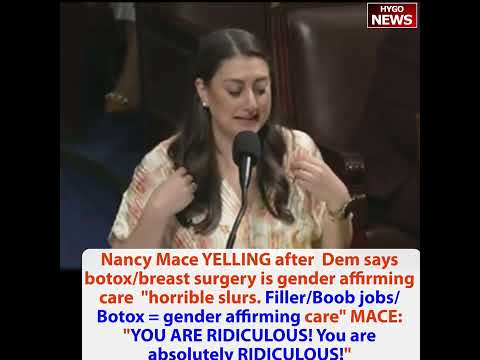
Nancy Mace YELLING: YOU ARE RIDICULOUS! RFK on historic change pharmaceutical advertising
The video captures two major Congressional moments. Rep. Nancy Mace (R-SC) erupted on the House floor after a Democratic congresswoman tried to equate women’s cosmetic procedures like botox, breast augmentation, and fillers with transgender “gender-affirming care” for minors. Mace yelled “YOU ARE RIDICULOUS! You are absolutely RIDICULOUS!” as the chair called for order. In a second clip, Secretary Robert F. Kennedy Jr. explained President Trump’s executive order restoring the 1997 rules requiring pharmaceutical advertisements to disclose all side effects. Kennedy explained that before 1997, pharmaceutical ads had to list all side effects — and most companies didn’t advertise on TV because it lengthened the ads too much. The 1997 FDA rule allowed advertisers to merely reference a website or phone line for side effects, which triggered the proliferation of direct-to-consumer drug advertising. Kennedy noted only two countries in the world allow direct-to-consumer pharmaceutical advertising on television: the United States and New Zealand. He said FDA enforcement had fallen from over 100 warning letters per year to just one in 2023 and zero last year. Kennedy announced the FDA is sending approximately 100 enforcement letters today and thousands of warning letters including to online pharmacies. Democratic member: “Filler is gender affirming care. Boob jobs is gender affirming care. Botox is gender affirming care. Lots of my colleagues have received gender affirming care.” Mace: “Ridiculous! You are absolutely ridiculous!” Kennedy: “The president just signed an executive order that’s an historic change in the way that pharmaceutical advertising is done on television.”
Gender Affirming Care Debate
A Democratic congresswoman attempted to reframe “gender-affirming care.”
“I would just like to point out that I think it’s very interesting that my colleague from South Carolina is so obsessed with the issue of trans people using horrible slurs to talk about them when many people in this body have received gender affirming care.”
The rhetorical framing — attempting to make Mace’s opposition to youth gender transition seem hypocritical if members of Congress have received cosmetic procedures.
“Filler is gender affirming care. Boob jobs is gender affirming care. Botox is gender affirming care. Lots of my colleagues have received gender affirming care.”
The conflation — traditional cosmetic procedures equated with cross-sex medicalization of minors.
The category error:
- Adult cosmetic procedures (botox, filler, breast augmentation) — affirm existing sex characteristics
- Pediatric gender transition — alters primary and secondary sex characteristics
- One aesthetic, the other structural
- One adult informed consent, the other minor
“And let me be clear I think everyone should have access to the gender affirming care that they need and I think we should respect everybody in this country with that I yield back.”
The concluding framework — everyone should have access. “Gender affirming care” expanded to include anything from makeup to cross-sex surgery on minors.
Mace Response
“Ridiculous you are absolutely ridiculous ladies now recognized.”
Nancy Mace’s response — immediate, emphatic, public. The viral moment captured.
Mace (R-SC) had been vocal on the issue of gender policy, child safety, and women’s spaces. The Democratic attempt to equate cosmetic procedures with child medicalization struck her as intellectually dishonest and offensive.
“Or the house will be in order.”
The chair calling for order. “The gentle lady and the gentleman will suspend the house be in order.”
The procedural interruption — the chair trying to restore decorum as members yelled across each other.
Pharmaceutical Executive Order
The clip transitioned to HHS Secretary Robert F. Kennedy Jr. announcing a major pharmaceutical advertising reform.
“The president just signed an executive order that’s an historic change in the way that pharmaceutical advertising is done on television and the order basically reinstates or gives us now the the opportunity to reinstate the 1997 rules.”
The executive order reverses a 1997 FDA rule change.
1997 Rule Change
“Prior to 1997 pharmaceutical advertisers were required to put all the side effects on their ads Many of them didn’t advertise because it lengthened the because of what it did to the length of the advertising.”
Pre-1997 pharmaceutical TV advertising rules:
- Full side effect disclosure required
- Advertising lengthened by disclosure
- Many companies avoided TV entirely
- Limited direct-to-consumer marketing
“And that the removal of that requirement in 1997 FDA changed the rule to allow them to report the side effects on a website or on a telephone.”
The 1997 change:
- Side effects could be referenced online or by phone
- Only partial side effects mentioned on TV
- Dramatically shorter ads possible
- TV advertising economically viable
“And they know they only had to report a few of them on television. And that triggered a proliferation of these ads.”
The consequence — explosion of direct-to-consumer drug advertising on American television.
Only Two Countries
“We have there’s only two countries in the world that allowed to direct to consumer advertising by pharmaceutical companies on television or one of those countries New Zealand is the other.”
The global context:
- Direct-to-consumer TV pharmaceutical advertising:
- U.S. — allowed since 1997
- New Zealand — allowed
- Every other country — banned or severely restricted
The EU, UK, Canada, Japan, Australia — all prohibit direct-to-consumer pharmaceutical TV advertising. The American exception has been extensively criticized by public health experts.
Health Impact
“It’s had a disastrous impact on human health on people’s relationships with their doctors and really on the entire gestalt where Americans are led to believe that there’s a bill for every ill.”
Kennedy’s framework:
- Direct-to-consumer ads create artificial demand
- Patients request specific drugs from doctors
- Doctor-patient relationship distorted
- Prescription volumes inflated
- Medical culture focused on pharmaceutical solutions
The “pill for every ill” framework — Americans trained to expect medical solutions to every problem. The ads drive this expectation.
FDA Action
“Today the FDA is taking action to rein in misleading direct to consumer drug ads for far too long. These ads have distorted the doctor-patient relationship and have created artificial demand for medications regardless of their clinical appropriateness.”
The FDA response — misleading ads as target.
“In recent years the FDA has increasingly been lax in its enforcement approach.”
The enforcement decline documented.
Warning Letters
“It used to be that the FDA would send more than a hundred warning letters each year and misleading ads were rare.”
The historical enforcement:
- 100+ warning letters annually
- Misleading ads rare
- Industry compliance strong
“But over time enforcement waned in 2023 the FDA sent just one warning letter and last year it was zero.”
The decline:
- 2023: 1 warning letter
- Last year: 0 warning letters
- Near-total enforcement collapse
New Enforcement
“Well, it’s a new day the FDA is sending approximately 100 enforcement action letters today and thousands of letters warning the industry including online Pharmacies who have increasingly been promoting drugs with no mention of side effects at all.”
The aggressive response:
- 100 enforcement action letters today
- Thousands of warning letters
- Online pharmacies targeted
- Social media drug promotion covered
Online pharmacies (Hims, Ro, others) have promoted drugs (Ozempic, etc.) without adequate side effect disclosure. The new framework requires compliance.
“Some create a misleading impression in direct violation of existing FDA regulation. We are taking drug marketing claims seriously and making our regulatory standards transparent.”
Doctor-Patient Framework
“Ultimately, we believe that decisions about what drugs to take belong between a patient and their doctor.”
Kennedy’s core principle — medical decisions should be medical decisions. Marketing to patients should not drive prescription patterns. The doctor-patient relationship should be central.
The implication:
- Reduced direct-to-consumer advertising
- More educated physician prescribing
- Less marketing-driven demand
- Better health outcomes
- Lower costs
Significance
Two major Congressional moments captured in the video represent Trump administration policy priorities:
- Gender policy — protecting children from medical transition while mocking adult cosmetic procedure conflation
- Pharmaceutical policy — restoring side effect disclosure requirements and reducing direct-to-consumer advertising
The Mace moment went viral for capturing Republican frustration with Democratic reframing of child protection as adult choice. The false equivalence — botox for adults equals cross-sex hormones for 12-year-olds — was rejected forcefully.
The pharmaceutical advertising reform addresses a major structural issue in American healthcare costs. Direct-to-consumer advertising:
- Costs pharmaceutical companies ~$10 billion annually
- Drives prescription volumes
- Costs rolled into drug prices
- Reducing advertising reduces drug costs long-term
Kennedy’s framework — America as an international outlier needing to return to global norms — aligns with other Trump administration priorities reducing pharmaceutical industry dominance.
Key Takeaways
- Democratic framing: “Filler is gender affirming care. Boob jobs is gender affirming care. Botox is gender affirming care. Lots of my colleagues have received gender affirming care.”
- Mace response: “You are absolutely ridiculous!”
- Kennedy on executive order: “The president just signed an executive order that’s an historic change in the way that pharmaceutical advertising is done on television and the order basically reinstates or gives us now the opportunity to reinstate the 1997 rules.”
- Kennedy on global context: “There’s only two countries in the world that allowed to direct to consumer advertising by pharmaceutical companies on television or one of those countries New Zealand is the other. It’s had a disastrous impact on human health on people’s relationships with their doctors.”
- Kennedy on enforcement: “It used to be that the FDA would send more than a hundred warning letters each year and misleading ads were rare, but over time enforcement waned in 2023 the FDA sent just one warning letter and last year it was zero … It’s a new day the FDA is sending approximately 100 enforcement action letters today and thousands of letters warning the industry.”