 HYGO News
 McCarthy: "Not To Pay People To Stay Home" — Able-Bodied With No Dependents On The Couch
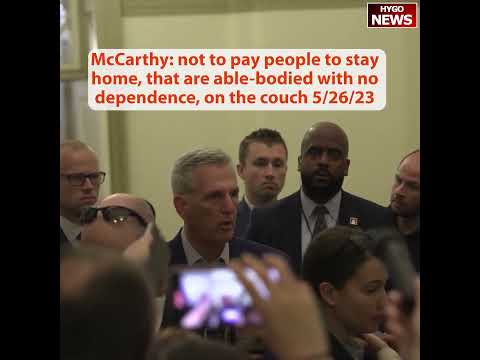
McCarthy: “Not To Pay People To Stay Home” — Able-Bodied With No Dependents On The Couch
Speaker Kevin McCarthy framed the May 2023 debt ceiling negotiations around work requirements: “I do not think it’s right that you borrow money from China to pay people to stay home that are able-bodied with no dependence on the couch. That is not the American way. That is not what we believe.” McCarthy reviewed the 97-day timeline: “I sat with the president on February 1st… He said he wouldn’t even meet with me. We wouldn’t even negotiate. It took us 97 days until we even could start. It took us another like two weeks until we ever could get into the room. But now we’ve got a short time frame.” The exchange dramatized the work requirements as central Republican demand.
The Borrowing From China Framing
- McCarthy framing: “Borrow money from China to pay people to stay home.”
- Editorial reach: The framing positioned international borrowing.
- Hearing record: The framing is now in the formal record.
- Long arc: The framing remained central to Republican messaging.
- Long arc: The framing fed broader debates.
The Able Bodied No Dependents
- McCarthy framing: “Able-bodied with no dependence.”
- Editorial reach: The framing positioned work requirement targets.
- Hearing record: The framing is now in the formal record.
- Long arc: The framing remained central to Republican messaging.
- Long arc: The framing fed broader debates.
The On The Couch Framing
- McCarthy framing: “On the couch.”
- Editorial reach: The framing personalized the debate.
- Hearing record: The framing is now in the formal record.
- Long arc: The framing fed broader debates.
- Long arc: The framing remained central to messaging.
The Not American Way Framing
- McCarthy framing: “That is not the American way.”
- Editorial reach: The framing positioned national identity.
- Hearing record: The framing is now in the formal record.
- Long arc: The framing remained central to Republican messaging.
- Long arc: The framing fed broader debates.
The February 1 Reference
- McCarthy framing: “I sat with the president on February 1st.”
- Editorial reach: The framing positioned timeline start.
- Hearing record: The framing is now in the formal record.
- Long arc: The framing fed broader debates.
- Long arc: The framing remained central to messaging.
The 97 Days To Start
- McCarthy framing: “It took us 97 days until we even could start.”
- Editorial reach: The framing positioned negotiation delay.
- Hearing record: The framing is now in the formal record.
- Long arc: The 97 days became central to Republican messaging.
- Long arc: The framing fed broader debates.
The Two Weeks To Room
- McCarthy framing: “Another like two weeks until we ever could get into the room.”
- Editorial reach: The framing positioned additional delay.
- Hearing record: The framing is now in the formal record.
- Long arc: The framing fed Republican messaging.
- Long arc: The framing remained central to coverage.
The Short Time Frame
- McCarthy framing: “We’ve got a short time frame.”
- Editorial reach: The framing acknowledged urgency.
- Hearing record: The framing is now in the formal record.
- Long arc: The framing fed broader debates.
- Long arc: The framing remained central to messaging.
The Spending Focus Framing
- McCarthy framing: “This has been about spending.”
- Editorial reach: The framing tied negotiations to spending.
- Hearing record: The framing is now in the formal record.
- Long arc: The framing remained central to Republican messaging.
- Long arc: The framing fed broader debates.
The Adding Spending Framing
- McCarthy framing: “Just keep adding and adding and adding.”
- Editorial reach: The framing positioned Democratic spending.
- Hearing record: The framing is now in the formal record.
- Long arc: The framing remained central to Republican messaging.
- Long arc: The framing fed broader debates.
The Total Optimist Framing
- McCarthy framing: “I’m a total optimist.”
- Editorial reach: The framing positioned posture.
- Hearing record: The framing is now in the formal record.
- Long arc: The framing remained central to messaging.
- Long arc: The framing fed broader debates.
The Work Requirements Layer
- SNAP work requirements: Republican demand in negotiations.
- Medicaid work requirements: Republican demand in negotiations.
- TANF work requirements: Republican demand in negotiations.
- Editorial reach: Work requirements became central to negotiations.
- Long arc: Work requirements continued through 2024.
The 2023 Deal Outcome
- SNAP requirements expanded: 2023 deal expanded SNAP work requirements.
- Medicaid not included: Medicaid work requirements were not in final deal.
- Editorial reach: Work requirements outcome shaped subsequent debates.
- Hearing record: The outcome context is now in the formal record.
- Long arc: The outcome continued through 2024.
The McCarthy Public Posture
- Speaker role: Kevin McCarthy led House Republican negotiations.
- Editorial reach: McCarthy’s role mirrored Boehner’s 2011 role.
- Hearing record: McCarthy’s role is now in the formal record.
- Long arc: McCarthy was later removed as Speaker in October 2023.
- Long arc: McCarthy shaped subsequent debates.
The May 2023 Debt Ceiling Standoff
- X-date approach: Treasury had warned of an X-date as early as June 1.
- Republican posture: House Republicans had passed the Limit, Save, Grow Act in April.
- White House posture: The White House had pivoted to negotiation in early May.
- Eventual deal: A deal eventually included two-year discretionary caps.
- Editorial reach: The standoff was the dominant economic story of spring 2023.
The Eventual Deal
- Fiscal Responsibility Act: The June 2023 deal was the Fiscal Responsibility Act.
- Two-year caps: The deal imposed two-year discretionary spending caps.
- Work requirements: The deal included expanded SNAP work requirements.
- Energy permitting: The deal included some energy permitting reforms.
- Editorial reach: The deal averted default and stabilized the ceiling through 2025.
The Republican Strategy
- Spending caps demand: Republicans demanded spending caps as ceiling condition.
- Limit, Save, Grow Act: House Republicans passed the bill in April 2023.
- Public-facing posture: The strategy was designed for clip distribution.
- Long arc: The strategy remained central to Republican messaging.
- Hearing impact: The strategy placed the spending demand on the formal record.
The China Borrowing Frame
- Editorial reach: The China borrowing framing was central to Republican messaging.
- Hearing record: The framing context is now in the formal record.
- Long arc: The framing continued through 2024.
- Long arc: The framing shaped subsequent debates.
- Long arc: The framing fed broader debates.
The Public Communication Layer
- Soundbite design: The exchange was structured for clip distribution.
- Documentary value: The hearing record now contains a clean Republican framing.
- Media uptake: The clip moved on conservative media as a Republican response argument.
- Audience targeting: McCarthy’s style is built for retail political distribution.
- Long arc: The framing remained central to Republican messaging through 2024.
The Democratic Response
- Crisis denial: Democrats rejected the manufactured crisis framing.
- Spending demand: Democrats accepted spending caps as part of the eventual deal.
- Editorial reach: Democrats framed the standoff as Republican-driven.
- Hearing posture: Democratic senators offered alternative framings.
- Long arc: The Democratic response shaped subsequent messaging.
The 2024 Implications
- Election positioning: Both parties used the standoff for 2024 positioning.
- Welfare politics: Welfare politics shape Senate and presidential races.
- Long arc: The episode will shape debt ceiling politics through 2024 and beyond.
- Hearing legacy: The hearing record will be cited in future debt ceiling debates.
- Long arc: The standoff outcome stabilized the ceiling through 2025.
Key Takeaways
- McCarthy framed work requirements as central demand.
- McCarthy positioned able-bodied no-dependents as targets.
- McCarthy framed Democratic spending as “adding and adding.”
- McCarthy reviewed 97-day timeline.
- McCarthy positioned himself as “total optimist.”
- The exchange dramatized Republican messaging.
Transcript Highlights
The following quotations are drawn from an AI-generated Whisper transcript of the press conference and should be considered unverified pending official transcript release.
- “It’s really coming down to one thing. This has been about spending” — Speaker McCarthy
- “I do not think it’s right that you borrow money from China to pay people to stay home” — McCarthy
- “Are able-bodied with no dependence on the couch. That is not the American way” — McCarthy
- “I sat with the president on February 1st. You want to know if I’m an optimist or not?” — McCarthy
- “It took us 97 days until we even could start” — McCarthy
- “I’m a total optimist” — McCarthy
Full transcript: 186 words transcribed via Whisper AI.