 HYGO News
 John McCain advocating Repealing and replacing Obamacare in the past
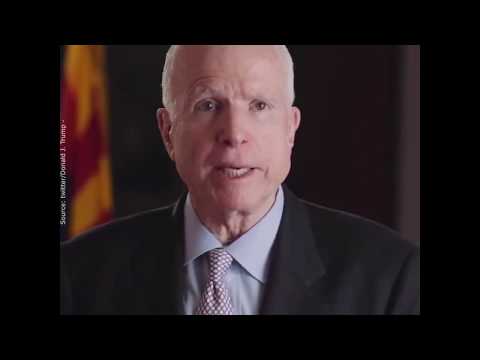
John McCain advocating Repealing and replacing Obamacare in the past
In September 2017, Senator John McCain had twice voted against Republican efforts to repeal the Affordable Care Act, most famously with his dramatic thumbs-down vote on the Senate floor. As the video description stated, “John McCain did not support the recent proposals to repeal obamacare. This is compilation of a few of the many clips of John McCain advocating Repealing and replacing Obamacare in the past.” The compilation documents years of passionate floor speeches and campaign statements in which McCain made repealing Obamacare a central promise.
McCain’s Early Opposition to Obamacare’s Passage
The earliest clips in the video capture McCain’s anger at how the Affordable Care Act was passed in the first place. He described the scene after the original vote: “All this euphoria that’s going on is inside the Beltway Champagne toasting and all that. Outside the Beltway, the American people are very angry and they don’t like it and we’re going to try to repeal this and we are going to have a very spirited campaign coming up between now and November and there will be a very heavy price to pay for it.”
McCain repeatedly emphasized the partisan nature of the ACA’s passage: “The first time that on a pure partisan basis a major piece of legislation has been passed and it’s going to be historic because it’s going to be repealed and replaced.” He returned to this point across multiple speeches, calling it unprecedented: “For the first time in history we had a major entitlement reform that was done on a totally partisan basis.”
His frustration extended to the legislative process itself: “I fought for weeks and weeks and weeks against Obamacare and they would not allow us an amendment. There was not a single amendment allowed. No input from the minority party.” In another clip, he confronted Democrats directly: “You had your 60 votes, you ran the 60 votes in the Affordable Care Act down our throats.”
Campaign Promises and the Arizona Argument
The video also includes clips from McCain’s 2016 reelection campaign, where repealing Obamacare was the central distinction between him and his Democratic opponent, Ann Kirkpatrick. McCain drew the contrast sharply: “She won’t support replacing failed health care policies of the incumbent administration. I will. She said her vote for Obamacare was her proudest. She still maintains that even as 10,000 people in Pinal County face the prospect of losing their insurance because the system won’t work as they were promised.”
He stated his position plainly: “I voted against Obamacare and will continue to support efforts to replace it with a health care plan that works for everyone.”
Arizona became his go-to example of the ACA’s failures: “We have 15 counties, 14 of them, there’s only one provider. For a period of time we had a county with no provider. Our state of Arizona has the unique category of having a county without a single health care provider. Not one.” He argued that Pinal County was a preview of what awaited the rest of the country: “If we don’t replace it, then you’re going to see these horror stories like Pinal County, Arizona all over America.”
The Broken Promises Argument
A recurring theme in McCain’s speeches was Obama’s promise that people could keep their existing coverage. He quoted Obama’s assurance repeatedly: “If you like your doctor you’ll be able to keep your doctor, period. If you like your health plan you’ll be able to keep your health care plan, period. No one will take it away no matter what.” He then declared: “Of course that turned out to be a lie. Ever since Americans have been hit by broken promise after broken promise and met with higher costs, less choices, greater uncertainty and poor quality of care.”
McCain also argued the law was structurally flawed from the start: “Obamacare was doomed to fail because it was based on the concept that they would take money from healthy young people and use it to pay for the health care needs.” He even invoked a Democratic authority to support his case: “Right now it is so bad that the former president of the United States, Bill Clinton, said it’s the craziest thing he’d ever heard of.”
Additional Context from Full Remarks
When Democrats later asked Republicans to work with them to fix the ACA’s problems, McCain rejected the invitation: “Somehow now call upon Republicans to work with you to fix this disaster after on the floor of the United States Senate you did not allow a single amendment, not a single amendment by the Republicans who were allowed.” His position was clear: “We don’t want to fix it. We want to replace it because it’s been a complete failure.”
The irony captured by the video is that despite these years of passionate advocacy for repeal, McCain ultimately became the deciding vote against his own party’s repeal efforts in 2017. He said he would “consider supporting legislation similar to that offered by my friends Senators Graham and Cassidy were it the product of extensive hearings, debate and amendment,” but concluded: “That has not been the case.” His argument had come full circle — he opposed the ACA because it was passed on a partisan basis without proper process, and he opposed its repeal for the same reason.
Key Takeaways
- The video compiles years of John McCain speeches and campaign statements passionately advocating for the repeal and replacement of Obamacare, making the case that the law was passed on an unprecedented partisan basis and had failed the people of Arizona.
- McCain repeatedly cited his home state, where 14 of 15 counties had only one insurance provider and one county briefly had none, as evidence that the ACA was collapsing.
- The compilation highlights the contradiction between McCain’s years of repeal advocacy and his 2017 votes against his own party’s repeal efforts, which he justified by arguing that repeal should go through the same bipartisan process he had demanded for the original law.