 HYGO News
 main reason I voted against the budget: Inflation
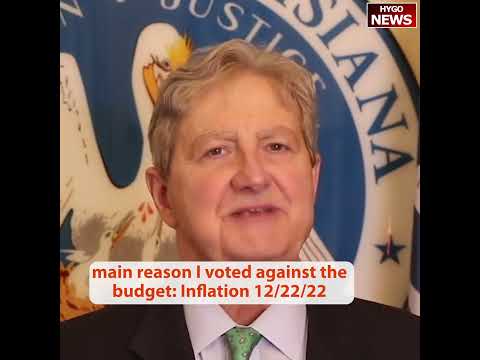
Senator Kennedy Explains Budget No Vote: “Inflation Is a Cancer on the American Dream”
On 12/22/2022, Senator John Kennedy explained his vote against the omnibus budget to his Louisiana constituents. “The United States Senate has passed a budget for the federal government for next year. I expect the House of Representatives, which is controlled also by the Democratic Party, to concur in the Senate’s proposal. I voted against the budget, and I wanted to explain to the people in Louisiana why,” Kennedy said. His main reason: “Inflation. As I’ve said before, inflation is ravaging the American dream. It’s a cancer on the American dream, and we’re not going to get control of it until Congress stops spending so much money.” The brief explanation captured Kennedy’s core fiscal conservative position connecting federal spending to inflation.
The Constituent Communication
Kennedy framed his explanation directly to Louisiana voters. “I voted against the budget, and I wanted to explain to the people in Louisiana why,” Kennedy said.
The constituent focus:
Direct accountability — To Louisiana voters.
Personal communication — Of vote decision.
Substantive reasons — For opposition.
Clear language — Accessible to all.
Regular practice — For Kennedy.
Kennedy’s communication style:
Louisiana-oriented — Distinct regional focus.
Folksy language — Relatable.
Brief explanations — For attention spans.
Clear principles — Without hedging.
Media-friendly — For coverage.
The direct constituent communication model had advantages:
Voter trust — Through transparency.
Political positioning — As responsive.
Campaign material — For future use.
Personal branding — Distinctive.
Reduced mediation — Of message.
The Three Authors
Kennedy again cited the bill’s authors. “This budget was basically put together by three people, Senator McConnell and the Senate, Senator Schumer and the Senate, and Speaker Pelosi and the House,” Kennedy said.
The three-author framing:
Leadership concentration — Acknowledged.
Bipartisan involvement — Including Republican.
Honest criticism — Of both parties.
Process critique — Beyond partisan.
Accountability distribution — Among leaders.
Kennedy’s willingness to include McConnell was politically significant:
Not purely partisan — Criticized own party leader.
Consistent principle — Above loyalty.
Credibility maintained — Through honesty.
Different audiences — Reached through consistency.
Leader targeting — Strategic.
”Inflation Is Ravaging”
Kennedy returned to his core message. “Inflation. As I’ve said before, inflation is ravaging the American dream,” Kennedy said.
The inflation framing:
Concrete impact — On Americans.
Emotional weight — “Ravaging.”
Universal concern — Crossing demographics.
Kennedy consistency — “As I’ve said before.”
Political salience — In late 2022.
The “American dream” framing:
Aspirational concept — Resonant with voters.
Personal framing — Beyond macro-economic.
Cross-party appeal — Most Americans.
Loss framing — What’s being taken.
Traditional values — Being undermined.
”Cancer on the American Dream”
Kennedy used medical metaphor. “It’s a cancer on the American dream,” Kennedy said.
The cancer metaphor:
Disease imagery — Serious illness.
Progressive deterioration — Not quick.
Requires treatment — Not passive.
Potentially fatal — If untreated.
Spreading — Throughout body.
The cancer metaphor for inflation:
Captures progressive damage — Over time.
Requires intervention — Active response.
Affects everything — In body politic.
Urgent concern — Not optional.
Requires commitment — To treatment.
This vivid metaphor was effective political communication. It:
Conveyed urgency — Without exaggeration.
Required response — From policymakers.
Personal stakes — For audiences.
Memorable framing — For coverage.
Accessible language — Beyond technical.
”Congress Stops Spending So Much Money”
Kennedy identified the solution. “We’re not going to get control of it until Congress stops spending so much money,” Kennedy said.
The solution prescription:
Clear action — Stop spending.
Congressional responsibility — Identified.
Control goal — Of inflation.
Causal claim — Spending causes inflation.
Principle positioning — For voters.
The prescription was economically debatable:
Some economists agreed — Fiscal policy matters.
Others disagreed — Monetary policy primary.
Complex reality — Multiple factors.
Political messaging — Simplified.
Voter resonance — Regardless of precision.
Kennedy’s simplification served political purposes. Whether economically precise or not, the message:
Connected inflation to Washington — Politically.
Gave voters explanation — For their experience.
Created responsibility — For politicians.
Suggested solution — Congressional restraint.
Aligned with conservative principles — Traditional.
The Brief Format
Kennedy’s explanation was notably brief. The 126-word transcript covered:
Vote announcement — On budget.
Expectation of passage — House would concur.
Personal explanation — Promise to voters.
Primary reason — Three authors.
Main reason — Inflation.
Core principle — Stop spending.
Brief political communications worked for:
Short attention spans — Modern media.
Clip generation — For coverage.
Message discipline — On priorities.
Repetition across forums — Consistent.
Voter engagement — Accessible.
Kennedy was skilled at concentrated political messaging. He could deliver key points in short formats.
The Louisiana Context
Louisiana as political context:
Conservative state — Trending Republican.
Inflation concerns — Particularly resonant.
Economic vulnerability — To price increases.
Working families — Affected by inflation.
Traditional values — Fiscal discipline welcomed.
Kennedy’s Louisiana-focused explanation:
Matched voter concerns — Appropriately.
Used local values — Traditional conservatism.
Avoided national framing — Too abstract.
Personal connection — To state.
Political alignment — With voters.
The Budget Context
Kennedy’s vote was one of many “no” votes:
Fiscal conservative Republicans — Mostly opposed.
Some Democrats — Varied.
Overall passage — Bipartisan majority.
Leadership support — From both parties’ leaders.
Rank-and-file division — On both sides.
The omnibus pattern:
Leaders negotiated — Final package.
Members voted — Up or down.
Limited amendments — Possible.
Bipartisan support — Required for passage.
Mixed Republican votes — In Senate.
Kennedy’s principled no vote was predictable given his positions. But the vote:
Established record — For future reference.
Preserved credibility — On fiscal issues.
Maintained principles — Despite outcome.
Positioned for 2024 — Political calendar.
Built case — Over time.
The Inflation Context
By December 2022, inflation dynamics were:
Annual inflation around 7.1% — November 2022.
Declining from peak — Slowly.
Fed tightening — Aggressive.
Supply chain improving — Helping.
Energy prices — Moderating.
Political salience — Remaining high.
Kennedy’s inflation focus was:
Politically resonant — With voters.
Factually grounded — In ongoing concern.
Consistent theme — For fiscal conservatives.
Messaging effective — Beyond narrow constituency.
Long-term positioning — For future debates.
The Economic Debate
The inflation-spending connection was contested:
Republican view — Federal spending caused inflation.
Administration view — Global factors primary.
Fed view — Both contributing.
Economists split — On specifics.
Political simplification — Of complex reality.
Different schools of thought:
Monetarist — Fed policy primary.
Keynesian — Fiscal policy matters.
Supply-side — Real economy matters.
Complex reality — Multiple factors.
Academic debate — Ongoing.
Kennedy’s simplification served political purposes. Economically:
Some validity — To spending claim.
Overstated possibly — As sole cause.
Strategically useful — For opposition.
Voter understanding — Accessible.
Political messaging — Effective.
The Political Positioning
Kennedy’s consistent anti-spending positioning served career goals:
Fiscal conservative brand — Reliable.
Louisiana voters — Comfortable.
Republican caucus — Represented wing.
Media platforms — Available.
Long-term career — Positioned.
Kennedy was building:
Political brand — Distinctive.
Voter base — Through consistency.
Media profile — For coverage.
Caucus role — Within party.
Future ambitions — Possible.
Kennedy had been mentioned for various higher positions. His consistent messaging helped position him for:
Senate leadership — Within Republican caucus.
Committee chairs — When in majority.
Higher office — If pursued.
Media appearances — Growing.
Political influence — Building.
The Short-Form Communication
Kennedy’s short explanation was effective:
Time respectful — Of audiences.
Message concentrated — On priorities.
Clip-ready — For media.
Voter accessible — Beyond wonks.
Distinctive style — Louisiana folksy.
Modern political communication increasingly required:
Short formats — For attention.
Clip-worthy moments — For distribution.
Emotional resonance — Beyond facts.
Personal connection — With voters.
Distinctive voice — For memorability.
Kennedy excelled at all these elements. His brief Louisiana-targeted explanations served multiple audiences through various channels.
The Future Application
Kennedy’s December 2022 framing would recur:
2023 debt ceiling — Similar arguments.
2023 appropriations — Consistent themes.
Future omnibus bills — Same critique.
Continuing resolutions — Regular opposition.
Debt concerns — Ongoing priority.
Each future fight would find Kennedy:
Using similar language — Consistent.
Referencing past positions — Credibility.
Maintaining principles — Despite costs.
Engaging voters — Through same approach.
Building long-term — Political brand.
Key Takeaways
- Senator John Kennedy explained his vote against the omnibus to his Louisiana constituents.
- He cited the bill was authored by three people: Schumer, Pelosi, and McConnell — acknowledging Republican leader involvement.
- His main reason: inflation. “Inflation is ravaging the American dream. It’s a cancer on the American dream.”
- Kennedy’s prescription: “We’re not going to get control of it until Congress stops spending so much money.”
- The brief direct-to-constituent communication was characteristic of Kennedy’s political style.
- The inflation-spending connection was politically resonant but economically debated.
- Kennedy’s consistent messaging established fiscal conservative credentials for future fights.
Transcript Highlights
The following is transcribed from the video audio (unverified — AI-generated from audio).
- The United States Senate has passed a budget for the federal government for next year.
- I voted against the budget, and I wanted to explain to the people in Louisiana why.
- This budget was basically put together by three people, Senator McConnell and the Senate, Senator Schumer and the Senate, and Speaker Pelosi and the House.
- Here’s the main reason I voted against the budget. Inflation.
- Inflation is ravaging the American dream. It’s a cancer on the American dream.
- We’re not going to get control of it until Congress stops spending so much money.
Full transcript: 126 words transcribed via Whisper AI.