 HYGO News
 Lankford: small town illegally crossing 8K increased to 310K. NYC complains only 40K difficult?
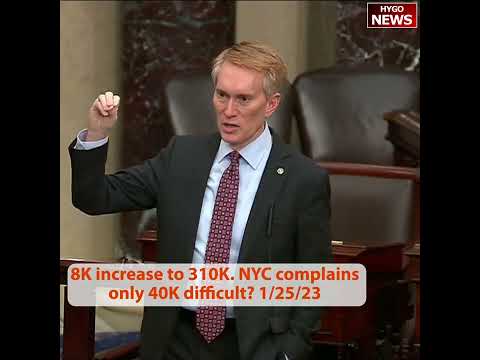
Sen. Lankford: Yuma, AZ Went From 8,100 Crossings to 310,000 in Three Years — NYC Complains About Just 40K
In January 2023, Senator James Lankford (R-OK) delivered sharp comparison highlighting border community strains versus NYC complaints. “Yuma, Arizona, three years ago in that area had 8,100 people illegally cross in that year. For that one small town, they were trying to manage 8,100 people crossing three years ago. This past year, Yuma, Arizona had 310,000 people illegally cross through the area. So in three years, they went from 8,000 people illegally crossing to 310,000 people illegally crossing in a year. They’re overwhelmed,” Lankford said. The comparison: “May I remind you, the mayor of New York is worried about an additional 40 to 50,000 people in New York City. And having a difficult time absorbing that, Yuma, Arizona is trying to figure out how to absorb 310,000 people coming through their community.”
The Yuma Comparison
The Yuma data:
3 years ago — 8,100 crossings.
Past year — 310,000 crossings.
38x increase — Dramatic.
Small community — Yuma.
Overwhelming scale — For size.
The Yuma increase was staggering. A small border community going from 8,100 to 310,000 annual crossings represented overwhelming change in short period.
The NYC Comparison
NYC comparison:
Adams complaint — 40-50K migrants.
Big city — NYC.
Resources — Substantial.
Yuma contrast — Stark.
Political framing — Effective.
Lankford’s comparison was politically devastating. If NYC (population 8+ million) struggled with 40-50K migrants, how did Yuma (population under 100K) cope with 310K? The disparity highlighted federal failures.
”They’re Overwhelmed”
Lankford’s assessment:
Yuma overwhelmed — Stated.
Small town reality — Described.
Federal burden — On local.
Resources insufficient — Locally.
Federal absence — Implied.
The “overwhelmed” assessment was evident from scale. No small community could process 310,000 people without massive support. Federal response had been inadequate.
”Mayor of New York Is Worried”
The Adams reference:
NYC mayor — Complaining.
40-50K migrants — Scale.
NYC resources — Massive.
Complaining about — Smaller number.
Contrast — Stark.
Adams had been publicly complaining about NYC’s 40-50K migrants. Lankford was using this to highlight that border communities faced much larger numbers with much smaller resources. The comparison made NYC complaints look small.
The Resources Disparity
Resources disparity:
NYC budget — $100+ billion.
Yuma budget — Fraction.
Infrastructure — Different scales.
Staff — Different.
Capacity — Dramatically different.
NYC and Yuma had vastly different capacities. What overwhelmed NYC was fraction of what border communities faced routinely. The resource disparity made comparison politically powerful.
The Population Disparity
Population disparity:
NYC — 8.3 million.
Yuma — 100K.
83x difference — In population.
Crossings — Yuma 7x NYC’s complaint.
Per capita impact — Enormous.
The per-capita impact on Yuma versus NYC was astronomical. Yuma’s crossings were multiple times its total population. This level of burden was essentially unprecedented for small communities.
”The Issues Are Complicated and Difficult”
Lankford’s acknowledgment:
Complexity acknowledged — Of issue.
Difficulty recognized — Of solutions.
“But not unachievable” — Hope offered.
Law enforcement — Framed.
Solutions possible — Claimed.
Lankford wasn’t just attacking — he was acknowledging complexity while asserting solutions existed. This was more constructive than pure attack.
”It’s an Issue of How Are We Going to Enforce the Law”
The enforcement framing:
Law enforcement — Core issue.
Current failure — Implied.
Administrative choice — Emphasized.
Practical solution — Suggested.
GOP framing — Standard.
By framing issue as enforcement question, Lankford was positioning GOP as having answer (enforce existing laws) while Democrats had been avoiding this answer.
The Border Community Reality
Border community reality:
Overwhelmed — Widely.
Services strained — Various.
Emergency services — Burdened.
Schools — Affected.
Communities changed — Significantly.
Border communities faced realities that non-border communities couldn’t imagine. The cultural, economic, and service impacts were substantial. Their concerns deserved attention.
The Political Asymmetry
Political asymmetry:
Blue city complaints — Get attention.
Border community concerns — Less coverage.
Media focus — On high-profile mayors.
Actual impact — Different.
Political weight — Unequal.
The media and political attention followed high-profile mayors rather than border communities. Small border towns had legitimate concerns but less political voice.
The Lankford Position
Lankford’s position:
Oklahoma Senator — Republican.
Immigration focus — Established.
Reform interest — Genuine.
Eventual dealmaking — Attempted.
Credible voice — On issue.
Lankford was serious immigration voice, not purely attack politician. He would later engage in immigration reform negotiations. His critique had substantive weight.
The 310,000 Context
310,000 context:
Yuma sector — Specifically.
CBP data — Source.
Annual figure — One year.
Record high — Essentially.
Community impact — Massive.
The 310,000 figure was CBP border encounter data for Yuma sector in fiscal year. It was accurate and reflected genuine crisis-level numbers.
The Bus Programs Dimension
Bus programs dimension:
Texas buses — To blue cities.
Political messaging — Purpose.
Scale — Smaller than Yuma.
Coverage — Major.
Priority — Receiving.
The bus programs that got media attention involved thousands of migrants, not hundreds of thousands. But they got disproportionate coverage because destinations were blue cities with media presence.
The Federal Response Inadequacy
Federal response:
FEMA grants — Some.
Emergency funding — Limited.
Permanent resources — Inadequate.
Scale mismatch — With needs.
Communities stretched — Thin.
Federal response had been inadequate to scale. Border communities needed much more support than they were receiving. The resources available didn’t match reality.
The Political Messaging Effectiveness
Messaging effectiveness:
Concrete numbers — Powerful.
Specific town — Relatable.
Comparison — Devastating.
Simple message — Clear.
Memorable — Highly.
Lankford’s comparison was effective political communication. Specific numbers, specific places, clear contrast. This was memorable messaging likely to be repeated.
The NYC Political Symbolism
NYC symbolism:
Sanctuary city — Symbol.
Liberal bastion — Perceived.
Democratic stronghold — Yes.
Migrant welcoming — Claimed.
Reality check — Experienced.
NYC’s struggles with relatively small migrant numbers revealed gap between sanctuary city rhetoric and capacity. This was political pressure point for Democrats.
The Administration’s Challenge
Administration challenge:
Border communities — Crisis.
Blue cities — Straining.
Progressive base — Demands.
Moderate voters — Concerns.
Impossible balance — Arguably.
Administration faced genuinely impossible task satisfying all constituencies. Border communities wanted enforcement; progressive base wanted openness; everyone wanted federal help.
The 2024 Implications
2024 implications:
Immigration salience — High.
Border as issue — Growing.
GOP advantage — Possible.
Democratic vulnerability — Real.
Messaging challenge — Major.
Immigration was shaping up as major 2024 issue. The imbalance between border reality and federal response created GOP opportunity. Administration messaging was struggling.
The Local Voice Problem
Local voice problem:
Border communities — Small.
Political weight — Limited.
Media access — Less.
National attention — Intermittent.
Systemic challenge — For their concerns.
Small border communities struggled to get national attention proportionate to their burdens. Senators like Lankford helped but couldn’t fully compensate for attention gap.
The Solutions Framework
Solutions framework:
Enforcement — Lankford focus.
Reform — Comprehensive needed.
Resources — Federal.
Coordination — With states/locals.
Long-term — Required.
Solutions needed multiple elements. Enforcement alone wouldn’t address causes. Comprehensive reform had proven politically impossible. Resources were limited. Long-term coordination was lacking.
The Title 42 Role
Title 42 role:
Pending expiration — Uncertain.
Impact substantial — On numbers.
Replacement policies — Needed.
Legal status — Contested.
Political fight — Ongoing.
Title 42 had been used for rapid expulsions. Its pending end would affect crossing numbers and processing. Administration was planning replacement policies.
The Border State Politics
Border state politics:
Texas — Republican governor.
Arizona — Divided.
New Mexico — Democratic.
California — Democratic.
Different approaches — Each.
Border states had different political leadership and approaches. This complicated coordination but reflected democratic diversity. No single approach worked for all.
The Local Elected Officials
Local officials:
Border mayors — Various views.
Both parties — Represented.
Overwhelming agreement — Crisis exists.
Solutions disagree — On.
Unified calls — For federal help.
Border community officials across parties generally agreed on crisis existence. They disagreed on solutions but agreed federal response was inadequate. Political lines were less sharp locally.
The Economic Dimension
Economic dimension:
Labor markets — Affected.
Housing — Strained.
Services — Impacted.
Business — Mixed impact.
Tax base — Varies.
Immigration had complex economic effects on border communities. Some sectors benefited; others were stressed. The overall impact was debated but real.
The Humanitarian Dimension
Humanitarian dimension:
Migrants — Often desperate.
Journey dangerous — Documented.
Cartels exploit — Situation.
Deaths occur — Regularly.
Moral complexity — Real.
The humanitarian dimension was serious. Migrants often faced desperate circumstances. Cartels profited from smuggling. Deaths in desert and other tragedies occurred. The human toll was significant.
The Cartel Angle
Cartel angle:
Human smuggling — Profitable.
Drug trade — Connected.
Fentanyl crisis — Related.
Enforcement gaps — Exploited.
National security — Concern.
Cartels benefited from current border situation through smuggling fees and drug trafficking. The fentanyl crisis had border dimensions. Security concerns were real.
The Congressional Inaction
Congressional inaction:
Comprehensive reform — Stalled.
Emergency funding — Inadequate.
Politics — Prevent action.
Blame games — Continuing.
Voters — Frustrated.
Congress hadn’t delivered on immigration for decades. Both parties bore responsibility. Various attempts had failed. The political dysfunction was legendary.
The Eventual Lankford Deal
Lankford’s eventual effort:
2024 negotiation — Participated.
Bipartisan deal — Reached.
Border security — Included.
Failed ultimately — Due to politics.
Good-faith effort — From Lankford.
Lankford would later participate in 2024 bipartisan border deal that ultimately failed. His critique in 2023 was consistent with his later constructive engagement. He was credible voice.
The Media Attention
Media attention:
Blue city mayors — Get coverage.
Border communities — Less.
Dramatic numbers — Sometimes cited.
Partisan framing — Dominant.
Substance — Varies.
Media attention patterns favored attention-grabbing stories over substantive coverage. This affected political priorities and public understanding of immigration realities.
Key Takeaways
- Senator James Lankford (R-OK) cited devastating Yuma, Arizona data: “Three years ago in that area had 8,100 people illegally cross in that year.”
- The current data: “This past year, Yuma, Arizona had 310,000 people illegally cross through the area.”
- In three years, Yuma went from 8,000 to 310,000 annual crossings — 38x increase.
- Lankford highlighted contrast with NYC: “The mayor of New York is worried about an additional 40 to 50,000 people in New York City.”
- He assessed: “They’re overwhelmed. And having a difficult time absorbing that, Yuma, Arizona is trying to figure out how to absorb 310,000 people coming through their community.”
- Lankford framed solution: “The issues are complicated and they are difficult, but they’re not unachievable. It’s an issue of how are we going to enforce the law?”
Transcript Highlights
The following is transcribed from the video audio (unverified — AI-generated from audio).
- Yuma, Arizona, three years ago in that area had 8,100 people illegally cross in that year.
- This past year, Yuma, Arizona had 310,000 people illegally cross through the area.
- So in three years, they went from 8,000 people illegally crossing to 310,000 people illegally crossing in a year. They’re overwhelmed.
- May I remind you, the mayor of New York is worried about an additional 40 to 50,000 people in New York City.
- And having a difficult time absorbing that, Yuma, Arizona is trying to figure out how to absorb 310,000 people coming through their community.
- The issues are complicated and they are difficult, but they’re not unachievable. It’s an issue of how are we going to enforce the law?
Full transcript: 135 words transcribed via Whisper AI.