 HYGO News
 Kennedy: It's Tax, You Know That, As Well As I Do, It's Taxes. Clausing: No Danger Of Decline
By HYGO News
Published
· Updated
Kennedy: It’s Tax, You Know That, As Well As I Do, It’s Taxes. Clausing: No Danger Of Decline
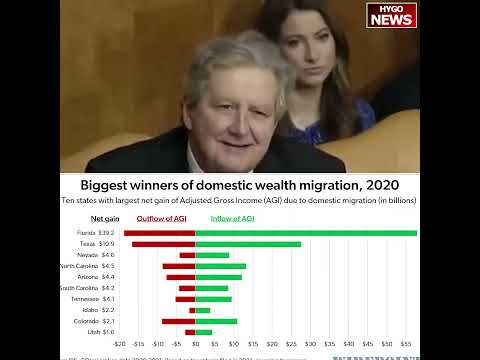
Sen. John Kennedy (R-La.) doubled down during May 2023 congressional testimony that wealthy migration from New York City is “taxes,” telling witness Clausing “you know that as well as I do.” He extended the argument to include California-to-Austin migration patterns. Clausing maintained California remains “one of the most successful economies in the world” and “not in any danger of decline, nor is New York City” — though she acknowledged “I don’t think we’re going to ever agree.”
The Kennedy Certainty
- “It’s taxes”: “It’s taxes” declaration.
- Mutual knowledge: Mutual knowledge claim.
- Professional certainty: Professional certainty.
- Political conviction: Political conviction.
- Economic principle: Economic principle.
The “Vote With Their Feet”
- Classical economics: Classical economics reference.
- Consumer choice: Consumer choice theory.
- Tiebout model: Tiebout model implication.
- Migration economics: Migration economics.
- Policy response: Policy response.
The California-Austin Pattern
- Texas migration: Texas migration.
- Austin destination: Austin destination.
- California departure: California departure.
- Tech migration: Tech industry migration.
- Policy competitiveness: Policy competitiveness.
The Clausing Defense
- Economic success: Economic success claim.
- California strength: California strength.
- Global ranking: Global ranking.
- Attraction factor: Attraction factor.
- Continuing economy: Continuing economy.
The “No Decline” Position
- California defense: California defense.
- NYC defense: NYC defense.
- Economic vitality: Economic vitality.
- Urban resilience: Urban resilience.
- Policy optimism: Policy optimism.
The Crime Factor
- Secondary concern: Secondary concern.
- Quality of life: Quality of life.
- Urban challenges: Urban challenges.
- Policy consequences: Policy consequences.
- Public safety: Public safety.
The Tax Theory
- Marginal analysis: Marginal analysis.
- Tax incidence: Tax incidence.
- Behavioral response: Behavioral response.
- Economic theory: Economic theory.
- Policy implications: Policy implications.
The Economic Theory Framework
- Classical economics: Classical economics.
- Neoclassical models: Neoclassical models.
- Behavioral economics: Behavioral economics.
- Policy analysis: Policy analysis.
- Political economy: Political economy.
The Disagreement Acknowledgment
- “Never going to agree”: “Never going to agree.”
- Professional differences: Professional differences.
- Partisan divides: Partisan divides.
- Policy disagreement: Policy disagreement.
- Political theater: Political theater.
The “Vibrant Places” Defense
- Urban resilience: Urban resilience.
- Economic strength: Economic strength.
- Cultural value: Cultural value.
- Metropolitan vitality: Metropolitan vitality.
- Policy success: Policy success.
The Political Economics
- Tax policy: Tax policy.
- State competition: State competition.
- Electoral implications: Electoral implications.
- Policy debate: Policy debate.
- Professional dialogue: Professional dialogue.
The Professional Exchange
- Respectful disagreement: Respectful disagreement.
- Academic debate: Academic debate.
- Policy dispute: Policy dispute.
- Professional standards: Professional standards.
- Democratic discourse: Democratic discourse.
The Migration Evidence
- Statistical patterns: Statistical patterns.
- Migration data: Migration data.
- Behavioral evidence: Behavioral evidence.
- Economic analysis: Economic analysis.
- Policy implications: Policy implications.
The Competitive Federalism
- State competition: State competition.
- Policy differentiation: Policy differentiation.
- Economic development: Economic development.
- Tax competitiveness: Tax competitiveness.
- Fiscal policy: Fiscal policy.
The Quality of Life
- Cost of living: Cost of living.
- Housing costs: Housing costs.
- Public services: Public services.
- Quality metrics: Quality metrics.
- Migration decisions: Migration decisions.
The Kennedy Position
- Tax policy critique: Tax policy critique.
- High-tax states: High-tax states.
- Economic effects: Economic effects.
- Policy reform: Policy reform.
- Political messaging: Political messaging.
The Witness Position
- Policy defense: Policy defense.
- Economic optimism: Economic optimism.
- Urban vitality: Urban vitality.
- Professional analysis: Professional analysis.
- Policy support: Policy support.
The Economic Reality
- Migration statistics: Migration statistics.
- Tax filings: Tax filings.
- Economic indicators: Economic indicators.
- Demographic shifts: Demographic shifts.
- Policy outcomes: Policy outcomes.
The Texas Alternative
- Austin growth: Austin growth.
- Tech industry: Tech industry.
- Business-friendly: Business-friendly.
- Tax advantage: Tax advantage.
- Economic development: Economic development.
The California Defense
- Economic scale: Economic scale.
- Innovation economy: Innovation economy.
- Global ranking: Global ranking.
- Continuing strength: Continuing strength.
- Policy success: Policy success.
The Political Framework
- Republican position: Republican position.
- Democratic position: Democratic position.
- Policy debate: Policy debate.
- Electoral implications: Electoral implications.
- Public discourse: Public discourse.
The Future Prospects
- Policy evolution: Policy evolution.
- Economic trends: Economic trends.
- State competition: State competition.
- Migration patterns: Migration patterns.
- Fiscal sustainability: Fiscal sustainability.
The Bipartisan Recognition
- Acknowledgment of disagreement: Acknowledgment of disagreement.
- Professional civility: Professional civility.
- Academic dispute: Academic dispute.
- Democratic discourse: Democratic discourse.
- Institutional function: Institutional function.
Key Takeaways
- Sen. Kennedy insisted wealthy migration from NYC is driven by “taxes.”
- He extended argument to California-to-Austin migration patterns.
- Clausing defended California as “one of the most successful economies in the world.”
- She maintained California and NYC were “in no danger of decline.”
- Both agreed “I don’t think we’re going to ever agree.”
- The exchange exposed fundamental economic philosophy differences.
Transcript Highlights
The following quotations are drawn from an AI-generated Whisper transcript of the hearing and should be considered unverified pending official transcript release.
- “I can tell you why it’s taxes. You know that as well as I do. It’s taxes.” — Sen. Kennedy
- “Some of it’s crime, but most of it is taxes.” — Sen. Kennedy
- “People vote with their feet. The same reason that people are leaving California and moving to Austin.” — Sen. Kennedy
- “If you look at California, it’s one of the most successful economies in the world, and it continues to be so.” — Clausing
- “I don’t think it’s in any danger of decline, nor is New York City. And these are very vibrant places.” — Clausing
- “I don’t think we’re going to ever agree. I don’t think we’re going to ever agree.” — Clausing
Full transcript: 127 words transcribed via Whisper AI.