 HYGO News
 Kennedy On Minorities Help: "Yes, Sir, I'm Familiar With The Case" — Witness Cites Equal Opportunity
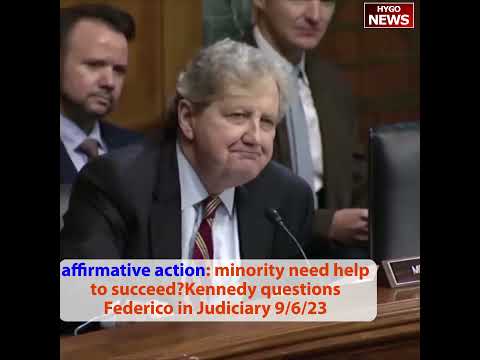
Kennedy On Minorities Help: “Yes, Sir, I’m Familiar With The Case” — Witness Cites Equal Opportunity
Senator John Kennedy continued his September 2023 affirmative action questioning of a judicial nominee. Kennedy framed: “Judge, do you think minorities need special help to achieve?” Witness: “Senator, I think as a country, we have come a long way. There are certain issues that Supreme Court just decided last term on a case of affirmative action that dealt with this issue.” Kennedy: “Yes, sir, I’m familiar with the case. Do you believe that minorities in America need special help to succeed?” Witness: “Senator, I think all people should deserve equal opportunity.” Kennedy: “Do you believe minorities need special help to succeed?” Witness: “Senator, again, I think based upon a person’s background and their community, they come from hardships they face, I hope that all persons in this country who work hard have an opportunity to.” Kennedy: “Let me try it again. Do you believe that minorities in America today need special help?”
The Need Special Help To Achieve
- Kennedy framing: “Judge, do you think minorities need special help to achieve?”
- Editorial reach: The framing positioned core question.
- Hearing record: The framing is now in the formal record.
- Long arc: The framing fed broader debates.
- Long arc: The framing remained central to coverage.
The Come A Long Way
- Witness framing: “Senator, I think as a country, we have come a long way.”
- Editorial reach: The framing positioned progress framing.
- Hearing record: The framing is now in the formal record.
- Long arc: The framing fed broader debates.
- Long arc: The framing remained central to coverage.
The Supreme Court Last Term
- Witness framing: “There are certain issues that Supreme Court just decided last term on a case of affirmative action that dealt with this issue.”
- Editorial reach: The framing positioned procedural deflection.
- Hearing record: The framing is now in the formal record.
- Long arc: The framing fed broader debates.
- Long arc: The framing remained central to coverage.
The Familiar With Case
- Kennedy framing: “Yes, sir, I’m familiar with the case.”
- Editorial reach: The framing positioned shared knowledge.
- Hearing record: The framing is now in the formal record.
- Long arc: The framing fed broader debates.
- Long arc: The framing remained central to coverage.
The Need Special Help Succeed
- Kennedy framing: “Do you believe that minorities in America need special help to succeed?”
- Editorial reach: The framing repeated direct question.
- Hearing record: The framing is now in the formal record.
- Long arc: The framing fed broader debates.
- Long arc: The framing remained central to coverage.
The All People Equal Opportunity
- Witness framing: “Senator, I think all people should deserve equal opportunity.”
- Editorial reach: The framing positioned universal framing.
- Hearing record: The framing is now in the formal record.
- Long arc: The framing fed broader debates.
- Long arc: The framing remained central to coverage.
The Background Community Hardships
- Witness framing: “Senator, again, I think based upon a person’s background and their community, they come from hardships they face.”
- Editorial reach: The framing positioned background framing.
- Hearing record: The framing is now in the formal record.
- Long arc: The framing fed broader debates.
- Long arc: The framing remained central to coverage.
The All Persons Work Hard
- Witness framing: “I hope that all persons in this country who work hard have an opportunity to.”
- Editorial reach: The framing positioned work hard framing.
- Hearing record: The framing is now in the formal record.
- Long arc: The framing fed broader debates.
- Long arc: The framing remained central to coverage.
The Let Me Try Again
- Kennedy framing: “Let me try it again. Do you believe that minorities in America today need special help?”
- Editorial reach: The framing dramatized repeated attempt.
- Hearing record: The framing is now in the formal record.
- Long arc: The framing fed broader debates.
- Long arc: The framing remained central to coverage.
The Affirmative Action Layer
- Editorial reach: Affirmative action was central to Supreme Court term.
- Hearing record: The affirmative action context is now in the formal record.
- Long arc: Affirmative action continued through 2024.
- Long arc: Affirmative action shaped subsequent debates.
- Long arc: Affirmative action fed broader debates.
The Equal Opportunity Layer
- Editorial reach: Equal opportunity framing was central to nominee deflection.
- Hearing record: The equal opportunity context is now in the formal record.
- Long arc: Equal opportunity continued to be referenced.
- Long arc: Equal opportunity shaped subsequent debates.
- Long arc: Equal opportunity fed broader debates.
The Background Framing Layer
- Editorial reach: Background framing was central to nominee equivocation.
- Hearing record: The background context is now in the formal record.
- Long arc: Background continued to be referenced.
- Long arc: Background shaped subsequent debates.
- Long arc: Background fed broader debates.
The Judicial Nomination Layer
- Editorial reach: Judicial nomination was central to political dynamics.
- Hearing record: The judicial nomination context is now in the formal record.
- Long arc: Judicial nomination continued through 2024.
- Long arc: Judicial nomination shaped subsequent debates.
- Long arc: Judicial nomination fed broader debates.
The Republican Critique
- Editorial reach: Republicans cite judicial nominees as activist.
- Hearing record: The Republican critique context is now in the formal record.
- Long arc: The critique continued through 2024.
- Long arc: The critique shaped subsequent debates.
- Long arc: The critique fed broader debates.
The Senator Public Posture
- Kennedy role: Kennedy held Senate Judiciary role.
- Editorial reach: Kennedy’s posture shaped judicial nomination debates.
- Hearing record: Kennedy’s posture is now in the formal record.
- Long arc: Kennedy continued to be central through 2024.
- Long arc: Kennedy shaped subsequent debates.
The Public Communication Layer
- Soundbite design: Kennedy’s remarks were structured for clip distribution.
- Documentary value: The hearing record now contains a clean Kennedy framing.
- Media uptake: The clip moved on conservative media.
- Audience targeting: Kennedy’s style is built for retail political distribution.
- Long arc: The framing remained central through 2024.
The 2024 Implications
- Election positioning: Both parties used judicial nominations for 2024 positioning.
- Judicial nomination salience: Judicial nomination became central in 2024 coverage.
- Long arc: The episode will shape judicial debates through 2024 and beyond.
- Hearing legacy: The hearing record will be cited in future judicial debates.
- Long arc: The framing remains in circulation.
Key Takeaways
- Kennedy pressed minorities-special-help question.
- Witness cited “come a long way.”
- Witness invoked equal opportunity universal framing.
- Witness invoked background and hardships.
- Kennedy repeated question multiple times.
- The exchange dramatized nomination evaluation.
Transcript Highlights
The following quotations are drawn from an AI-generated Whisper transcript of the hearing and should be considered unverified pending official transcript release.
- “Judge, do you think minorities need special help to achieve?” — Kennedy
- “Senator, I think as a country, we have come a long way” — witness
- “There are certain issues that Supreme Court just decided last term on a case of affirmative action” — witness
- “Senator, I think all people should deserve equal opportunity” — witness
- “Senator, again, I think based upon a person’s background and their community, they come from hardships they face” — witness
- “Let me try it again. Do you believe that minorities in America today need special help?” — Kennedy
Full transcript: 130 words transcribed via Whisper AI.