 HYGO News
 Jeffries Threatens DHS: 'They'll Find Out -- It's a Red Line' on Arresting Dems Who Stormed ICE; Sen. Kennedy: 'Skip the Foreplay' on PBM Reform
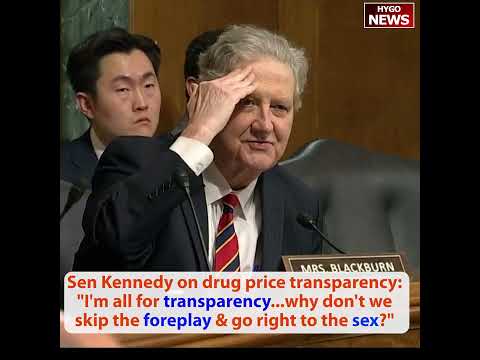
Jeffries Threatens DHS: “They’ll Find Out — It’s a Red Line” on Arresting Dems Who Stormed ICE; Sen. Kennedy: “Skip the Foreplay” on PBM Reform
House Minority Leader Hakeem Jeffries issued a stunning threat against federal law enforcement during National Police Week in May 2025, warning DHS not to arrest Democrat members who had stormed the Newark ICE facility. “They’ll find out. They’ll find out. They’ll find out. It’s a red line. They know better than to go down that road. There are clear lines that they dare not cross,” Jeffries said. Separately, Sen. John Kennedy (R-LA) used a Senate hearing on drug prices to deliver his trademark bluntness: “I’m all for transparency. But why don’t we skip the foreplay and go right to the sex and outlaw vertical integration for Part D?” He also challenged witnesses on PBM fiduciary duties and observed of one economist: “You speak Sanskrit. I know your job is to protect the PBMs.”
Jeffries’ Red Line
A reporter asked Jeffries about consequences for Democrat members.
“You said they better not touch our members,” the reporter said. “What happens if they were to go and arrest these members or if they would try to sanction them during the house arrest?”
Jeffries was emphatic: “They’ll find out.”
The reporter pressed: “What would you do?”
“They’ll find out.”
“Doesn’t that broach a—”
“They’ll find out.”
The reporter tried to clarify: “That’s a red line?”
Jeffries confirmed: “It’s a red line. It’s very clear.”
“What’s the red line, though?”
Jeffries wouldn’t elaborate: “It’s a red line.”
The threefold repetition of “they’ll find out” — followed by the refusal to specify what would happen — was the definition of an empty threat dressed up in ominous language. Jeffries had no actual enforcement power over DHS. He could not direct ICE agents to ignore their duties, could not impeach cabinet secretaries without majority control, and could not halt federal law enforcement operations through congressional maneuvering.
The threat was also constitutionally problematic. Members of Congress had no legal immunity from arrest for violent confrontations with federal law enforcement. If Rep. LaMonica McIver had physically assaulted ICE agents — as video evidence showed she had — she was subject to federal charges like any other citizen. A House Minority Leader warning DHS not to enforce the law against his colleagues was essentially demanding that Democratic members of Congress be treated as above the law.
The timing made the threat particularly egregious. National Police Week — the annual observance that honored law enforcement officers killed in the line of duty — was happening even as Jeffries was threatening federal agents who enforced the law. While flags flew at half-staff at police departments across the country honoring fallen officers, the House Minority Leader was threatening consequences against federal agents who dared to do their jobs.
”Skip the Foreplay”
Sen. John Kennedy used a Senate hearing on pharmaceutical pricing to deploy his characteristic Louisiana bluntness.
The topic was pharmacy benefit managers (PBMs) — the middlemen who negotiate drug prices between pharmaceutical manufacturers, insurers, and pharmacies — and their vertical integration with insurers.
“Does your research show that the prices that consumers pay are higher than they would be if those companies were not vertically integrated?” Kennedy asked a witness.
The witness deflected: “My research on Medicare, partly…”
Kennedy was impatient: “Give me an answer. Partially.”
The witness attempted specificity: “What I find is that Medicare Part D premiums are higher as a result of vertical integration.”
Kennedy pivoted to action: “I’m all for transparency, Mr. Chairman. I want to say that. But why don’t we skip the foreplay and go right to the sex and get rid of — outlaw vertical integration for Part D? Would you accept an amendment to your bill like that?”
The witness hedged: “I don’t want to answer that question right now because I want to study that.”
Kennedy turned to another witness: “Would you support that, Mr. Scott?”
Without waiting for an answer: “Let me just guess what your answer is. No, sir. And I can explain why.”
He described the opposition: “You speak Sanskrit. I’m sorry. You’re good at it. And I know your job is to protect the PBMs. And I might tell you, I don’t think PBMs are the only ones at fault, but you don’t have unclean hands.”
The “Sanskrit” jab was Kennedy’s way of describing testimony so obfuscatory that it might as well have been in a dead language. Industry representatives at congressional hearings typically delivered carefully crafted statements designed to acknowledge concerns while preventing any specific legislative action. Kennedy was cutting through the performance to identify the witness’s actual function: protecting PBM interests from effective regulation.
The PBM Problem
The vertical integration Kennedy targeted was the most consequential structural problem in American pharmaceutical pricing.
PBMs had originally been independent companies that negotiated drug prices between manufacturers and insurers. Over the past two decades, the three largest PBMs — CVS Caremark, Express Scripts, and OptumRx — had each been acquired by or merged with major health insurers. CVS owned Aetna. Express Scripts was owned by Cigna. OptumRx was part of UnitedHealth.
The result was a conflict of interest baked into the system. PBMs were supposed to negotiate lower drug prices on behalf of insurance plans and their members. But when the PBM and the insurer were the same company, the incentive to pass savings along to consumers disappeared. Rebates and discounts that should have reduced consumer costs instead inflated insurer profits. Drug prices kept rising, premiums kept rising, and the vertically integrated health conglomerates kept getting richer.
Kennedy’s proposal to “outlaw vertical integration for Part D” would have forced the separation of PBMs from insurers in Medicare Part D specifically. This would have restored the original market dynamic in which PBMs had incentive to actually reduce drug prices. The industry’s hostility to the proposal confirmed that vertical integration was the source of their excess profits.
Fiduciary Duty
Kennedy pressed on another angle.
“Professor Sud, you say PBMs ought to be fiduciaries,” Kennedy said. “To whom?”
The professor answered: “To both the plan and their members.”
Kennedy pushed: “Well, what if the plan and the members’ interests diverge? Who are their fiduciaries to?”
The professor conceded: “Ultimately, in principle, they should be fiduciaries to the members.”
Kennedy proposed another amendment: “Mr. Chairman, again, why don’t we skip the foreplay and go right to the sex? Why don’t we just amend your bill to require that PBMs have a fiduciary obligation to plan members?”
A witness objected: “So let me look at what you want to add to it.”
Kennedy was sharp: “So I’m not criticizing your bill. I like transparency. But we’re just nibbling around the edges here.”
He corrected a legal misstatement: “And with respect, Mr. Scott, your definition of a fiduciary is wrong. Fiduciary isn’t somebody that controls the decision. You know that, and I know that. Fiduciary is somebody who has a legal obligation to give his client the best advice and to do what’s best for his client.”
He explained the legal principle: “It doesn’t replace agent with principal or vice versa. You know that, and I know that.”
He delivered the closing line: “Well, you need to talk to your lawyers. I may be wrong, but I doubt it.”
The fiduciary duty argument was legally sophisticated. A fiduciary was legally obligated to prioritize the client’s interests over their own. If PBMs were fiduciaries to plan members — not just to the insurance plans that employed them — they would be legally required to actually lower drug costs for consumers. The industry’s resistance to fiduciary status confirmed that the current structure allowed PBMs to prioritize their own profits over their customers’ wellbeing.
Key Takeaways
- Jeffries on DHS potentially arresting Dems who stormed ICE facility: “They’ll find out. They’ll find out. They’ll find out. It’s a red line.”
- Reporters pressed for specifics; Jeffries refused to elaborate beyond “red line” language.
- Sen. Kennedy on PBM reform: “I’m all for transparency, but why don’t we skip the foreplay and go right to the sex and outlaw vertical integration for Part D?”
- Kennedy on industry witness: “You speak Sanskrit. Your job is to protect the PBMs.”
- On fiduciary duty: “A fiduciary is somebody who has a legal obligation to give his client the best advice. Your lawyers can confirm it — I may be wrong, but I doubt it.”