 HYGO News
 Inflation 5%, Unemployment 3.6%: Could Fed Need To Raise Rates To 7%-8%?
Inflation 5%, Unemployment 3.6%: Could Fed Need To Raise Rates To 7%-8%?
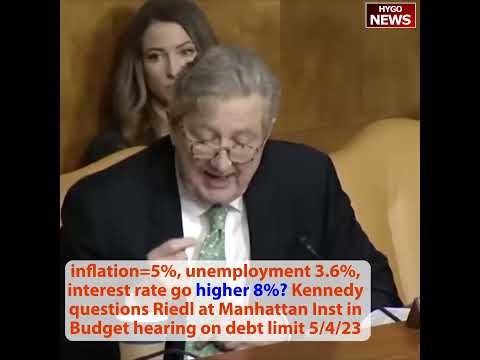
A senator working through historical inflation-unemployment dynamics walked a witness through a stark math exercise during a Senate hearing: if the Federal Reserve has historically needed to raise unemployment by 3.6 percentage points to bring inflation down two points, and if today’s unemployment is 3.5% with inflation at 5%, then “history” implies the Fed could need to raise interest rates “between 7% and 8%” to finish the job. The witness — referencing similar analysis from former Treasury Secretary Larry Summers — agreed the rate could “have to go that high, depending on how the economy responds to current hikes.” The exchange dramatized the rate-path uncertainty hanging over the Fed’s 2023 tightening cycle.
The Historical Sacrifice Ratio
- Sacrifice ratio: A widely cited estimate of how much unemployment must rise to bring inflation down by a given amount.
- 3.6 point estimate: The witness accepted the framing that historic experience required ~3.6 points of unemployment rise per 2 points of disinflation.
- Summers similarity: The witness acknowledged similarity to Larry Summers’s public framing.
- Soft-landing skepticism: Higher sacrifice ratios imply soft landings are unlikely.
- Editorial value: The framing has shaped 2023 rate-path commentary across financial media.
The Current Snapshot
- Unemployment 3.5%: The current rate cited at the hearing was 3.5%.
- Inflation ~5%: Headline inflation cited at the hearing was approximately 5%.
- Federal funds rate: The federal funds rate range was 5.00%-5.25% at the time.
- Tightening cycle: The Fed had begun a sustained tightening cycle in March 2022.
- Forward signal: Markets remained uncertain on the terminal rate.
The Math Implication
- Disinflation gap: Bringing inflation from ~5% to 2% requires ~3 points of disinflation.
- Sacrifice ratio extrapolation: Historic sacrifice ratios imply 5+ points of unemployment rise.
- Rate path implication: That rise typically requires materially higher real rates.
- Senator math: The senator extrapolated nominal rates of “7% to 8%” if history were the guide.
- Witness response: The witness said rates “could have to go that high” depending on the economy.
The Witness Hedge
- Conditional answer: The witness conditioned the rate ceiling on economic response to current hikes.
- Not a forecast: The witness did not endorse 7%-8% as a base case.
- Historical reference: The witness anchored the answer in historical sacrifice-ratio analysis.
- Editorial discipline: The exchange illustrated how careful witnesses are about rate forecasts.
- Hearing record: The hedge sits alongside the headline number in the formal record.
The Summers Framing
- Public commentary: Larry Summers had spent 2022-23 arguing for higher-for-longer rates.
- Sacrifice ratio: Summers used sacrifice-ratio analysis as the basis for his framing.
- Public skepticism: Summers had been publicly skeptical of soft-landing scenarios.
- Influential voice: Summers’s framing shaped financial media commentary on the rate path.
- Editorial reach: His analysis filtered through hearing testimony and Fed-watching commentary.
The Soft Landing Question
- Definition: A “soft landing” returns inflation to target without significant unemployment rise.
- Historical precedent: Soft landings are historically rare.
- 2023 question: Whether the 2022-23 tightening cycle could deliver one was a central debate.
- Optimistic scenario: Goldilocks scenarios required services inflation cooling without recession.
- Pessimistic scenario: Hard-landing scenarios required substantial labor-market loosening.
The Fed Posture
- Tightening pace: The Fed had moved aggressively from near-zero to ~5% in 14 months.
- Forward guidance: Fed officials signaled continued hikes pending data.
- Data dependence: The Fed framed decisions as data-dependent rather than pre-committed.
- Banking stress: Spring 2023 banking stresses (SVB, Signature, First Republic) complicated the path.
- Rate ceiling: Markets debated the eventual peak through the spring of 2023.
The Banking System Stress
- SVB collapse: Silicon Valley Bank failed in March 2023 amid duration-mismatch losses.
- Signature collapse: Signature Bank failed shortly after.
- First Republic: First Republic was acquired by JPMorgan in May 2023.
- Fed response: The Fed introduced the Bank Term Funding Program to stabilize the system.
- Rate-path complication: The stresses raised doubts about how high the Fed could push rates.
The Labor Market Resilience
- Persistent strength: The 3.5% unemployment rate reflected unusual labor-market resilience.
- Wage pressure: Wage growth remained elevated relative to historical comfort zones.
- Sectoral picture: Services demand kept hiring strong despite rate hikes.
- Long arc: The labor market’s resilience was central to the 2023 rate-path debate.
- Editorial framing: The strength fed both soft-landing optimism and sticky-inflation concern.
The Inflation Picture
- Headline 5%: Headline inflation cited at the hearing was ~5%.
- Core measures: Core inflation (excluding food and energy) was running modestly higher.
- Services component: Services inflation, especially shelter, remained sticky.
- Goods deflation: Goods prices were beginning to disinflate as supply chains normalized.
- Editorial line: The mix of sticky services and easing goods complicated the rate-path math.
The Sacrifice Ratio Debate
- Historical estimates: Sacrifice ratios in modern U.S. history vary across episodes.
- Volcker reference: The 1979-82 Volcker disinflation involved unemployment rises near 4 points.
- Greenspan reference: 1990s disinflation involved smaller unemployment changes.
- Methodology fights: Economists disagree on how to measure sacrifice ratios across episodes.
- Editorial value: Despite disagreement, the framing dominated 2023 rate-path commentary.
The Soft Landing Optimism
- Disinflation channel: Goods deflation could deliver disinflation without major labor loosening.
- Inflation expectations: Anchored expectations could let the Fed avoid harder action.
- Productivity: Productivity gains could ease the wage-price tradeoff.
- Editorial line: Optimists argued the post-COVID economy had unusual disinflation channels.
- Skeptic rejoinder: Skeptics said the channels were temporary and services would dominate.
The Recession Question
- Yield curve: The yield curve was deeply inverted through 2023.
- Leading indicators: Conference Board indicators pointed to recession risk.
- Bank lending: Bank lending standards had tightened sharply post-banking stress.
- Editorial line: Most forecasters in mid-2023 expected mild recession in 2024.
- Outcome: The 2024 economy ultimately surprised to the upside, undermining recession calls.
The Long Rate Picture
- Term structure: Long rates rose materially through 2023.
- Real rate normalization: Real long rates returned to early-2000s levels.
- Fiscal influence: Fiscal deficits shaped term premia in long Treasuries.
- Editorial line: Higher long rates tightened financial conditions even without short-rate hikes.
- Long arc: The shift in the rate environment will reshape capital allocation for years.
The Political Stakes
- Inflation politics: Inflation remained a central political issue through 2024.
- Real wage debate: Real wage growth turned positive in 2023 but lagged perception.
- Election year: 2024 presidential framing leaned heavily on inflation narratives.
- Fed independence: The political framing did not threaten Fed independence in practice.
- Long arc: The inflation episode will shape Fed framework reviews for the next decade.
The 7%-8% Ceiling Question
- Senator framing: The senator’s framing implied a 7%-8% ceiling in worst-case scenarios.
- Witness conditional: The witness conditioned the ceiling on economic response.
- Market pricing: Markets did not price 7%-8% as a base case at any point in 2023.
- Editorial reach: The framing nonetheless shaped commentary on tail risks.
- Eventual path: The Fed’s actual peak was 5.25%-5.50% by late 2023.
The Volcker Precedent
- Historical anchor: The 1979-82 Volcker disinflation remains the operative U.S. precedent.
- Rate ceiling: Volcker pushed the federal funds rate to ~20% at peak.
- Recession cost: The 1981-82 recession was severe, with unemployment peaking near 11%.
- Inflation outcome: The Volcker tightening eventually anchored inflation expectations.
- Editorial use: 2023 commentary frequently invoked the Volcker precedent.
The Productivity Wildcard
- Productivity gains: 2023 saw early signs of productivity acceleration.
- AI factor: AI deployment was an emerging factor in productivity discussions.
- Wage-price model: Productivity gains can ease the wage-price tradeoff.
- Editorial line: Productivity optimists argued the disinflation could be cheaper than history suggested.
- Long arc: The productivity question remains central to the rate-path outlook.
The 2024 Implications
- Election positioning: Both parties used the inflation narrative for 2024 positioning.
- Fed independence: The political environment did not directly threaten Fed independence.
- Real wage politics: Real wage growth politics surfaced as a 2024 wedge issue.
- Banking sector: Banking sector concerns remained part of the policy debate.
- Long arc: The inflation episode will shape the next decade of Fed framework reviews.
Key Takeaways
- A senator pressed a witness on whether the Fed could need to raise rates to 7%-8%.
- The senator extrapolated from historical sacrifice ratios of ~3.6 points unemployment per 2 points disinflation.
- The witness, citing analysis similar to Larry Summers, said rates “could have to go that high.”
- The witness conditioned the rate ceiling on how the economy responds to current hikes.
- The exchange dramatized the rate-path uncertainty during the 2023 tightening cycle.
- The actual Fed peak was 5.25%-5.50% by late 2023, well below the senator’s hypothetical.
Transcript Highlights
The following quotations are drawn from an AI-generated Whisper transcript of the hearing and should be considered unverified pending official transcript release.
- “In order to get inflation down 2%, Federal Reserve had to raise interest rates such that it raised unemployment about 3.6%” — senator
- “That sounds similar to what Mr. Summers has said. He’s made similar points” — witness
- “The current unemployment rate is 3.5%, is it not? Yes” — senator / witness
- “The current inflation rate is 5%, is it not? Approximately, yes” — senator / witness
- “We’ll probably have to eventually raise interest rates to between 7% and 8%, is that correct?” — senator
- “It could have to go that high, depending on how the economy responds to current hikes” — witness
Full transcript: 150 words transcribed via Whisper AI.