 HYGO News
 "I Think That's Outrageous": Interior Secretary Said "We've Got Too Many Jobs"
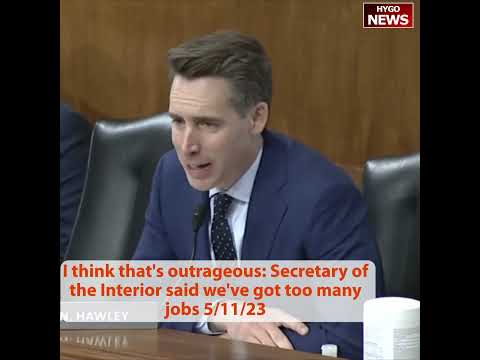
“I Think That’s Outrageous”: Interior Secretary Said “We’ve Got Too Many Jobs”
A senator continued an extended exchange on critical minerals during a May 2023 hearing by recounting a conversation with the Secretary of the Interior. Asked about opening more domestic mines, the Secretary had reportedly responded by citing labor market tightness — “1.9 jobs for every American in the country, so there’s a lot of jobs. And right now…we’ve got basically too many jobs.” The senator’s reaction: “I just think that’s outrageous. I just think that it’s totally outrageous. We need more good-paying jobs in this country, which is why we need realistic, serious permitting reform that will make those jobs available, secure our critical supply chains, and get our workers back to work.”
The Interior Secretary Conversation
- Senator framing: Senator recounted conversation with Interior Secretary.
- Editorial reach: The recounting dramatized the policy disagreement.
- Hearing record: The recounting is now in the formal record.
- Long arc: The recounting fed Republican messaging.
- Long arc: The recounting shaped subsequent oversight.
The 1.9 Jobs Reference
- Interior Secretary’s data: 1.9 jobs for every unemployed American.
- Editorial reach: The data referenced labor market tightness.
- Hearing record: The data is now in the formal record.
- Long arc: The data shaped labor market debates.
- Long arc: The data fed Republican messaging.
The Too Many Jobs Framing
- Senator characterization: Interior Secretary said “we’ve got basically too many jobs.”
- Editorial reach: The framing dramatized the policy disagreement.
- Hearing record: The framing is now in the formal record.
- Long arc: The framing remained central to Republican messaging.
- Long arc: The framing fed broader fiscal debates.
The Outrageous Framing
- Senator framing: “I just think that that’s outrageous. I just think that it’s totally outrageous.”
- Editorial reach: The framing dramatized Republican response.
- Hearing record: The framing is now in the formal record.
- Long arc: The framing remained central to Republican messaging.
- Long arc: The framing fed broader fiscal debates.
The More Good Paying Jobs
- Senator framing: “We need more good-paying jobs in this country.”
- Editorial reach: The framing connects to working class messaging.
- Hearing record: The framing is now in the formal record.
- Long arc: The framing remained central to Republican messaging.
- Long arc: The framing operates as both substance and rhetoric.
The Permitting Reform Framing
- Senator framing: “We need realistic, serious permitting reform.”
- Editorial reach: The framing positions permitting as central.
- Hearing record: The framing is now in the formal record.
- Long arc: Permitting reform continued through 2024.
- Long arc: Permitting reform shaped industrial policy.
The Critical Supply Chains Framing
- Senator framing: Permitting reform would “secure our critical supply chains.”
- Editorial reach: The framing connects to industrial policy.
- Hearing record: The framing is now in the formal record.
- Long arc: The framing remained central to Republican messaging.
- Long arc: The framing fed broader strategic debates.
The Workers Back To Work Framing
- Senator framing: Permitting reform would “get our workers back to work.”
- Editorial reach: The framing connects to working class messaging.
- Hearing record: The framing is now in the formal record.
- Long arc: The framing remained central to Republican messaging.
- Long arc: The framing operates as both substance and rhetoric.
The Haaland Reference
- Interior Secretary: Deb Haaland served as Interior Secretary at the time.
- Editorial reach: Haaland’s role gave the testimony official policy weight.
- Hearing record: Haaland’s role is now in the formal record.
- Long arc: Haaland continued to lead Interior through 2024.
- Long arc: Haaland shaped public lands policy.
The Domestic Mining Permits
- Editorial reach: Domestic mining permits face substantial regulatory hurdles.
- Editorial line: The permitting question is central to domestic supply.
- Hearing record: The permitting context is now in the formal record.
- Long arc: Permitting reform continued to be debated through 2024.
- Long arc: Permitting reform shaped industrial policy.
The Critical Minerals Context
- Editorial reach: Critical minerals are central to clean energy transition.
- Battery requirement: Batteries require lithium, cobalt, nickel, and other minerals.
- Editorial reach: Supply chain became central to industrial policy.
- Hearing record: The critical minerals context is now in the formal record.
- Long arc: Critical minerals continued to be central through 2024.
The Labor Market Picture
- Tight labor market: The 2023 labor market was historically tight.
- Editorial reach: Tight labor markets shaped policy debates.
- Hearing record: The labor market context is now in the formal record.
- Long arc: Labor market tightness continued through 2024.
- Long arc: Labor market tightness shaped wage debates.
The IRA Critical Minerals
- 2022 IRA: The Inflation Reduction Act included critical minerals sourcing provisions.
- Sourcing rules: The rules prefer U.S. or free trade partner sources.
- Editorial reach: The rules reshape the critical minerals supply chain.
- Hearing record: The IRA rules context is now in the formal record.
- Long arc: The IRA rules continued to evolve through 2024.
The Permitting Reform 2023
- 2023 Fiscal Responsibility Act: The June 2023 deal included some permitting reform.
- Editorial reach: Permitting reform continued to be debated through 2024.
- Hearing record: The permitting reform context is now in the formal record.
- Long arc: Permitting reform shaped industrial policy.
- Long arc: Permitting reform continued to be central.
The U.S. Mineral Resources
- Editorial reach: The U.S. has substantial domestic mineral resources.
- Editorial line: Mining of those resources faces regulatory and environmental hurdles.
- Hearing record: The U.S. resources context is now in the formal record.
- Long arc: U.S. mineral development continued through 2024.
- Long arc: U.S. mineral development shaped supply chain debates.
The Republican Strategy
- Domestic mining framing: Republicans support domestic mining expansion.
- Editorial reach: The framing connects to broader fiscal and industrial debates.
- Hearing record: The Republican strategy is now in the formal record.
- Long arc: The strategy remained central to Republican messaging.
- Long arc: The strategy shaped 2024 election positioning.
The Democratic Response
- Investment framing: Democrats frame critical minerals as investment.
- Editorial reach: The framing shapes industrial policy debates.
- Hearing record: The Democratic response is now in the formal record.
- Long arc: The framing continued through 2024.
- Long arc: The framing shaped 2024 election positioning.
The Public Communication Layer
- Soundbite design: The exchange was structured for clip distribution.
- Documentary value: The hearing record now contains a clean Republican framing.
- Media uptake: The clip moved on conservative media as a Republican response argument.
- Audience targeting: The senator’s style is built for retail political distribution.
- Long arc: The framing remained central to Republican messaging through 2024.
The Working Class Messaging
- Editorial reach: Working class messaging connects to populist politics.
- Hearing record: The working class context is now in the formal record.
- Long arc: Working class messaging continued through 2024.
- Long arc: Working class messaging shaped 2024 election positioning.
- Long arc: Working class messaging fed Republican messaging.
The 2024 Implications
- Election positioning: Both parties use critical minerals for 2024 positioning.
- Industrial state politics: Industrial state politics shape Senate races.
- Long arc: The episode will shape industrial policy through 2024 and beyond.
- Hearing legacy: The hearing record will be cited in future industrial debates.
- Long arc: The framing remains in circulation.
Key Takeaways
- A senator recounted Interior Secretary’s reference to “1.9 jobs for every American.”
- The Secretary characterized the labor market as having “basically too many jobs.”
- The senator’s reaction: “outrageous. Totally outrageous.”
- The senator framed the response as needing more good-paying jobs.
- The senator pivoted to permitting reform as the policy answer.
- The exchange dramatized Republican critique of administration mining policy.
Transcript Highlights
The following quotations are drawn from an AI-generated Whisper transcript of the hearing and should be considered unverified pending official transcript release.
- “I’m asking because when I raise this issue specifically as it relates to opening up more minds in this country with our protections” — senator
- “The Secretary of the Interior told me last month that she pointed out to me that, well, there’s 1.9 jobs for every American in the country” — senator
- “And right now, you know, we’ve got basically too many jobs” — senator characterizing Interior Secretary
- “I just think that that’s outrageous. I just think that it’s totally outrageous” — senator
- “We need more good-paying jobs in this country” — senator
- “Realistic, serious permitting reform that will make those jobs available, secure our critical supply chains, and get our workers back to work” — senator
Full transcript: 121 words transcribed via Whisper AI.