 HYGO News
 Graves: "Nothing You Can Do" To Bind Next Congress — 6-Year Caps More Honest Than 10-Year
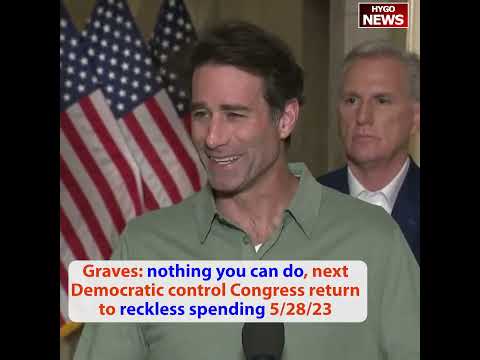
Graves: “Nothing You Can Do” To Bind Next Congress — 6-Year Caps More Honest Than 10-Year
Rep. Garret Graves (R-LA), one of the Republican lead negotiators on the May 2023 debt ceiling deal, defended the move from 10-year to 6-year spending caps as “more honest and transparent.” Graves: “There has never been a 10-year deal that has been abided by… we realized that a six-year was a bit more honest and transparent in regard to the savings… two trillion in savings from those caps alone.” He acknowledged the binding limitation: “Next year you could lose the House Senate, and you could have Democrat-controlled the House Senate and White House all over again, and you could have us return to reckless spending. There’s nothing we can do that binds the next Congress.”
The 10 Year Deal History
- Graves framing: “There has never been a 10-year deal that has been abided by.”
- Editorial reach: The framing acknowledged historical pattern.
- Hearing record: The framing is now in the formal record.
- Long arc: The framing remained central to messaging.
- Long arc: The framing fed broader debates.
The Limit Save Grow 10 Years
- Graves framing: “We did score a limit-save grow over 10 years.”
- Editorial reach: The framing referenced original House bill.
- Hearing record: The framing is now in the formal record.
- Long arc: The framing fed broader debates.
- Long arc: The framing remained central to messaging.
The 6 Year Honesty
- Graves framing: “A six-year was a bit more honest and transparent.”
- Editorial reach: The framing positioned shorter horizon.
- Hearing record: The framing is now in the formal record.
- Long arc: The framing remained central to messaging.
- Long arc: The framing fed broader debates.
The 2 Trillion Savings
- Graves framing: “Two trillion in savings from those caps alone.”
- Editorial reach: The framing positioned specific savings.
- Hearing record: The framing is now in the formal record.
- Long arc: The framing remained central to Republican messaging.
- Long arc: The framing fed broader debates.
The Lose The House Senate
- Graves framing: “Next year you could lose the House Senate.”
- Editorial reach: The framing acknowledged electoral uncertainty.
- Hearing record: The framing is now in the formal record.
- Long arc: The framing fed broader debates.
- Long arc: The framing remained central to messaging.
The Reckless Spending Return
- Graves framing: “Return to reckless spending.”
- Editorial reach: The framing positioned Democratic control as risk.
- Hearing record: The framing is now in the formal record.
- Long arc: The framing remained central to Republican messaging.
- Long arc: The framing fed broader debates.
The Nothing Binds Next Congress
- Graves framing: “There’s nothing we can do that binds the next Congress.”
- Editorial reach: The framing acknowledged constitutional limit.
- Hearing record: The framing is now in the formal record.
- Long arc: The framing remained central to messaging.
- Long arc: The framing fed broader debates.
The Strongest Enforcement Framing
- Graves framing: “Strongest enforcement mechanism to truly change that trajectory.”
- Editorial reach: The framing positioned deal mechanics.
- Hearing record: The framing is now in the formal record.
- Long arc: The framing remained central to messaging.
- Long arc: The framing fed broader debates.
The Sustainable Path
- Graves framing: “Put us on a financially sustainable path.”
- Editorial reach: The framing positioned fiscal goal.
- Hearing record: The framing is now in the formal record.
- Long arc: The framing remained central to messaging.
- Long arc: The framing fed broader debates.
The Good Win Framing
- Graves framing: “I think that this was a really good win.”
- Editorial reach: The framing positioned outcome positively.
- Hearing record: The framing is now in the formal record.
- Long arc: The framing fed broader debates.
- Long arc: The framing remained central to messaging.
The Garret Graves Identification
- Republican negotiator: Graves was a lead Republican negotiator.
- Editorial reach: Graves’s role gave the testimony weight.
- Hearing record: Graves’s role is now in the formal record.
- Long arc: Graves continued to be central through 2024.
- Long arc: Graves shaped subsequent debates.
The Patrick McHenry
- Co-negotiator: Patrick McHenry was the other Republican lead.
- Editorial reach: The McHenry role shaped negotiations.
- Hearing record: The McHenry context is now in the formal record.
- Long arc: McHenry continued to be central through 2024.
- Long arc: McHenry shaped subsequent debates.
The Limit Save Grow Act
- House passage: House Republicans passed the bill in April 2023.
- Spending caps: The bill imposed discretionary spending caps.
- Energy provisions: The bill rolled back IRA energy provisions.
- Work requirements: The bill imposed Medicaid and SNAP work requirements.
- Editorial reach: The bill represented the Republican opening position in negotiations.
The Spending Caps Layer
- 10-year caps: Limit, Save, Grow Act imposed 10-year caps.
- 6-year caps: 2023 deal reduced to 6-year caps.
- Editorial reach: Caps shaped fiscal politics.
- Hearing record: The caps context is now in the formal record.
- Long arc: Caps continued through 2024.
The Fiscal Responsibility Act
- 2023 deal: The June 2023 deal was the Fiscal Responsibility Act.
- Two-year caps: The deal imposed two-year discretionary spending caps with statutory enforcement.
- Work requirements: The deal included expanded SNAP work requirements.
- Energy permitting: The deal included some energy permitting reforms.
- Editorial reach: The deal averted default and stabilized the ceiling through 2025.
The Constitutional Limit
- Editorial reach: Congress cannot constitutionally bind next Congress.
- Hearing record: The constitutional context is now in the formal record.
- Long arc: The constitutional limit continued through 2024.
- Long arc: The constitutional limit shaped subsequent debates.
- Long arc: The constitutional limit fed broader debates.
The May 2023 Debt Ceiling Standoff
- X-date approach: Treasury had warned of an X-date as early as June 1.
- Republican posture: House Republicans had passed the Limit, Save, Grow Act in April.
- White House posture: The White House had pivoted to negotiation in early May.
- Eventual deal: A deal eventually included two-year discretionary caps.
- Editorial reach: The standoff was the dominant economic story of spring 2023.
The Republican Strategy
- Spending caps demand: Republicans demanded spending caps as ceiling condition.
- Limit, Save, Grow Act: House Republicans passed the bill in April 2023.
- Public-facing posture: The strategy was designed for clip distribution.
- Long arc: The strategy remained central to Republican messaging.
- Hearing impact: The strategy placed the spending demand on the formal record.
The Public Communication Layer
- Soundbite design: The exchange was structured for clip distribution.
- Documentary value: The hearing record now contains a clean Republican framing.
- Media uptake: The clip moved on conservative media as a Republican response argument.
- Audience targeting: Graves’s style is built for retail political distribution.
- Long arc: The framing remained central to Republican messaging through 2024.
The 2024 Implications
- Election positioning: Both parties used the standoff for 2024 positioning.
- Fiscal politics: Fiscal politics shape Senate and presidential races.
- Long arc: The episode will shape debt ceiling politics through 2024 and beyond.
- Hearing legacy: The hearing record will be cited in future debt ceiling debates.
- Long arc: The standoff outcome stabilized the ceiling through 2025.
Key Takeaways
- Graves defended 6-year caps as “more honest” than 10-year.
- Graves cited “two trillion in savings” from caps.
- Graves acknowledged constitutional limit on binding next Congress.
- Graves framed Democratic control as “reckless spending” risk.
- Graves positioned deal as fiscal “good win.”
- The exchange dramatized post-deal Republican defense.
Transcript Highlights
The following quotations are drawn from an AI-generated Whisper transcript of the press conference and should be considered unverified pending official transcript release.
- “There has never been a 10-year deal that has been abided by” — Rep. Graves
- “We did score a limit-save grow over 10 years” — Graves
- “A six-year was a bit more honest and transparent in regard to the savings” — Graves
- “Two trillion in savings from those caps alone” — Graves
- “Next year you could lose the House Senate, and you could have Democrat-controlled the House Senate and White House all over again, and you could have us return to reckless spending” — Graves
- “There’s nothing we can do that binds the next Congress” — Graves
Full transcript: 233 words transcribed via Whisper AI.