 HYGO News
 Some must have magical powers that I can't grasp: all 50 Dems agree in advance though none seen this
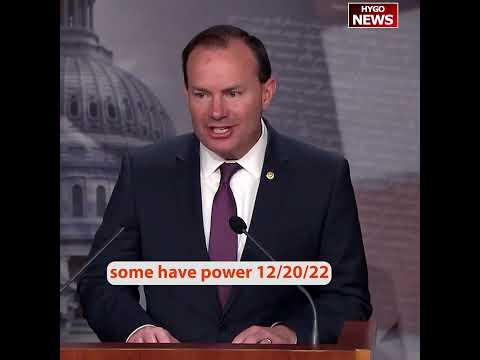
Senator on Omnibus: Only “4 or 5 People” Wrote 4,155-Page Bill — 50 Democrats Agreeing Without Reading Must Have “Magical Powers”
On 12/22/2022, a Republican senator delivered pointed remarks criticizing the 4,155-page omnibus spending bill’s development process. “This monstrous spending bill clocks in at 4,155 pages. It was released in the middle of the night. We’ve had it for only a few hours. And now we’re being told Congress needs to vote on and pass this thing on an expedited basis,” the senator said. “This is a handful like four or five people in Congress wrote this. They put it together. They introduced it in the middle of the night, early morning hours of today.” The senator noted that 50 Democrats would vote for the bill without reading it. “Some of our colleagues must have magical powers, powers that I can’t grasp,” the senator said. The critique exposed how the bill was fundamentally a leadership product rather than a product of deliberative process.
The “Monstrous” Characterization
The senator’s opening characterization was vivid. “This monstrous spending bill clocks in at 4,155 pages,” the senator said.
The “monstrous” framing:
Size emphasis — Through negative description.
Political theater — Making abstract concrete.
Emotional appeal — Beyond factual description.
Memorable framing — For media.
Rhetorical strength — Beyond neutral language.
“Monstrous” conveyed both size and problematic nature. A bill could be “large” and acceptable. A bill being “monstrous” suggested fundamental problems with:
Scale — Too big.
Process — Wrong approach.
Content — Problematic specifics.
Implications — Negative consequences.
Democratic legitimacy — Questionable.
”Only a Few Hours”
The senator emphasized the short review time. “We’ve had it for only a few hours,” the senator said.
The few hours represented:
Unpracticable review — Of massive text.
Staff analysis limited — Even with support.
Expert consultation impossible — Before vote.
Constituent communication — Only speculation.
Public engagement — Not possible.
The contrast between:
Hours to review — Before vote.
Months of delay — Before production.
Leadership control — Throughout.
Member marginalization — For review.
Was stark. Leadership had taken months to produce the bill but expected members to review it in hours.
”Expedited Basis”
The senator noted the expedited timeline. “Now we’re being told Congress needs to vote on and pass this thing on an expedited basis. Some are saying within the next 48 to 72 hours,” the senator said.
The 48-72 hours:
Absolute minimum — For vote.
No meaningful review — Possible.
Leadership schedule — Dictating.
End-of-session urgency — Created.
Shutdown threat — Motivating.
“Expedited basis” was euphemism for “rushed without review.” The procedural speed:
Prevented substantive debate — In chambers.
Minimized amendment opportunities — For changes.
Reduced public scrutiny — Through speed.
Served leadership interests — For control.
Undermined deliberative purpose — Of Congress.
”Four or Five People Wrote This”
The senator exposed the authorship reality. “This is a handful like four or five people in Congress wrote this. They put it together,” the senator said.
The “four or five people” referred to:
Senate Appropriations leadership — Chairman and ranking.
House Appropriations leadership — Similar.
Party leadership — Schumer, McConnell, etc.
Key staff — For specific provisions.
Administration coordination — For priorities.
Rather than Congress collectively writing the bill:
Senior negotiators — Made decisions.
Other members excluded — From substantive work.
Party discipline — Expected acceptance.
Conference process — Final form.
No open deliberation — On final text.
This concentration of authorship was concerning:
Constitutional framers — Envisioned broader participation.
Traditional process — Involved more members.
Current practice — Concentrated power.
Democratic legitimacy — Undermined.
Member disempowerment — Accepted.
”They Introduced It in the Middle of the Night”
The senator detailed the process. “They introduced it in the middle of the night, early morning hours of today,” the senator said.
The middle-of-night introduction:
Avoided public attention — During release.
Prevented immediate response — From members.
Reduced media coverage — Of release.
Strategic timing — By leadership.
Process manipulation — For control.
This timing pattern was increasingly common:
1 AM-3 AM releases — For major bills.
Weekend timing — Also common.
Holiday timing — When attention reduced.
Late Friday — Beginning weekends.
Dead-of-night — Minimizing scrutiny.
Each timing choice served leadership interests by reducing opportunities for opposition mobilization.
”Now They’re Wanting to Collapse All Hearings”
The senator described process collapse. “Now they’re wanting to collapse all hearings, all floor debates, all discussions in earnest about this and say you just have to pass it because this is what the process is,” the senator said.
The “collapsed” process:
No hearings — On the combined bill.
Minimal floor debate — Due to time.
No earnest discussions — About specifics.
Just pass it — Leadership instruction.
“This is the process” — Justification.
Normal legislative process included:
Committee hearings — For examination.
Committee markup — For amendments.
Floor debate — For arguments.
Amendment votes — For changes.
Conference negotiations — For differences.
None of these had occurred for the final omnibus text. The process had:
Bypassed committees — For whole bill.
Avoided hearings — On specifics.
Skipped floor debate — On combined bill.
Prevented amendments — Except procedural.
Closed deliberation — To leadership.
”Magical Powers That I Can’t Grasp”
The senator’s key line was memorable. “Some of our colleagues must have magical powers, powers that I can’t grasp,” the senator said.
The magical powers framing:
Sarcastic dismissal — Of capacity to agree.
Impossibility acknowledgment — Of review.
Colleagues’ claimed ability — To vote.
Senator’s inability — To understand.
Democratic dysfunction — Exposed.
The implication was clear:
50 Democrats — Agreed to bill.
None had read it fully — Impossible in timeframe.
They voted to support — Anyway.
Required “magical powers” — For legitimate approval.
Process was farcical — By normal standards.
The “Unicorn” Framing
The “magical powers” framing connected to broader criticism:
Unicorn-like agreement — On unread text.
Supernatural coordination — Of 50 votes.
Unrealistic claims — Of review.
Absurd process — Laid bare.
Democratic deficit — Exposed.
The framing was politically effective because:
Self-evidently true — Nobody could read 4,155 pages quickly.
Made claims of review absurd — On their face.
Exposed institutional failure — Memorably.
Transcended partisan politics — On process.
Invited audience participation — In recognition.
”The Process Is This Way Because…”
The senator explained the dysfunction. “The process is this way because time after time got enough members who agreed to support these things without even having voted for it,” the senator said.
The explanation identified:
Member acquiescence — Enabling leadership.
Process perpetuation — Through member cooperation.
Leadership control — Sustained by members.
Democratic erosion — Through complicity.
Reform resistance — From multiple sides.
The senator was essentially saying that members were complicit in process dysfunction. Leadership could only sustain the pattern with member cooperation. Members, by going along with the pattern, enabled its continuation.
The Member Complicity
The senator’s point about member complicity was significant:
Members didn’t refuse — To vote on unreviewed bills.
Members didn’t demand — Proper process.
Members didn’t organize — For reform.
Members didn’t break — Party discipline.
Members accepted — Leadership direction.
Each individual member could have refused to vote on unreviewed legislation. If enough members collectively refused, leadership would have to change process. But individual refusals carried political costs:
Party leadership — Wouldn’t tolerate resistance.
Campaign support — Could be withdrawn.
Committee assignments — Could be lost.
Legislative priorities — Could be ignored.
Political future — Could be harmed.
So individual members typically went along even when recognizing process problems. The collective action problem prevented systemic change.
The Leadership Concentration
The senator’s “four or five people” framing highlighted concentration of power:
Speaker/Leader — Dominant roles.
Whip structure — For discipline.
Committee chairs — For specific areas.
Key staff — For text.
Executive coordination — For priorities.
This concentrated power was:
Constitutionally problematic — By original design.
Politically entrenched — Through practice.
Self-reinforcing — Through process.
Resistant to reform — From leadership.
Accepted by members — For various reasons.
Modern Congress operated very differently from historical deliberative bodies. The senator’s critique exposed this gap between ideal and reality.
The Democratic Implications
The senator’s critique had democratic implications:
Accountability — Requires understanding.
Understanding — Requires review.
Review — Requires time.
Time — Was denied.
Therefore accountability — Was impossible.
Citizens couldn’t hold representatives accountable for votes they hadn’t meaningfully evaluated. Representatives couldn’t defend votes on specifics they hadn’t known about. The entire chain of democratic accountability was broken:
Voters — Couldn’t evaluate specific votes.
Representatives — Couldn’t explain specific votes.
Leadership — Made actual decisions.
Staff — Implemented specific language.
Lobbyists — Influenced without visibility.
The Reform Challenge
The senator’s critique was consistent but reform was elusive:
Multiple decades — Of similar patterns.
Bipartisan involvement — In process.
Leadership preferences — Against reform.
Member acceptance — Of process.
Public disengagement — From details.
Despite recurring criticism, the omnibus pattern continued. Each year produced similar bills through similar processes with similar objections. No structural reform emerged.
The Outcome
The omnibus passed despite the senator’s objections and similar criticism. The specific critique became part of the public record but didn’t change the outcome. The pattern of:
Massive bills — Released late.
Member complicity — Or acquiescence.
Leadership control — Sustained.
Public disengagement — Continuing.
Reform deferred — Indefinitely.
Continued essentially unchanged. Future Congresses would likely face similar bills with similar critiques and similar outcomes.
Key Takeaways
- A Republican senator criticized the 4,155-page omnibus as a “monstrous spending bill” released in the middle of night.
- The senator emphasized that only “four or five people in Congress wrote this” — concentrating authorship in leadership.
- Process included no hearings, minimal floor debate, and no substantive discussions before the expedited vote.
- The senator made a memorable line: “Some of our colleagues must have magical powers, powers that I can’t grasp” — referring to how 50 Democrats could agree to support unread legislation.
- The critique exposed that normal deliberative process had been “collapsed” to expedite passage.
- Member acquiescence to leadership control enabled the pattern’s continuation.
- Despite the critique, the omnibus passed and the pattern continued.
Transcript Highlights
The following is transcribed from the video audio (unverified — AI-generated from audio).
- This monstrous spending bill clocks in at 4,155 pages.
- It was released in the middle of the night. We’ve had it for only a few hours.
- Now we’re being told Congress needs to vote on and pass this thing on an expedited basis. Some are saying within the next 48 to 72 hours.
- This is a handful like four or five people in Congress wrote this. They put it together.
- They introduced it in the middle of the night, early morning hours of today.
- Some of our colleagues must have magical powers, powers that I can’t grasp.
Full transcript: 175 words transcribed via Whisper AI.