 HYGO News
 Q: If we spend $50T, but the possibility of China and India not cooperating? A: I don't know
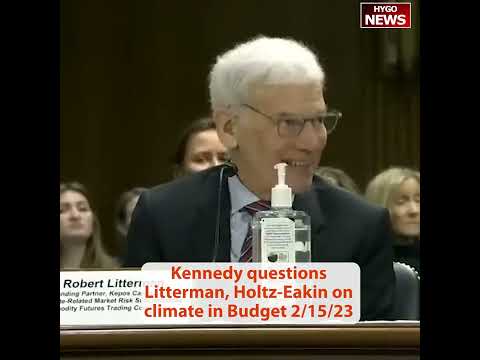
Kennedy: If US Spends $50T But China/India Don’t Cooperate, How Much Temperature Change? Witness Can’t Answer
In February 2023, Senator John Kennedy continued pressing climate witnesses on specific effectiveness of US climate spending if major emitters don’t cooperate. “What if we spend 50 trillion dollars, Europe cooperates, most western democracies cooperate, but India and China don’t? How much will our 50 trillion dollars lower world temperature?” Kennedy asked. The witness deflected: “We’re in this together, Senator. We have to get the world to work together.” Kennedy persisted: “How much, I get that. Okay. How much will lower world temperature? If China and India do not help.” The witness responded: “Yes. Okay.” Kennedy then turned to Dr. Litterman with a more pointed question: “Do you believe based on your observations, you seem to be very intelligent, well informed man, based on your observation of Mr. Xi Jinping, that Mr. Xi Jinping will ever do anything that is inconsistent with China’s best interests in the name of global climate change?”
The Partial Cooperation Scenario
Scenario:
Europe cooperates — Yes.
Western democracies — Most.
India/China don’t — Key.
Partial global action — Actually.
Substantive — Question.
Kennedy’s partial cooperation scenario with Europe and most Western democracies cooperating but India and China not was substantive question. Actually realistic partial global action scenario not theoretical.
”We’re In This Together”
Witness deflection:
Standard response — Climate.
Cooperative framing — Ideal.
Not answering — Question.
Philosophical — Rather than quantitative.
Standard — Dodge.
“We’re in this together, Senator” was standard climate cooperative framing rather than answering question. Philosophical rather than quantitative response. Standard dodge of uncomfortable specifics.
”Get the World to Work Together”
Goal:
Aspirational — Framing.
Diplomatic — Language.
Not answering — Specific question.
Deflection — Through goals.
Standard — Response.
“We have to get the world to work together” was aspirational diplomatic language not answering specific question. Deflection through goal statement. Standard response avoiding uncomfortable specifics.
”How Much” Kennedy Persistence
Persistence:
“I get that” — Acknowledged.
Specific — Sought.
Cooperation point — Moved past.
Temperature impact — Central.
Substantive — Inquiry.
Kennedy’s “how much, I get that. Okay. How much will lower world temperature?” persistence moved past cooperation point toward specific temperature impact. Substantive central inquiry.
”If China and India Do Not Help”
Hypothetical:
Specific — Scenario.
Non-cooperation — Defined.
Real possibility — Yes.
Policy — Relevant.
Substantive — Question.
Kennedy’s “if China and India do not help” hypothetical defined specific non-cooperation scenario that was real possibility in policy-relevant substantive question.
The Witness “Yes. Okay.”
Response:
Minimal — Answer.
Acknowledgment — Scenario.
Not quantitative — Response.
Deflection — Continued.
Limited — Engagement.
Witness’s “Yes. Okay.” minimal response acknowledged scenario without quantitative answer. Continued deflection with limited engagement. Pattern of non-quantitative response to quantitative questions.
The Dr. Litterman Turn
Turn:
Different witness — Targeted.
More pointed — Question.
Substantive — Challenge.
Xi Jinping — Specific.
Political — Dimension.
Kennedy turned to Dr. Litterman with more pointed question. Substantive challenge introducing Xi Jinping specific political dimension. Different witness, different line of questioning.
”Very Intelligent, Well Informed Man”
Flattery:
Compliment — Strategic.
Position Litterman — Credentialed.
Then ask — Pointed.
Technique — Classic.
Effective — Setup.
Kennedy’s “very intelligent, well informed man” flattery strategically positioned Litterman as credentialed before pointed question. Classic rhetorical technique effective setup for substantive challenge.
”Observation of Mr. Xi Jinping”
Specific:
Xi Jinping — Named.
Observation basis — Expertise.
Specific leader — Focus.
Policy question — About him.
Pointed — Inquiry.
Kennedy’s “observation of Mr. Xi Jinping” specifically named Chinese leader and required observation-based expertise response. Specific leader focus with policy question about him. Pointed inquiry.
”Ever Do Anything Inconsistent With China’s Best Interests”
Framework:
National interest — Priority.
China first — Framing.
Xi character — Assessed.
Political — Reality.
Substantive — Question.
Kennedy’s “ever do anything that is inconsistent with China’s best interests in the name of global climate change” framework asked if Xi would prioritize climate over China’s national interests. Substantive realpolitik question.
”In the Name of Global Climate Change”
Specific:
Climate — Focus.
Cost China — Implicit.
National vs. global — Tension.
Political economy — Reality.
Substantive — Question.
Kennedy’s “in the name of global climate change” specific climate focus implicitly questioned whether Xi would accept costs to China’s interests for global climate. Political economy reality substantive question.
The Realpolitik Framework
Framework:
National interests — Primary.
Global goods — Secondary.
Xi calculation — Likely self-interest.
China behavior — Pattern.
Standard — Analysis.
Realpolitik framework had national interests primary vs. global goods secondary. Xi calculation likely prioritizing China self-interest. Standard realpolitik analysis of China behavior patterns.
The China Climate Commitment Context
Context:
2060 target — Declared.
Coal expansion — Continuing.
Gradual — Stated approach.
Development first — Priority.
Partial — Commitment.
China climate commitment context had declared 2060 net-zero target while coal expansion continued. Stated gradual approach with development first priority showed partial commitment to climate goals.
The India Development Priority
Priority:
Development — Primary.
Poverty reduction — Urgent.
Energy access — Expanding.
Climate later — Framing.
Legitimate — Concerns.
India’s development priority with primary focus on poverty reduction and expanding energy access had climate framed as later priority. Legitimate developmental concerns complicating simple climate expectations.
The China Coal Expansion
Expansion:
New plants — Building.
Climate commitments — Contradicted.
Growth priority — Clear.
Energy security — Emphasized.
Pattern — Established.
China coal expansion building new plants contradicted climate commitments with clear growth priority and emphasized energy security. Established pattern of growth over climate mitigation in short term.
The Western Democracies Commitments
Commitments:
Binding — More usually.
Implementation — Serious.
Progress — Real.
Costs — Borne.
Asymmetric — Effort.
Western democracies’ commitments were more binding with serious implementation producing real progress at costs borne. Asymmetric effort between democracies and authoritarian nations in climate action.
The Global Temperature Impact Complexity
Complexity:
US contribution — ~15% emissions.
Other nations — 85%.
Marginal impact — Without cooperation.
Complex modeling — Required.
Substantive — Reality.
Global temperature impact complexity with US at ~15% of emissions and 85% from others made marginal impact limited without cooperation. Complex modeling required. Substantive realistic question.
The Leadership Argument
Leadership:
US example — Moral.
Innovation — Leadership.
Moral high ground — Politics.
Climate coalition — Building.
Standard — Response.
Leadership argument included US example as moral leadership with innovation leadership. Moral high ground politics. Climate coalition building. Standard response to cost-effectiveness challenges.
The Substantive Climate Benefits
Benefits:
US actions — Real.
Technology development — Exported.
Emissions reduction — Some.
Economic transformation — Gained.
Substantive — Positives.
Substantive climate benefits of US actions including exported technology development, some emissions reduction, gained economic transformation were real. Substantive positives beyond temperature directly.
The Kennedy Argument Framework
Framework:
Cost-benefit — Analysis.
Effectiveness — Questioned.
Alternative uses — Implied.
Conservative — Approach.
Substantive — Challenge.
Kennedy’s argument framework through cost-benefit analysis questioned effectiveness implying alternative uses of resources. Conservative approach substantive challenge to climate spending priorities.
The Witness Position Difficulty
Difficulty:
Honest answers — Hard.
Political defense — Needed.
Substantive — Limits.
Academic integrity — Required.
Balance — Difficult.
Witness position difficulty had honest answers being hard while political defense needed. Substantive limits in knowledge. Academic integrity required. Difficult balance in Congressional testimony.
The Xi Jinping Character Question
Character:
Authoritarian — Leader.
National interest — Prioritizer.
China First — Approach.
Climate flexibility — Limited.
Standard — Observation.
Xi Jinping character as authoritarian leader and national interest prioritizer with China First approach had limited climate flexibility. Standard realistic observation of leader characteristics.
The China Strategic Climate Calculation
Calculation:
Manufacturing dominance — Green tech.
Economic advantage — Through renewables.
Cost others — Let them bear.
Profit from — Transition.
Strategic — Genius.
China’s strategic climate calculation gained manufacturing dominance in green tech for economic advantage through renewables while letting others bear costs and profiting from transition. Strategic approach.
The Political Rhetoric vs. Science
Rhetoric vs. science:
Simple political — Framing.
Complex scientific — Reality.
Tension — Permanent.
Translation — Difficult.
Both — Legitimate.
Political rhetoric vs. science tension between simple political framing and complex scientific reality was permanent. Difficult translation between domains. Both legitimate functions needing translation.
The Kennedy Expert Cross-Examination Style
Style:
Legal approach — Applied.
Systematic — Questioning.
Foundation laid — Carefully.
Witnesses pinned — Specifically.
Effective — Technique.
Kennedy’s expert cross-examination style applied legal approach through systematic questioning, carefully laid foundation, specifically pinned witnesses. Effective technique from legal background.
The Louisiana Senator Background
Background:
Attorney general — Former.
Legal experience — Extensive.
State legislator — Prior.
Senator — Since 2017.
Conservative — Approach.
Kennedy’s Louisiana Senator background as former attorney general with extensive legal experience, prior state legislator, Senator since 2017, conservative approach informed questioning style.
The Budget Committee Function
Function:
Cost oversight — Primary.
Policy review — Included.
Expert input — Sought.
Political engagement — Natural.
Standard — Congressional.
Budget Committee function as primary cost oversight with policy review and sought expert input naturally involved political engagement. Standard Congressional oversight function.
The Political Clip Value
Value:
Memorable moments — Created.
Viral potential — Real.
Conservative media — Amplify.
Base mobilization — Achieved.
Campaign material — Generated.
Political clip value through memorable moments with real viral potential attracted conservative media amplification. Base mobilization achieved. Campaign material generated for 2024 cycle.
The Democratic Response Strategy
Strategy:
Benefits articulation — Required.
Scientific consensus — Cited.
Moral imperative — Framed.
Urgency — Emphasized.
Complex — Messaging needed.
Democratic response strategy required benefits articulation with cited scientific consensus. Moral imperative framed. Urgency emphasized. Complex messaging needed to counter cost-benefit framework.
The Climate Policy Implementation Challenges
Challenges:
Multiple agencies — Involved.
Coordination — Complex.
Implementation — Varied.
Effectiveness — Mixed.
Ongoing — Evolution.
Climate policy implementation challenges involved multiple agencies with complex coordination producing varied implementation and mixed effectiveness. Ongoing evolution of policy approaches.
The Innovation Factor Reality
Reality:
Technology declining — Costs.
Scale matters — Greatly.
Market effects — Real.
Future projections — Uncertain.
Optimistic — Reasonable.
Innovation factor reality with declining technology costs and greatly mattering scale effects produced real market effects. Future projections uncertain but optimistic reasonable.
The Long-Term Climate Trajectory
Trajectory:
Emissions peaking — Some nations.
Growth — Others still.
Technology — Advancing.
Policy evolving — Slowly.
Complex — Dynamic.
Long-term climate trajectory with emissions peaking in some nations while growth continued in others alongside advancing technology and slowly evolving policy was complex dynamic.
The Carbon Pricing Absence
Absence:
Market mechanism — Missing.
Political failure — Mostly.
Efficient — Approach.
Cost-effective — Solution.
Substantive — Alternative.
Carbon pricing absence as missing market mechanism was mostly political failure of efficient approach. Cost-effective solution as substantive alternative to current approach potentially.
The 2024 Campaign Climate Politics
Politics:
Cost focus — GOP.
Benefits focus — Dems.
Both valid — Partially.
Compromise — Difficult.
Battle — Political.
2024 campaign climate politics had GOP cost focus and Democratic benefits focus both partially valid with difficult compromise. Political battle over framing and priorities continuing.
The Scientific Uncertainty Reality
Reality:
Models — Uncertain.
Ranges — Wide.
Probability — Distributions.
Point estimates — Misleading.
Substantive — Challenge.
Scientific uncertainty reality with uncertain models producing wide ranges through probability distributions meant point estimates were misleading. Substantive challenge for simple answers Kennedy wanted.
The Democratic Advocacy Messaging
Messaging:
Simple — Required politically.
Complex — Reality scientifically.
Tension — Permanent.
Strategy — Evolving.
Difficult — Balance.
Democratic advocacy messaging tension between simple politically required vs. complex scientific reality was permanent with evolving strategy. Difficult balance between political and analytical needs.
The Kennedy Hearing Broader Impact
Impact:
Narrative — Built.
Cost awareness — Increased.
Benefits questions — Raised.
Political frame — Established.
Long-term — Discussion.
Kennedy hearing broader impact built narrative with increased cost awareness and raised benefits questions. Political frame established affecting long-term discussion of climate policy economics.
The Expert Testimony Value
Value:
Substantive — Engagement.
Honest hedging — Appropriate.
Complexity — Conveyed.
Democratic — Function.
Record — Created.
Expert testimony value through substantive engagement with appropriate honest hedging conveyed complexity. Democratic function served through record creation for future reference.
The Political Communication Evolution
Evolution:
Climate policy — Maturing.
Cost-benefit — Framework.
Honest conversation — Needed.
Simplification — Challenge.
Ongoing — Debate.
Political communication evolution around maturing climate policy needed cost-benefit framework with honest conversation despite simplification challenge. Ongoing public debate about priorities.
Key Takeaways
- Senator Kennedy pressed: “What if we spend 50 trillion dollars, Europe cooperates, most western democracies cooperate, but India and China don’t? How much will our 50 trillion dollars lower world temperature?”
- Witness deflected: “We’re in this together, Senator. We have to get the world to work together.”
- Kennedy persisted on specifics: “How much, I get that. Okay. How much will lower world temperature?”
- He turned to Dr. Litterman with pointed question about Xi Jinping.
- Key question: “Do you believe… that Mr. Xi Jinping will ever do anything that is inconsistent with China’s best interests in the name of global climate change?”
- The exchange highlighted cost-effectiveness concerns with climate spending given partial global cooperation.
Transcript Highlights
The following is transcribed from the video audio (unverified — AI-generated from audio).
- What if we spend 50 trillion dollars, Europe cooperates, most western democracies cooperate, but India and China don’t?
- How much will our 50 trillion dollars lower world temperature?
- We’re in this together, Senator. We have to get the world to work together.
- How much, I get that. Okay. How much will lower world temperature? If China and India do not help.
- Dr. Litterman, do you believe based on your observations, you seem to be very intelligent, well informed man, based on your observation of Mr. Xi Jinping.
- That Mr. Xi Jinping will ever do anything that is inconsistent with China’s best interests in the name of global climate change?
Full transcript: 114 words transcribed via Whisper AI.