 HYGO News
 Not to come, stunned can't recall that, Graham Questions Attorney General Garland
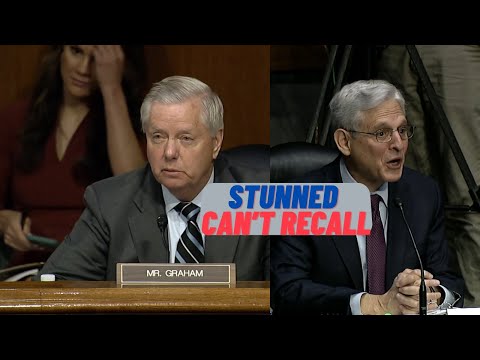
“Not to Come” — Graham Questions Attorney General Garland on the Border Crisis
During a Senate Judiciary Committee hearing in late October 2021, Senator Lindsey Graham (R-SC) pressed Attorney General Merrick Garland on the growing border crisis, producing an exchange that exposed sharp disconnects between the administration’s rhetoric, its enforcement posture, and the reality described by Border Patrol agents on the ground. Garland acknowledged a caravan of approximately 3,000 migrants was approaching the Texas border and said he would tell them “not to come,” but then repeatedly said he could not recall Border Patrol officers telling him they were overwhelmed during a visit to the border just a week earlier. Graham’s disbelief was palpable: “I’m just stunned that you can’t recall that.”
The Caravan Question
Graham opened by establishing the immediate facts on the ground. “Are you aware of the caravan of about 3,000 people approaching the state of Texas?” he asked Garland.
The attorney general confirmed he was aware. “I have read about it in the news media,” Garland said. “I think it’s south of Mexico City is what I remember.”
Graham then asked the obvious follow-up: “So what would you tell these people?”
Garland gave what appeared to be a straightforward answer: “I would tell them not to come.” But he immediately qualified it by noting that the Justice Department’s role was limited to prosecution and adjudication of asylum and removal claims, implicitly redirecting broader border questions to the Department of Homeland Security.
Graham pushed back on the jurisdictional dodge. “But you’re the Attorney General of the United States,” he said, signaling that the nation’s top law enforcement officer could not avoid the question by pointing to a different agency.
Garland Refuses to Say Whether Asylum Laws Are Being Abused
The exchange then turned to the question of whether the asylum system was being exploited by economic migrants who did not qualify for refugee protections. Graham asked directly: “Do you think our asylum laws are being abused?”
Garland’s response was carefully noncommittal. “Asylum laws are statutes passed by the Congress,” he said.
“Yeah, do you think they’re being abused?” Graham pressed.
“I think this is a question that has to be evaluated on a one-by-one basis,” Garland replied, declining to make a broad assessment.
The exchange highlighted a tension that had been building throughout the Biden administration’s first year. Republicans argued that the vast majority of migrants arriving at the southern border were making asylum claims not because they faced persecution in their home countries but because claiming asylum was the most effective way to enter and remain in the United States under the administration’s catch-and-release policies. The attorney general’s refusal to offer a general assessment of whether the system was being abused left Graham visibly frustrated.
”They Never Mentioned the Pull Factors?”
The most striking portion of the exchange came when Graham asked about Garland’s recent trip to the southern border, which had taken place approximately one week before the hearing. Garland confirmed he had visited the border at Nogales, Arizona, and had spoken directly with Border Patrol agents.
Graham asked a pointed question: “Did they tell you anything about asylum claims being made by people that are mostly economic claims, not asylum claims? Did they mention that to you?”
Garland hedged: “I think it’s fair — I don’t recall exactly.”
Graham’s incredulity grew. “You don’t recall being told by the Border Patrol that they’re overwhelmed? They can’t hold the line much anymore, that we’ve had 1.7 million people apprehended? And the big magnet, the pull factor is the way the catch-and-release program around asylum — that didn’t stick out to you?”
Garland said flatly: “That was not a discussion that I had.”
Graham then asked who Garland had spoken with during his border visit. Garland confirmed he had spoken to Border Patrol agents at Nogales. Graham pressed further: “They never mentioned to you the pull factors of illegal immigration?”
Garland began to explain that his visit was “a review of what they were doing at the border with respect to —” before Graham cut him off.
“It’s a simple question: they never mentioned to you that they’ve got a problem with being overrun by asylum seekers?” Graham demanded.
Garland’s response became the exchange’s defining moment. “I know from reading the news media that Border Patrol agents feel that way,” he said.
Graham reacted with visible frustration. “I mean, it’s not about reading the paper. You were there talking to them.”
Garland attempted a final defense: “I don’t recall that. I don’t want to tell you about a conversation that I’m not sure I had.”
Graham delivered his closing line: “I’m just stunned that you can’t recall that.”
The Disconnect Between the Border Visit and the Testimony
The exchange raised a question that went beyond the specific words exchanged: how could the attorney general of the United States visit the southern border during the worst migration crisis in two decades, speak directly with Border Patrol agents, and come away without recalling whether they had discussed the central issue dominating their work?
By October 2021, Customs and Border Protection had recorded more than 1.7 million encounters at the southern border during fiscal year 2021, a figure that shattered previous records. Border Patrol agents and their union had been publicly and vocally describing themselves as overwhelmed, understaffed, and forced to release migrants into the interior of the country because they lacked the capacity to process and detain them.
Garland’s assertion that he learned about Border Patrol’s concerns “from reading the news media” rather than from the agents he met face-to-face suggested either an extraordinarily narrow conversation during his border visit or a deliberate effort to avoid being quoted as having received firsthand accounts of the crisis from his own personnel.
The Political Context
The hearing took place against the backdrop of Vice President Kamala Harris’s widely criticized performance as the administration’s point person on the “root causes” of migration. Harris had been assigned the border portfolio in March 2021 but had faced sustained criticism for not visiting the border until June, and then only briefly in El Paso rather than the Rio Grande Valley where the crisis was most acute.
Garland’s testimony added to the impression that senior administration officials were either unwilling or unable to engage directly with the scale of the border problem. Graham’s questioning was designed to demonstrate that even when officials visited the border, they came away without acknowledging the most basic facts about what was happening there.
Key Takeaways
- AG Garland told the Senate Judiciary Committee he would tell a caravan of 3,000 approaching migrants “not to come” but refused to say broadly whether asylum laws were being abused, calling it a question that must be evaluated “on a one-by-one basis.”
- Garland said he could not recall Border Patrol agents at Nogales telling him they were overwhelmed during a visit just a week earlier, claiming he learned about their concerns “from reading the news media” rather than from the agents themselves.
- Graham declared himself “stunned” by Garland’s inability to recall discussions about the 1.7 million apprehensions and the pull factors of catch-and-release asylum policies during a face-to-face visit with the very agents dealing with the crisis.