 HYGO News
 Not flying surveillance balloons over China. Over Taiwan, over the South China Sea?
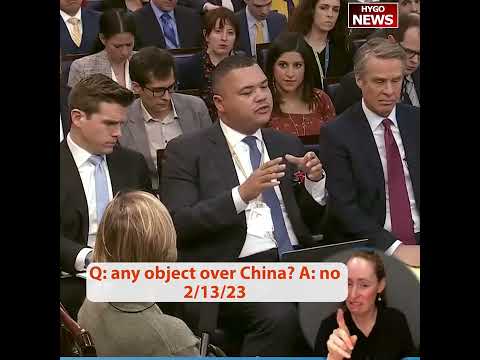
Kirby Firmly Denies U.S. Surveillance Craft In Chinese Airspace — “Even Chinese Claimed Airspace”
In February 2023 as China accused U.S. of flying balloons over Chinese territory in response to the spy balloon dispute, a reporter pressed National Security spokesperson John Kirby for specifics. “You said we’re not flying any surveillance balloons over China. Are we flying any other kind of surveillance craft routinely over China?” the reporter asked. Kirby responded: “You’re not flying surveillance balloons over China. I’m not aware of any other craft that we’re flying over into Chinese airspace.” The reporter pressed on definitions: “Just you said a moment ago that there’s no knowledge of a U.S. balloon or other craft over Chinese territory. Just being cognizant of the fact that China has a different definition of what their territory is than the United States. Is there any U.S. surveillance aircraft over Taiwan, over the South China Sea that would fit into that?” Kirby was firm: “There is no U.S. surveillance aircraft in Chinese airspace.” The reporter clarified: “Okay, even Chinese claimed airspace.” Kirby repeated unequivocally: “There is no U.S. surveillance aircraft in Chinese airspace.”
The China Counter-Accusation Context
Counter-accusation:
China alleged — U.S. balloons.
Over China territory — Claim.
Propaganda response — To Chinese balloon.
Widely disbelieved — Globally.
Denial pattern — Chinese.
Context was China’s counter-accusation that U.S. had been flying balloons over Chinese territory. This was propaganda response to exposed Chinese surveillance. Widely disbelieved globally. Denial pattern deploying counter-accusations.
”Not Flying Surveillance Balloons”
Initial denial:
Surveillance balloons — Specifically.
Over China — Location.
Flat denial — Direct.
Narrow scope — Technically.
Confirmation — Sought for other craft.
Kirby’s initial denial was specifically about surveillance balloons over China. Flat direct denial. But narrow scope technically. Reporter confirmed for other craft categories through follow-up questions.
”Any Other Kind of Surveillance Craft”
Broader question:
Other craft — Broader category.
Aircraft — Included.
Drones — Possibly.
Intelligence assets — Various.
Comprehensive — Inquiry.
The reporter’s “any other kind of surveillance craft routinely over China” expanded inquiry to comprehensive category. Aircraft, drones, various intelligence assets could be included. Comprehensive professional inquiry.
”Not Aware of Any Other Craft”
Kirby response:
“Not aware” — Qualifier.
“Any other” — Broad.
Chinese airspace — Specifically.
Knowledge limits — Acknowledged.
Hedged — Slightly.
Kirby’s “not aware of any other craft that we’re flying over into Chinese airspace” was hedged with “not aware” qualifier. Knowledge limits acknowledged. But broad coverage of other craft categories. Standard careful spokesperson language.
The China Different Territory Definition
Territory definition:
China claims — Broader.
Taiwan included — Chinese view.
South China Sea — Extensive claims.
U.S. disagrees — With claims.
Definition difference — Real.
The reporter’s “China has a different definition of what their territory is than the United States” was accurate. China claims Taiwan and extensive South China Sea areas. U.S. disagrees with these claims. Real definitional differences.
The Taiwan Strait Operations
Taiwan Strait:
Regular U.S. presence — Yes.
Freedom of navigation — Operations.
Strait transits — Standard.
International waters — U.S. view.
Chinese protest — Routine.
U.S. Taiwan Strait operations were routine freedom of navigation with standard strait transits. International waters in U.S. view. Chinese protest routine but U.S. operations continued. Standard pattern.
The South China Sea Operations
South China Sea:
Freedom of navigation — Operations.
Artificial islands — Chinese built.
International waters — U.S. asserts.
Regular presence — Yes.
Challenging — Chinese claims.
U.S. South China Sea operations included freedom of navigation operations around Chinese artificial islands. U.S. asserts international waters. Regular presence challenging Chinese claims. Standard naval operations.
”No U.S. Surveillance Aircraft in Chinese Airspace”
Firm denial:
Unequivocal — Response.
“Chinese airspace” — Specific.
International airspace — Implied OK.
Distinction — Maintained.
Clear — Position.
Kirby’s “there is no U.S. surveillance aircraft in Chinese airspace” was unequivocal. Chinese airspace specific. International airspace implicitly different. Distinction maintained. Clear U.S. position on territorial respect.
”Even Chinese Claimed Airspace”
Broader check:
Chinese claims — Disputed areas.
Taiwan airspace — Claimed.
South China Sea — Areas claimed.
U.S. view — International.
Clarification — Sought.
The reporter’s “even Chinese claimed airspace” clarification probed disputed Chinese claims areas — Taiwan airspace they claim, South China Sea areas they claim. U.S. view these as international. Clarification was sought for comprehensive answer.
”No U.S. Surveillance Aircraft in Chinese Airspace” Repeated
Repetition:
Same answer — Repeated.
Strategic — Language.
“Chinese airspace” — Specifically.
Not addressing — Claimed but disputed.
Careful — Distinction.
Kirby repeated “there is no U.S. surveillance aircraft in Chinese airspace” verbatim. Strategic language. “Chinese airspace” specifically. Not addressing claimed but disputed areas. Careful distinction maintained.
The Linguistic Precision
Precision:
Lawyer-like — Care.
Specific language — Chosen.
Disputed areas — Ambiguous.
Diplomatic — Sensitivity.
Professional — Approach.
Kirby’s lawyer-like precision with specifically chosen language about Chinese airspace vs. Chinese-claimed airspace was diplomatic sensitivity. Professional approach to ambiguous territorial questions. Standard careful communication.
The U.S. Intelligence Collection Reality
Intelligence collection:
Satellite — Primary.
Aircraft — International airspace.
Signals intelligence — Various.
Multiple methods — Deployed.
Not violating — Chinese airspace.
U.S. intelligence collection reality was satellite-based primary with aircraft operating in international airspace, signals intelligence, multiple methods deployed. But technically not violating Chinese sovereign airspace. Legal and diplomatic compliance.
The International Law Framework
International law:
Sovereign airspace — Protected.
12 nautical miles — Territorial.
ADIZ — Air Defense zones.
Not sovereign — ADIZ technically.
Principles — Established.
International law framework protected sovereign airspace at 12 nautical miles territorial. Air Defense Identification Zones (ADIZ) weren’t sovereign technically. Established principles allowed U.S. operations in international airspace.
The Chinese ADIZ Claims
Chinese ADIZ:
East China Sea — 2013.
Extensive — Claimed.
Not internationally — Recognized.
U.S. ignores — Largely.
Continuing — Disputes.
Chinese ADIZ over East China Sea claimed 2013 was extensive. Not internationally recognized as sovereign. U.S. ignored Chinese ADIZ requirements largely. Continuing disputes over airspace definitions.
The China Counter-Propaganda
Counter-propaganda:
U.S. balloons claim — Made.
No evidence — Produced.
Deflection — Clear.
Propaganda — Function.
Chinese audience — Target.
Chinese counter-propaganda about U.S. balloons was claim made without evidence produced. Clear deflection function. Propaganda function for Chinese audience. Counter-messaging rather than factual claim.
The Taiwan Context Complications
Taiwan context:
Cross-strait — Tensions.
U.S. operations — Regular.
Taiwan defense — Commitment.
Chinese protests — Routine.
Strategic — Competition.
Taiwan context complications included cross-strait tensions, regular U.S. operations, U.S. Taiwan defense commitment, routine Chinese protests, strategic competition dimension. Complex Taiwan strategic picture.
The South China Sea Dimensions
SCS dimensions:
Multiple claims — By China.
Artificial islands — Built.
Militarization — Chinese.
U.S. operations — Counter.
Regional tensions — Real.
South China Sea dimensions included multiple Chinese claims, built artificial islands, Chinese militarization, U.S. counter-operations, real regional tensions. Major strategic theater with daily operations.
The Legal Compliance Emphasis
Legal compliance:
U.S. follows — International law.
China often — Disputes law.
Compliance — U.S. pride.
Position — Defended.
Diplomatic — Value.
U.S. legal compliance with international law emphasis was contrasted with Chinese disputes about law. Compliance was U.S. pride. Position was defended. Diplomatic value of compliance.
The Intelligence vs. Military Operations
Operations distinction:
Intelligence — Surveillance.
Military — Freedom of navigation.
Different categories — Technically.
Legal frameworks — Different.
Both — Occurring.
Intelligence surveillance vs. military freedom of navigation operations were different categories technically with different legal frameworks. Both occurring in various international spaces near China.
The Satellite Surveillance Dominant
Satellites:
Primary — Intelligence tool.
Not airspace — Violation.
Space — Different regime.
Chinese — Also do.
Accepted — Internationally.
Satellite surveillance was primary U.S. intelligence tool and not airspace violation. Space different regime from airspace. Chinese also did satellite surveillance. Accepted internationally as legitimate practice.
The Press Corps Professional Inquiry
Inquiry:
Definitional precision — Sought.
Substantive questions — Professional.
Disputed territory — Probed.
Legal clarity — Wanted.
Quality — Journalism.
Press corps professional inquiry sought definitional precision through substantive questions. Disputed territory probed. Legal clarity wanted. Quality journalism displayed through careful questioning.
The Chinese Domestic Audience
Chinese audience:
Counter-narrative — Needed.
Face-saving — Required.
Propaganda — Serves both.
External messaging — Partially for internal.
Political function — Domestic.
Chinese domestic audience needed counter-narrative and face-saving after balloon exposure. Propaganda served both external and domestic audiences. External messaging partially for internal political function. Domestic political dynamics.
The Diplomatic Message Discipline
Message discipline:
“Chinese airspace” — Repeated.
Disputed areas — Ambiguous.
Strategic — Ambiguity.
Legal precision — Maintained.
Professional — Diplomacy.
Diplomatic message discipline repeated “Chinese airspace” phrase maintaining strategic ambiguity about disputed claimed areas. Legal precision maintained. Professional diplomatic communication.
The U.S. Operational Pattern
U.S. operations:
Regular — In region.
International airspace — Most.
Near China — Yes.
Chinese airspace — No.
Legal — Compliant.
U.S. operational pattern in region was regular in international airspace, near China yes, but not in Chinese sovereign airspace. Legally compliant with international law. Standard operating pattern.
The Strategic Competition Framework
Framework:
Major power — Rivalry.
Military dimensions — Real.
Diplomatic — Continuing.
Economic — Decoupling.
Technology — Competition.
Strategic competition framework was major power rivalry with real military dimensions, continuing diplomatic efforts, economic decoupling, technology competition. Multi-dimensional strategic competition.
The Hypothetical China Provocation
Hypothetical:
If China — Provided evidence.
Specific — Claim.
Response needed — Would be.
Strategic — Options.
Escalation — Risk.
Hypothetical China providing specific evidence of U.S. violations would require strategic response options. Escalation risk present. But China hadn’t provided such evidence — claims remained general propaganda.
The Reporter’s Sustained Professional Work
Professional work:
Multiple angles — Explored.
Precision — Sought.
Substantive — Throughout.
Respectful — Tone.
Quality — Accountability.
Reporter’s sustained professional work explored multiple angles, sought precision, maintained substantive inquiry throughout, kept respectful tone, delivered quality accountability journalism.
The Kirby Final Answer
Final answer:
Repeated — Firmly.
Clear — Position.
Legal — Framework.
Diplomatic — Care.
Consistent — Messaging.
Kirby’s firmly repeated final answer was clear position within legal framework and diplomatic care. Consistent messaging maintained. Professional communications execution on sensitive topic.
The Long-Term Narrative Impact
Narrative impact:
U.S. position — Clear.
Chinese claims — Undermined.
Propaganda — Rebutted.
International — Audience.
Strategic — Communication.
Long-term narrative impact was clear U.S. position undermining Chinese claims, rebutting propaganda. International audience for messaging. Strategic communication succeeding in establishing position.
The Evidence-Based Approach
Evidence-based:
U.S. relies on — Facts.
China relies on — Claims.
Asymmetry — Evident.
Credibility — At stake.
Long-term — Strategy.
The evidence-based approach was U.S. relying on facts while China relied on unsupported claims. Asymmetry evident. Credibility at stake. Long-term strategic communication advantage for evidence-based approach.
Key Takeaways
- A reporter asked about U.S. surveillance craft beyond balloons over China after China’s counter-accusations.
- Kirby stated: “You’re not flying surveillance balloons over China. I’m not aware of any other craft that we’re flying over into Chinese airspace.”
- The reporter noted: “China has a different definition of what their territory is than the United States.”
- Specific follow-up: “Is there any U.S. surveillance aircraft over Taiwan, over the South China Sea that would fit into that?”
- Kirby was firm: “There is no U.S. surveillance aircraft in Chinese airspace.”
- When asked about “Chinese claimed airspace,” Kirby repeated unchanged: “There is no U.S. surveillance aircraft in Chinese airspace.”
Transcript Highlights
The following is transcribed from the video audio (unverified — AI-generated from audio).
- You said we’re not flying any surveillance balloons over China. Are we flying any other kind of surveillance craft routinely over China?
- You’re not flying surveillance balloons over China. I’m not aware of any other craft that we’re flying over into Chinese airspace.
- Just being cognizant of the fact that China has a different definition of what their territory is than the United States.
- Is there any U.S. surveillance aircraft over Taiwan, over the South China Sea that would fit into that?
- There is no U.S. surveillance aircraft in Chinese airspace.
- Okay, even Chinese claimed airspace. There is no U.S. surveillance aircraft in Chinese airspace.
Full transcript: 125 words transcribed via Whisper AI.