 HYGO News
 LA Mayor Bass EO to protect criminals; Dem: ICE is horrific; Newsom leaders jail; Justice Jackson
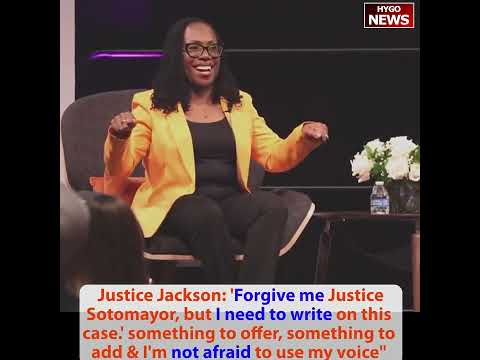
LA Mayor Bass EO to protect criminals; Dem: ICE is horrific; Newsom leaders jail; Justice Jackson
Four distinct Democratic Party flashpoints landed in the same news cycle. LA Mayor Karen Bass signed an executive directive instructing city departments to develop preparedness plans for how city workers should “address immigration officials should they approach a city department” — a formalization of municipal resistance to federal immigration enforcement. California Democrat Rep. Julia Brownley called ICE “horrific,” “vulgar,” and “un-American” for conducting the operation that halted child labor at a marijuana facility. Maryland Attorney General Anthony Brown declared “Maryland refuses to cooperate with ICE.” California Governor Gavin Newsom told an activist audience that “the most transformative leaders” — King, Havel, Mandela, Chavez — “had one thing in common, and that was jail time,” raising the question of whether he was suggesting Democratic officials should seek arrest. And Justice Ketanji Brown Jackson explained her decision to sometimes break with Sotomayor on dissents with the line: “Forgive me Justice Sotomayor, but I need to write on this case … I’m not afraid to use my voice.” Four different leaders, one underlying thread: the positioning of progressive institutional power against federal enforcement and conservative jurisprudence.
LA Mayor Bass: Executive Directive on ICE Protocols
Mayor Karen Bass opened the day’s news with a direct announcement. “So the executive directive that I will be signing in a few minutes is to help the city family, to help the city workforce, to help the city departments and all of the general managers essentially develop preparedness plans that have specific protocols and that help city workers know how to address immigration officials should they approach a city department.”
The language is carefully chosen. “Preparedness plans.” “Specific protocols.” “How to address immigration officials should they approach a city department.” None of those phrases use the words “resistance,” “obstruction,” or “non-cooperation.” But the operational content is clear. LA is formalizing procedures for city workers — people at the Department of Water and Power, at the libraries, at the parking enforcement offices, at every point of municipal contact — to know what to say and not say, what to hand over and not hand over, when a federal immigration agent walks in.
The administration’s critics framed this as the mayor signing “an executive order to protect criminal illegal aliens.” Bass’s framing is that the city is protecting its workforce from having to improvise in politically charged encounters. The gap between those two framings is the entire sanctuary-city debate in miniature.
Rep. Julia Brownley: “Horrific,” “Vulgar,” “Un-American”
California Democrat Rep. Julia Brownley escalated the rhetoric further, this time directed at a specific enforcement action. In remarks captured on video, she called ICE’s conduct “horrific,” said it “shouldn’t be this way,” described it as “vulgar” and “un-American.”
“What we’ve really seen here is horrific,” Brownley said. “It shouldn’t be this way. It is vulgar. It’s un-American. This is not what we are about here.”
The operation she was describing was the ICE enforcement action at a marijuana facility that uncovered children being exploited for cheap labor. The mayor of Oxnard announced he would explore legal avenues to stop such operations. Rep. Brownley took the rhetorical step further: not merely opposing the operations through legal channels, but labeling the federal agency that rescued the exploited children with the harshest three-word moral judgment available — vulgar, horrific, un-American.
The problem with those adjectives is that they are asserted without engaging the predicate. The ICE operation found child labor. Children were being exploited at a cannabis operation. Removing them from that exploitation is child-welfare intervention. Calling the removal vulgar, horrific, and un-American without addressing the exploitation that necessitated it is a rhetorical strategy that counts on the audience not asking a single follow-up question about what the operation actually uncovered.
Maryland AG: “Maryland Refuses to Cooperate”
Democrat Maryland Attorney General Anthony Brown formalized his state’s posture. “Maryland refuses to cooperate with ICE.”
That is the most direct formulation of state non-cooperation on record in Maryland’s history. It goes beyond a sanctuary jurisdiction’s informal practice. It is the state’s top law enforcement officer stating categorically that state resources will not be deployed in support of federal immigration enforcement.
The practical question is what that means for detention facilities, court clerks, and local police across Maryland. In a state with significant local policing variation, the AG’s statement is as much a political posture as a uniform operational policy — some Maryland counties, with their own elected sheriffs, may or may not align with the AG’s position. What the statement does accomplish is setting the narrative framework: “Maryland refuses” is the headline, and counties pushing back against that framing now carry the political burden.
Newsom’s Jail-Time Riff
California Governor Gavin Newsom made what may be the most unusual remarks of the cycle. Speaking to a supportive audience, Newsom invoked Dr. Martin Luther King Jr., Václav Havel, Nelson Mandela, and César Chavez.
“You think about some of the most transformative leaders in our life. You think about some of the most iconic leaders like Dr. King, or Havil, or Mandela, or people like, you know, well, César Chavez himself. And at the peak of their influence, they had one thing in common, and that was jail time.”
Then the pivot: “It was just kind of interesting, you know. I don’t think Gandhi spent a day in his life as prime minister, but all of them had something much more powerful than formal authority. They had something you have in abundance and that’s called moral authority. And we can use a little of that in this country today.”
The remarks are pitched as inspiration — that “moral authority” exceeds “formal authority,” and that historically transformative figures earned that moral authority partly through willingness to go to jail for their cause. In the context Newsom was delivering them — a Democratic-aligned audience, in a political moment where federal immigration operations are being actively resisted by state and local officials — the implication is hard to miss. The governor is suggesting that voluntary civil disobedience, to the point of jail time, is a legitimate and potentially ennobling posture for Democratic activism.
What the Governor Did Not Say
Newsom did not explicitly call for Democratic elected officials to break the law. He did not explicitly call for activists to get arrested. The remarks were positioned as a reflection on historical figures. But framed for a California audience at this political moment, with ICE operations occurring in California cities, with Democratic mayors and prosecutors positioning themselves against federal enforcement, the framing does not need to be explicit to be understood.
The King-Havel-Mandela-Chavez lineup is a specifically curated list. King spent time in Birmingham jail. Havel was a Czech dissident jailed by the Communist regime. Mandela served 27 years in South African prisons under apartheid. Chavez was jailed during United Farm Workers organizing. What they have in common is that they were jailed by regimes or systems that their moral vision eventually displaced. The implicit comparison — that today’s Democratic activism on immigration is analogous to King’s civil rights struggle or Mandela’s fight against apartheid — is the unstated subtext of the entire riff.
Whether Newsom believes the comparison is apt is his question to answer. The political effect of making it to an activist audience is to validate the most confrontational posture among his allies.
Justice Jackson: “I’m Not Afraid to Use My Voice”
At a different register entirely, Justice Ketanji Brown Jackson spoke publicly about how she decides whether to write separate dissents from Justice Sonia Sotomayor. The court’s current balance — the justice described being “sometimes in the minority” — means Sotomayor, as the senior liberal, typically assigns the principal dissent.
“The justice with the most seniority on the majority side and on the minority side is responsible for making the assignments,” Jackson explained. “In a split decision, let’s say it’s a 6-3 decision with, you know, me, Justice Sotomayor and Justice Kagan in the minority, Justice Sotomayor will decide who’s going to write the V dissent, the principal dissent. Sometimes she will assign one to me.”
But then the striking part. “There are sometimes when, even after the principal dissent is written, I have a slightly different perspective or a different take on something or this is an issue of particular importance to me for whatever reason where I will say, forgive me Justice Sotomayor, but I need to write on this case. And it’s because I feel like I might have something to offer and something to add and I’m not afraid to use my voice.”
That is a public acknowledgment of internal pushback against the court’s most senior liberal justice. It is also the reason Jackson’s written output has accelerated since she joined the court. “I’m not afraid to use my voice” is not a courtroom line. It is a personal positioning statement, delivered to a public audience, signaling that Jackson will not subordinate her distinctive perspective to the seniority system when she believes her voice is needed.
”The How” of Dissents
Jackson added a reflection on the written exchanges between majority and dissent. “The majority writer can address the dissent in the majority opinion. As I’ve said to people sometimes it isn’t the what you’re saying, it’s the how. Does that ever hurt your feelings, more the how than the what? I have a very thick skin. I do. I mean, maybe that’s part of the blessing you go all the way back to the beginning.”
The “how” of judicial writing is a subject the public does not usually hear justices discuss openly. Majority opinions that address dissents pointedly — describing reasoning as “insupportable,” “inconsistent with this Court’s precedents,” or other sharpened language — are part of the texture of appellate decision-making. Jackson’s acknowledgment that the how sometimes matters more than the what, and her assertion that she has “a very thick skin,” is a rare public window into the emotional dimension of being a justice in regular 6-3 minority decisions.
A Four-Front Day
Four Democratic institutional actors — a mayor, a congresswoman, an attorney general, a governor — plus a sitting justice of the Supreme Court. The positions range from procedural (Bass’s “preparedness plans”) to categorical (Brown’s “refuses to cooperate”) to rhetorical (Brownley’s “horrific, vulgar, un-American”) to aspirational (Newsom’s jail-time riff) to quietly independent (Jackson’s “not afraid to use my voice”).
What unites them is a posture of institutional resistance — the idea that each level of progressive institutional power should use whatever tools it has to push back against, work around, or differentiate itself from the current federal enforcement and conservative judicial posture.
The Jackson item, technically, is different in kind. She is not resisting immigration enforcement. She is reflecting on her internal dynamics within the court’s liberal bloc. But the thread that connects all five is the same: progressives positioning themselves as willing to dissent, disrupt, obstruct, or break ranks when they believe the cause warrants it.
Key Takeaways
- LA Mayor Karen Bass signed an executive directive instructing city departments to develop “specific protocols” so city workers know “how to address immigration officials should they approach a city department” — a formalization of municipal resistance to federal ICE operations.
- California Democrat Rep. Julia Brownley called ICE’s child-labor rescue operation at a marijuana facility “horrific,” “vulgar,” and “un-American” — “This is not what we are about here.”
- Maryland Attorney General Anthony Brown stated flatly: “Maryland refuses to cooperate with ICE,” putting the state’s top law enforcement officer on record against federal immigration coordination.
- Governor Gavin Newsom told an activist audience that “the most transformative leaders” — King, Havel, Mandela, Chavez — “had one thing in common, and that was jail time” and “moral authority” exceeds “formal authority.”
- Justice Ketanji Brown Jackson revealed she sometimes breaks with senior Justice Sotomayor on dissents: “Forgive me Justice Sotomayor, but I need to write on this case … I’m not afraid to use my voice,” adding she has “a very thick skin” for the “how” of judicial exchanges.