 HYGO News
 Impersonating police officer; LA Mayor cleans up; block ICE; tip off illegals before ICE raids
Impersonating police officer; LA Mayor cleans up; block ICE; tip off illegals before ICE raids
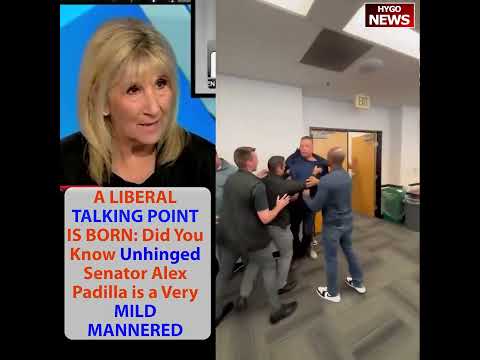
A set of incidents over a 72-hour period captured the operational consequences of the current Democratic posture on federal immigration enforcement. A case of police impersonation produced public safety warnings from local police. Los Angeles Mayor Karen Bass engaged in what Democratic politicians themselves described as a “little PR effort” to clean up graffiti from riots she had previously declined to condemn. Pennsylvania Democratic officials openly instructed constituents to “stand in front and block ICE” from deporting criminals. LA City Councilwoman Imelda Padilla — not the senator, a different Padilla — asked the LAPD whether it could use AI to warn illegal immigrants about ICE operations in advance. Secretary of Defense Pete Hegseth, in a parallel clip, offered the administration’s rejoinder: Trump is “dialed in” and “putting America First.” Finally, a full liberal talking point was born overnight to defend Senator Alex Padilla as a “mild mannered” man. This article walks through each thread.
The Impersonation Case
The first segment of the video concerns a police impersonation case in Brooklyn Park. The local police chief briefed the public. “It was impersonating an officer who, how much we shot these people, did they knock on the door and people came to the door or were there some breakers in the hall?”
The subsequent explanation was clear. “Yeah, it was knocking on the door and asking the person to come out, absolutely impersonating a police officer, reminding them that if somebody comes to the door and they knock on the door and claiming to be a police officer, please do a couple of things. One, call 911 and confirm that the officer belongs there.”
The connection to the broader story is important. As federal agents operating in sensitive environments have become more visible, the opportunity for bad actors to impersonate law enforcement has increased. Residents who are already uncertain whether to open the door to law enforcement may be more vulnerable to con artists posing as officers.
The Brooklyn Park Pair Rule
The chief then shared an operational change the department had made. “We’ve informed all our officers in Brooklyn Park that they are not to approach anybody by themselves, they’re approaching pairs, meaning two officers. So if there’s only one officer outside the door, do not answer the door and call 911.”
The pair rule is both a protection for officers and a signal for residents. Officers working in pairs have each other as witnesses and backup. Residents who see a lone officer at their door can use the pair rule as a verification check — an impersonator is less likely to arrive with a partner who can corroborate his identity.
The practical effect for immigrant communities worried about federal enforcement is that the pair rule gives them a simple test. Real officers come in pairs. Lone individuals at the door claiming to be officers are suspicious and should trigger a 911 call.
LA Mayor’s Graffiti Cleanup
The transcript then pivots to Los Angeles. “I spoke about the president’s decision to quote unquote send in the troops to LA Mayor Karen Bass in a 101 interview on Thursday. She was hearing this little PR effort, basically trying to clean some of the graffiti off the walls.”
The characterization — “this little PR effort” — is striking because it comes from a Democratic source. Bass had been filmed helping with graffiti cleanup in an area affected by the riots. Her critics, including some on the political left, saw the cleanup as performative — a gesture at addressing the consequences of unrest she had previously declined to forcefully condemn.
”March In The Streets And Saying We Will Not Abide This”
The critique continued. “We need to be out here with the community, marching in the streets and saying that we will not abide this. We need to use our authority and our position to stand in front and block ice from taking neighbors whenever possible.”
This is the Democratic escalation in a single sentence. The speaker is not asking for constituents to call their representatives. The speaker is asking officials to use their authority to physically stand in front of ICE officers and block enforcement operations.
The Administration’s 413% Assault Statistic
The administration’s framing of this rhetoric is that it is not merely political. It is operational. “This is the kind of rhetoric that has led to a 413% increase in assaults against agents and threats against their families.”
The 413% figure is the administration’s reporting of the year-over-year increase in documented assaults against federal immigration agents. Whether the specific statistic survives scrutiny is a separate question, but the trajectory — more assaults, more threats, more physical interference — is consistent across multiple reporting sources. When elected officials at the local and state level publicly call for physical blocking of federal operations, the atmosphere for the agents executing those operations becomes more dangerous.
Imelda Padilla’s AI Proposal
The most remarkable moment in the video came from LA City Councilwoman Imelda Padilla, who asked the LAPD a question that effectively amounted to a request for assistance in obstructing federal enforcement.
Her question: “Can we use technology like AI technology to create a situation where your department can identify, hey, there’s agents, non-city of LA, in a neighboring town, everyone go on alert in a way where you can support our business community and our immigrant community to know that it’s time. That’s something related to the lack of due process, the lack of warrants is about to hit our town.”
The councilwoman is asking whether the LAPD can use artificial intelligence to create an alert system that would notify the immigrant community when federal agents are operating in neighboring jurisdictions — so that those targeted by the operations can be warned in advance.
The LAPD Response
The LAPD official’s response was direct. “So you’re asking me to warn you about an enforcement action being taken by another agency before it happens?”
“Yeah.”
“Yeah, we can’t do that.”
“Why not?”
“That would be obstruction of justice. You may wanna talk to the city attorney about that.”
The exchange captures, in three short lines, the constitutional and criminal problem with the councilwoman’s proposal. Warning targets of a pending federal enforcement action before it happens is not a gray-area political choice. It is a criminal offense — obstruction of justice — that carries federal penalties.
The LAPD official’s reference to the city attorney was a polite but pointed suggestion that the councilwoman’s question should have been run past legal counsel before being asked in a public setting. The fact that it was asked openly is itself a window into how normalized obstruction rhetoric has become in certain jurisdictions.
The “Mild Mannered” Talking Point
The video also captures the birth of a new Democratic talking point about Senator Alex Padilla — the senator, this time. Across multiple clips from different Democratic officials, the word “mild mannered” appears in almost identical formulation.
“And anyone that knows Alex Padilla knows one thing about Alex Padilla. He’s one of the most mild manner, decent people you’ll meet.”
“I know Alex Padilla to be among the most mild manner.”
“Jamie is right, he is very mild mannered. He’s not the type of person who would necessarily do this.”
“People who may not be familiar with Senator Padilla, he is one of the most mild manner, nerdy, soft spoken.”
“Thinks of him as anything other than a reasoned, reasonable, mild mannered senator.”
Why The “Mild Mannered” Framing Matters
The repetition across multiple Democratic voices — California Governor Gavin Newsom, a California House Democrat, various CNN talking heads, and Delaware Democratic Senator Chris Coons — indicates the coordination of a single messaging line. The intent of the line is clear. If Padilla can be established as mild-mannered by reputation, his behavior at the press conference becomes an aberration. An aberration invites the interpretation that something external produced it — likely Trump’s policies, in the Democratic telling.
The administration’s counter is that whether Padilla is mild-mannered in his ordinary professional conduct is beside the point. What matters is what he did at the press conference, not what he usually does. The protective officers’ response was to what Padilla did, not to his reputation. A senator who is mild-mannered 999 days of the year and who charges a cabinet secretary’s podium on the 1000th day is still, in that moment, a senator charging a cabinet secretary’s podium.
Hegseth: “Trump Is Dialed In”
The final thread is Secretary of Defense Pete Hegseth’s comment on Trump’s engagement with his own administration. “The American people can be assured that President Trump is dialed in. This is not an auto pen moment. We had that where the world saw our gaze distracted or not paying attention at all.”
The “auto pen” reference is a direct callback to the Biden administration’s widely reported use of the automated signing device for executive actions. The criticism that circulated during those years — that signature use was not necessarily confirmation of presidential awareness of the content signed — is one Hegseth is resurrecting to draw the contrast.
”Every Single Dynamic”
Hegseth continued. “President Trump is dialed in, I get to see it every single day. He knows every single dynamic of what’s going on here. And I’ll tell you what he’s doing, Rachel. He’s put in America first.”
The “every single dynamic” framing positions Trump as the active decision-maker across the government’s portfolio. Whether this characterization is accurate in every detail is debatable, but it is the characterization Hegseth is offering. The administration is betting that the contrast between a hands-on Trump and the perception of a less-engaged Biden administration plays favorably with voters.
The “America First” Closing
The “America First” framing is the long-running rhetorical brand of the Trump policy program. It is the shorthand for a set of choices that prioritize American workers, American manufacturing, American energy, and American security over international or transnational concerns. Hegseth’s invocation is a reminder to the audience that the full policy program hangs together around that central commitment, and that individual policy choices — immigration enforcement, tariffs, EV mandate rollback — are instances of the same overarching posture.
The Thread Connecting All Five Stories
The five threads in this video — police impersonation warnings, Bass’s graffiti theater, the “block ICE” rhetoric, Imelda Padilla’s AI proposal, and the “mild mannered” Alex Padilla defense — all connect to a single question. What does it mean for municipal and state governments to maintain policies that directly impede federal enforcement of federal law?
The administration’s answer is that it is obstruction, it is dangerous to agents, and it creates conditions that bad actors can exploit. The Democratic answer is that sanctuary policies protect vulnerable communities. Both answers shape concrete choices in concrete jurisdictions, and those choices have concrete consequences that show up in the news cycle again and again.
Key Takeaways
- Brooklyn Park PD warns: impersonators knocking on doors claiming to be police; real officers now approach only in pairs. “So if there’s only one officer outside the door, do not answer the door and call 911.”
- Democratic critic on Mayor Bass graffiti cleanup: “this little PR effort, basically trying to clean some of the graffiti off the walls. We need to be out here with the community, marching in the streets.”
- LA Councilwoman Imelda Padilla asked LAPD to use AI to warn illegal immigrants about pending ICE operations; LAPD response: “That would be obstruction of justice.”
- Democratic coordinated “mild mannered” talking point on Sen. Alex Padilla — Newsom, Coons, and CNN talking heads all converged on the same phrase.
- Hegseth: “The American people can be assured that President Trump is dialed in…This is not an auto pen moment.”