 HYGO News
 Corrupt: bought off piece by piece, person by person, enough special favors, 7500 earmarks
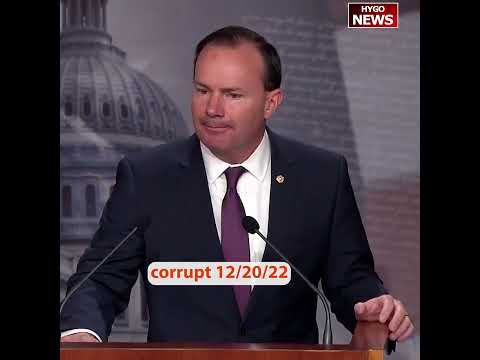
Senator: 7,500 Earmarks and “Bought Off Piece by Piece, Person by Person” — Not Legally Corrupt, But Corrupt Process
On 12/22/2022, a Republican senator continued criticizing the omnibus process, explaining exactly how 50 Democrats and 10-20 Republicans could agree to support the 4,155-page bill without having read it. “Those 50 Democrats and those 10 to 20 Republicans who pledged their support for it before it even existed, they somehow knew what was in it. Well, it wasn’t just that they were clarifying it, it’s that they were sort of bought off piece by piece, person by person,” the senator said. “I don’t mean bought off in the legally corrupt sense, but in the sense that it’s a corrupt process. You hand out enough special favors here or there to get this or that proposal, this or that funding priority in there. You throw at 7,500 earmarks, and you’re going to get a lot of people to jump on board. That isn’t right.”
The “How They Knew” Question
The senator addressed the central mystery. “Those 50 Democrats and those 10 to 20 Republicans who pledged their support for it before it even existed, they somehow knew what was in it,” the senator said.
The apparent contradiction:
Members pledged support — Before bill existed.
Yet none had read it — Could not have.
Yet they claimed to know — What they supported.
Appropriations committee members — Hadn’t seen it.
Even subcommittee chairs — Were excluded.
The “somehow knew” framing was sarcastic. Obviously members couldn’t know the specifics of a bill they hadn’t seen. Their claimed knowledge was fiction.
The Appropriations Committee Exclusion
The senator made a specific point. “I’ve got friends on the Appropriations Committee, including some who were subcommittee chairs or subcommittee ranking members on there who hadn’t seen it. Yet they didn’t know what was in it,” the senator said.
The Appropriations Committee exclusion was striking:
Appropriations members — Should have known.
Subcommittee chairs — Had specialized roles.
Ranking members — Had minority input.
All excluded — From final text.
Concentrated authorship — In leadership.
Even the committee with formal jurisdiction over spending hadn’t been involved in producing the final bill. The bill came from:
Leadership negotiations — Beyond committee.
Chair-ranking member deals — Top appropriators.
Staff drafting — Based on deal points.
Last-minute assembly — Of final text.
Not committee process — At all.
This concentration bypassed the standard committee system that was supposed to produce expertise-based legislation.
”Bought Off Piece by Piece”
The senator introduced his central framing. “It wasn’t just that they were clarifying it, it’s that they were sort of bought off piece by piece, person by person,” the senator said.
The “bought off” framing:
Piece by piece — Individual provisions.
Person by person — Individual members.
Transactional approach — Exchange of support.
Systematic method — Throughout.
Effective technique — For coalition-building.
The mechanics:
Leadership identifies — Member priorities.
Specific provisions — Added to bill.
Support secured — In exchange.
Coalition built — Incrementally.
Majority assembled — Through accumulation.
This wasn’t inherently unusual in legislation. But the scale and process were concerning when combined with the unreadable length and limited review time.
”Not Legally Corrupt”
The senator clarified his meaning. “I don’t mean bought off in the legally corrupt sense, but in the sense that it’s a corrupt process,” the senator said.
The distinction was important:
Legal corruption — Bribery, crimes.
Process corruption — Flawed system.
Moral concerns — About practice.
Not illegal — But problematic.
Democratic erosion — Through normalization.
The senator wasn’t accusing anyone of crimes. He was describing a process that:
Operated within legal bounds — But…
Violated democratic principles — And…
Corrupted deliberation — And…
Served narrow interests — And…
Undermined representative government — Over time.
This distinction allowed the senator to make serious criticism without making legal accusations. The “corrupt process” framing was:
Morally charged — Beyond procedural.
Politically defensible — Against libel.
Memorable language — For coverage.
Substantively accurate — From critic’s view.
Legally safe — For speaker.
The Mechanics of Corruption
The senator described the mechanics. “You hand out enough special favors here or there to get this or that proposal, this or that funding priority in there,” the senator said.
The “special favors” included:
Earmarks — Specific spending.
Policy provisions — For priorities.
Specific language — Benefiting constituencies.
Tax provisions — For sectors.
Administrative changes — Favoring interests.
Regulatory relief — For industries.
Each “favor” was:
Specific to a member — Usually.
Limited in scope — Generally.
Significant to recipients — Materially.
Transactional nature — Exchange element.
Coalition-building tool — For leadership.
The technique was effective. Members who received specific benefits were predictable yes votes. Leadership could assemble majorities through systematic distribution of benefits.
”7,500 Earmarks”
The senator cited a specific number. “You throw at 7,500 earmarks, and you’re going to get a lot of people to jump on board,” the senator said.
The 7,500 figure was different from prior reports but captured the scale:
Earlier reports — 9,000+ earmarks.
Various counts — Depending on methodology.
Massive scope — Regardless of exact number.
Individual member items — Throughout.
Broad distribution — Across parties.
Whatever the exact number, the scale showed:
Systematic practice — Not exceptional.
Wide participation — By members.
Leadership encouragement — For earmark distribution.
Coalition tool — For bill assembly.
Democratic questions — About practice.
”That Isn’t Right”
The senator’s moral judgment was clear. “That isn’t right,” the senator said.
The simple moral statement:
Direct judgment — On practice.
No hedging — About assessment.
Ethical stance — Beyond procedural.
Voter language — Accessible.
Personal position — Of senator.
“That isn’t right” was strong language without being inflammatory. It conveyed:
Disapproval — Of current practice.
Moral concern — About process.
Need for change — Implicitly.
Voter alignment — With accessible concern.
Personal investment — In reform.
”Reading and Debating and Discussing”
The senator invoked historical practice. “It used to be that the legislative process involved reading and debating and discussing,” the senator said, with the transcript cutting off.
The historical framing:
Nostalgic reference — To better times.
Reading — Basic engagement.
Debating — In chambers.
Discussing — Among members.
Process degradation — Over time.
Whether the historical period actually involved more reading, debating, and discussion was partially romantic. But the senator’s point about current practice was valid. Modern Congress featured:
Less reading — Of full text.
Less debate — On substance.
Less discussion — Beyond talking points.
More leadership control — Of process.
More staff influence — On specifics.
More lobbyist involvement — On provisions.
The “Bought Off” Language
The “bought off” language was politically effective but also risky:
Strong accusation — Of members.
Negative framing — Of process.
Voter accessible — Beyond technical.
Media memorable — For coverage.
Legally careful — With “not corrupt” qualifier.
The senator chose language that:
Made strong point — About process.
Protected from lawsuits — Through qualifier.
Resonated with voters — Understanding concerns.
Dramatized problems — Memorably.
Advanced reform case — Through attention.
The Member Complicity
The senator’s critique implicated members in the corruption:
Members received benefits — For votes.
Members knew system — They participated in.
Members didn’t reform — Despite concerns.
Members defended practice — Privately.
Members were complicit — In continuation.
This critique was uncomfortable for many of his colleagues. Senators who had received earmarks or specific provisions were:
Participants in “corrupt” process — By his definition.
Not legally corrupt — But ethically questionable.
Morally compromised — Through participation.
Unable to defend — Without hypocrisy.
Uncomfortable listeners — To such critiques.
The senator was speaking uncomfortable truths about his own institution.
The Coalition Mechanics
The senator’s description of coalition-building through favors explained how bills passed:
Without majority support — For whole bill.
With majority support — For specific provisions.
Assembled through trading — Provisions for votes.
Bipartisan in nature — Across parties.
Leadership-driven — From top.
This mechanic was:
Constitutional — Within bounds.
Effective — At passing legislation.
Ethically questionable — By some standards.
Democratically problematic — Some argued.
Historically present — Across eras.
But scaled up to 7,500 earmarks and $1.7 trillion in spending, the practice became concerning even to some who had accepted it historically.
The Reform Implications
The senator’s critique implied reform needs:
Reduced earmarks — Or elimination.
Open process — Instead of closed.
Member review — Required before votes.
Committee-based — Rather than leadership-driven.
Transparency increases — For practices.
Accountability mechanisms — For votes.
Specific reforms could include:
Single-subject bills — Reducing coalition complexity.
Page limits — Forcing shorter legislation.
Reading requirements — Before votes.
Sponsor attribution — For all provisions.
Disclosure requirements — For specific interests.
Voting delays — After posting.
None of these reforms had been implemented despite regular criticism. The system persisted because:
Leadership preferred it — For control.
Members benefited — From earmarks.
Public disengaged — From details.
Media cycles — Moved past concerns.
Reform organizations — Were overwhelmed.
The Media Coverage
The “bought off” and “corrupt process” framing was media-friendly. Specific memorable phrases:
“Bought off piece by piece” — Vivid image.
“7,500 earmarks” — Concrete number.
“Magical powers” — Absurd claim.
“Corrupt process” — Moral judgment.
“That isn’t right” — Simple condemnation.
These phrases provided:
Clip material — For coverage.
Memorable language — For reports.
Political positioning — For senator.
Reform advocacy — Beyond specific bill.
Voter engagement — Through accessible language.
The Political Role
The senator’s role in these critiques:
Fiscal conservative — Consistent stance.
Process reformer — On record.
Minority voice — Within caucus.
Media-engaged — For reform advocacy.
Long-term player — Building case over years.
Individual senators criticizing process rarely changed specific outcomes. But sustained criticism over years could:
Build public awareness — Of problems.
Influence future reforms — When possible.
Create political pressure — On leadership.
Establish personal brand — For politicians.
Maintain principled stance — Even without results.
Key Takeaways
- A Republican senator explained how members could support the 4,155-page omnibus without reading it: “bought off piece by piece, person by person.”
- The senator clarified: “I don’t mean bought off in the legally corrupt sense, but in the sense that it’s a corrupt process.”
- He cited “7,500 earmarks” as the mechanism for building coalition support.
- The critique identified leadership’s method: adding specific provisions to secure individual member votes.
- Even Appropriations Committee members — including subcommittee chairs — hadn’t seen the final text before it was released.
- The senator contrasted current practice with historical legislative process: “reading and debating and discussing.”
- The critique implicated members in the “corrupt process” without accusing them of legal corruption.
Transcript Highlights
The following is transcribed from the video audio (unverified — AI-generated from audio).
- I’ve got friends on the Appropriations Committee, including some who were subcommittee chairs or subcommittee ranking members on there who hadn’t seen it.
- Those 50 Democrats and those 10 to 20 Republicans who pledged their support for it before it even existed, they somehow knew what was in it.
- It wasn’t just that they were clarifying it, it’s that they were sort of bought off piece by piece, person by person.
- I don’t mean bought off in the legally corrupt sense, but in the sense that it’s a corrupt process.
- You throw at 7,500 earmarks, and you’re going to get a lot of people to jump on board.
- That isn’t right. It used to be that the legislative process involved reading and debating and discussing.
Full transcript: 195 words transcribed via Whisper AI.