 HYGO News
 At what point does the President ask for a call from President Xi?
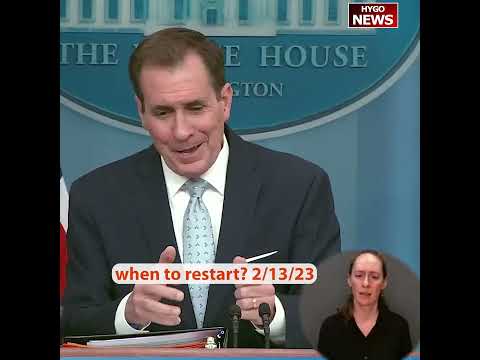
Kirby: “Now Is Not That Time” For Biden-Xi Call — Chinese Balloon Delayed Blinken Trip
In February 2023, a reporter asked National Security spokesperson John Kirby a comprehensive question about U.S.-China relations. “There’s not there yet. So I’d more like to see a relationship issue. You have the Chinese spy airship that went through. You’ve got China buying more oil from Russia. You’ve got China opening up cases in the US trying to steal US technology from universities. But the President Xi is going to be meeting with the Iranian president. At what point do you review, a big review, of the US relationship with China? And at what point does the president ask for a call from President Xi?” Kirby responded: “Again, I don’t have a call to talk about today. Let me just, again, level set here. And I know I’m running close on time, but sorry.” He continued: “The president met with President Xi at Bali at the G20. And Secretary Blinken was dang near wheels up, trying to head to Beijing to have those kinds of conversations. And then the Chinese decided to fly a surveillance balloon over the continental United States. And it wouldn’t be inappropriate to have that meeting. When are those discussions going to get back on the counter? I couldn’t tell you. As Secretary Blinken has said, it’ll happen at the appropriate time. Now is not that time.”
The Comprehensive Relationship Question
Relationship question:
Multiple issues — Listed.
Spy airship — One.
Russia oil — Another.
Tech theft — Third.
Xi-Iran meeting — Fourth.
Pattern — Concerning.
The reporter’s comprehensive relationship question listed multiple concerning issues: Chinese spy airship, China buying more oil from Russia, technology theft through university infiltration, Xi-Iran meeting. Pattern was concerning and sophisticated question framing.
”Chinese Spy Airship”
Airship:
“Airship” — Technical term.
Spy purpose — Asserted.
Recent — Incident.
Central — To relationship issues.
Specific — Reference.
The reporter’s “Chinese spy airship” terminology was technical and precise. Spy purpose asserted rather than accepting Chinese “weather balloon” framing. Recent incident central to relationship issues. Specific reference point.
”China Buying More Oil From Russia”
Russia oil:
Strategic concern — Sanctions evasion.
Russia support — China providing.
Ukraine context — Relevant.
U.S. sanctions — Undermined.
Concerning — Development.
China buying more oil from Russia was strategic concern about sanctions evasion. Russia support China was providing. Ukraine war context made this relevant. U.S. sanctions efforts were being undermined by Chinese purchases.
”Stealing US Technology From Universities”
Tech theft:
University infiltration — Pattern.
Intellectual property — Theft.
Research espionage — Ongoing.
FBI cases — Active.
Long-term — Concern.
China “opening up cases in the US trying to steal US technology from universities” referenced FBI investigations of Chinese intellectual property theft through university infiltration. Long-term concern with ongoing research espionage.
”Xi Meeting With Iranian President”
Xi-Iran:
Raisi visit — Expected.
Strategic partnership — Deepening.
Anti-U.S. axis — Concern.
Diplomatic — Signal.
Escalating — Concerns.
Xi meeting with Iranian President Raisi was expected strategic partnership deepening. Anti-U.S. axis concern. Diplomatic signal about China’s willingness to embrace U.S. adversaries. Escalating concerns in relationship.
”Big Review of U.S. Relationship”
Big review:
Comprehensive — Proposed.
Strategic reassessment — Suggested.
Current approach — Questioned.
Reform — Implied.
Substantive — Question.
The “big review of U.S. relationship with China” suggestion called for comprehensive strategic reassessment. Current approach questioned. Reform of approach implied. Substantive policy question about relationship direction.
”Call From President Xi”
Call question:
Presidential engagement — Sought.
Highest level — Request.
Direct — Communication.
Diplomatic — Significance.
Signal — Important.
The “call from President Xi” question sought highest-level presidential engagement. Direct communication at that level would be significant diplomatic signal. Important question about leadership engagement.
”Don’t Have a Call to Talk About”
No call:
Nothing to report — Standard.
Information limit — Imposed.
Deflection — Partial.
Current status — No contact planned.
Gap — Visible.
Kirby’s “don’t have a call to talk about today” was standard no-information response. Information limit imposed. Partial deflection. Current status no contact planned. Visible gap in high-level engagement.
”Level Set Here”
Level set:
Context reset — Requested.
Framework — Re-established.
Kirby control — Attempted.
Conversation redirect — Sought.
Standard — Technique.
Kirby’s “level set here” was standard technique for context reset and framework re-establishment. Control of conversation attempted. Redirection sought. Standard press conference technique.
”Running Close on Time”
Time pressure:
Briefing ending — Soon.
Limits imposed — By schedule.
Engagement limited — By clock.
Typical — Briefing dynamics.
Professional — Note.
The “running close on time” acknowledgment showed typical briefing dynamics. Limits imposed by schedule. Engagement limited by clock. Professional note about time constraints. Standard briefing practice.
”Met With President Xi at Bali”
Bali meeting:
November 2022 — G20.
In-person — Meeting.
Productive — Characterized.
Relationship — Attempted.
Reference — For engagement.
Biden’s meeting with Xi at Bali in November 2022 G20 was in-person productive characterized meeting. Relationship engagement attempted. Reference point for established engagement channel.
”Blinken Was Dang Near Wheels Up”
Blinken trip:
Planned — Imminently.
“Dang near wheels up” — Colorful phrase.
February trip — Was scheduled.
Diplomatic — Effort.
Cancelled — Due to balloon.
Blinken’s cancelled trip was “dang near wheels up” — colloquial colorful phrase. February trip was scheduled and imminent. Diplomatic effort was in progress. Cancelled due to balloon incident. Major diplomatic setback.
”Chinese Decided to Fly Surveillance Balloon”
Chinese decision:
“Decided” — Intentional.
Deliberate action — Framed.
Choice — Not accidental.
Diplomatic disruption — Chinese responsibility.
Blame — Placed.
“The Chinese decided to fly a surveillance balloon” placed blame deliberately. “Decided” framed as intentional. Choice rather than accident. Chinese responsibility for diplomatic disruption. Blame explicitly placed on China.
”Wouldn’t Be Inappropriate to Have That Meeting”
Inappropriate framing:
Character assessment — Of meeting.
After balloon — Incident.
Diplomatic appropriateness — Questioned.
Implicit message — To China.
Conditions — Signaling.
“It wouldn’t be inappropriate to have that meeting” was complex construction. After balloon incident, diplomatic appropriateness was questioned. Implicit message to China about conditions required before engagement restoration.
”When Are Those Discussions Going to Get Back on the Counter”
Discussion return:
Follow-up question — Substantive.
Timing — Sought.
Schedule — Information.
Resumption — When.
Professional — Inquiry.
The reporter’s substantive follow-up about when discussions would resume sought specific timing information. Schedule information requested. Resumption timing legitimate question. Professional inquiry.
”I Couldn’t Tell You”
Information limit:
Unknown timing — Admitted.
Not scheduled — Currently.
Strategic ambiguity — Maintained.
Deferral — To Blinken.
Standard — Deflection.
Kirby’s “I couldn’t tell you” acknowledged information limits. Timing currently unknown or not scheduled. Strategic ambiguity maintained. Deferral to Blinken as responsible for diplomacy. Standard deflection.
”Appropriate Time. Now Is Not That Time”
Appropriate timing:
Blinken phrase — Cited.
Principle — Of diplomacy.
Current — Not appropriate.
Future — Possibly.
Deferred — Strategically.
The “appropriate time, now is not that time” was Blinken’s standard phrase. Principle of diplomacy requiring readiness. Current timing was not appropriate. Future engagement possibly. Strategically deferred rather than abandoned.
The Diplomatic Strategic Choice
Strategic choice:
Punish China — Through delay.
Message sent — Through cancellation.
Engagement suspended — Strategically.
Pressure applied — Diplomatic.
Calculated — Approach.
Diplomatic strategic choice was punishing China through delay, sending message through cancellation. Engagement suspended strategically. Diplomatic pressure applied. Calculated approach to incident response.
The China Response Expected
Expected:
Denial continued — Likely.
Counter-messaging — Expected.
Wait out — U.S. posture.
Eventually resume — Predicted.
Standard — Pattern.
China’s expected response was continued denial, counter-messaging, wait out U.S. posture, eventually resume engagement. Standard pattern in these diplomatic disputes. Strategic patience by both sides.
The Long-Term Relationship Context
Long-term context:
Strategic competition — Established.
Technology rivalry — Ongoing.
Military tension — Real.
Economic interdependence — Reduced.
Multi-year — Dynamic.
Long-term U.S.-China relationship context was established strategic competition with technology rivalry ongoing, real military tension, reducing economic interdependence. Multi-year dynamic requiring sustained attention.
The Xi-Iran Meeting Significance
Xi-Iran:
Raisi visit — Planned.
Strategic partnership — Deepening.
Anti-U.S. axis — Concerning.
Regional implications — Middle East.
Alignment — Evident.
Xi-Iran meeting with Raisi visit was planned with strategic partnership deepening. Anti-U.S. axis concerning. Regional implications for Middle East. Evident alignment against U.S. interests in region.
The Russia-China Partnership Deepening
Russia-China:
“No limits” — 2022 declaration.
Oil purchases — Up.
Sanctions evasion — Provided.
Strategic cooperation — Real.
Bloc — Forming.
Russia-China partnership deepened with “no limits” 2022 declaration, up oil purchases providing sanctions evasion, real strategic cooperation. Bloc forming against U.S.-led order. Long-term concern.
The Technology Competition Dimensions
Technology:
Semiconductors — Critical.
AI rivalry — Intense.
Intellectual property — Theft concerns.
Export controls — U.S. imposing.
Strategic — Long-term.
Technology competition dimensions included semiconductors being critical, AI rivalry intense, intellectual property theft concerns, U.S. export controls being imposed, strategic long-term competition.
The University Research Espionage
Espionage:
China Initiative — Prior.
Prosecutions — Some.
Research theft — Ongoing.
Thousand Talents — Program.
Systematic — Chinese effort.
University research espionage through programs like “Thousand Talents” was systematic Chinese effort. Prior China Initiative had prosecutions. Research theft was ongoing. FBI counterintelligence focus on academic environment.
The Multi-Issue Relationship
Multi-issue:
Economic — Trade.
Security — Military.
Technology — Competition.
Human rights — Concerns.
Geopolitical — Global.
U.S.-China multi-issue relationship involved economic trade, security military dimensions, technology competition, human rights concerns, geopolitical global dynamics. Complex multi-dimensional relationship management.
The Kirby Professional Response
Professional response:
Substantive — Engagement.
Colorful phrasing — Used.
Time-conscious — Aware.
Deferral — Appropriate.
Professional — Throughout.
Kirby’s professional response showed substantive engagement with comprehensive question, colorful phrasing (“dang near wheels up”), time-conscious approach, appropriate deferral to Blinken on specifics. Professional throughout.
The Press Corps Sophisticated Engagement
Sophisticated:
Multi-issue question — Constructed.
Strategic framing — Used.
Substantive — Inquiry.
Policy-focused — Approach.
Quality — Journalism.
Press corps sophisticated engagement through multi-issue question construction, strategic framing, substantive inquiry, policy-focused approach, quality journalism. High-level policy questioning.
The Future Diplomatic Resumption
Future resumption:
Eventually — Expected.
Conditions — Needed.
Face-saving — For both.
Strategic value — Recognized.
Timing — Uncertain.
Future diplomatic resumption was expected eventually with conditions needed, face-saving for both sides, strategic value of engagement recognized, timing uncertain. Eventual diplomatic normalization likely.
The Blinken Trip Eventual
Eventual trip:
June 2023 — Rescheduled.
Secretary traveled — To Beijing.
Xi meeting — Occurred.
Diplomatic reset — Attempted.
Months later — Resumption.
Blinken’s eventually rescheduled trip occurred in June 2023 with Secretary traveling to Beijing and Xi meeting occurring. Diplomatic reset was attempted months later. Resumption achieved after incident cooldown.
The Ongoing Strategic Competition
Competition:
Multi-decade — Dynamic.
Multiple dimensions — Complex.
Management required — Not resolution.
Stability priority — Over victory.
Long-term — Challenge.
Ongoing strategic competition was multi-decade dynamic in multiple dimensions requiring management rather than resolution. Stability priority over victory. Long-term challenge requiring sustained strategic approach.
Key Takeaways
- A reporter listed multiple U.S.-China issues and asked: “At what point does the president ask for a call from President Xi?”
- Kirby responded: “I don’t have a call to talk about today.”
- He cited Biden-Xi Bali meeting: “The president met with President Xi at Bali at the G20.”
- He noted Blinken’s cancelled trip: “Secretary Blinken was dang near wheels up, trying to head to Beijing to have those kinds of conversations.”
- He blamed balloon: “Then the Chinese decided to fly a surveillance balloon over the continental United States.”
- He concluded: “As Secretary Blinken has said, it’ll happen at the appropriate time. Now is not that time.”
Transcript Highlights
The following is transcribed from the video audio (unverified — AI-generated from audio).
- You have the Chinese spy airship that went through. You’ve got China buying more oil from Russia. You’ve got China opening up cases in the US trying to steal US technology from universities.
- But the President Xi is going to be meeting with the Iranian president. At what point do you review, a big review, of the US relationship with China? And at what point does the president ask for a call from President Xi?
- Again, I don’t have a call to talk about today. Let me just, again, level set here.
- The president met with President Xi at Bali at the G20. And Secretary Blinken was dang near wheels up, trying to head to Beijing to have those kinds of conversations.
- And then the Chinese decided to fly a surveillance balloon over the continental United States.
- When are those discussions going to get back on the counter? I couldn’t tell you. As Secretary Blinken has said, it’ll happen at the appropriate time. Now is not that time.
Full transcript: 205 words transcribed via Whisper AI.