 HYGO News
 $50 trillion to make USA carbon neutral by 2050? 'I don't know' Kennedy questions Witnesses
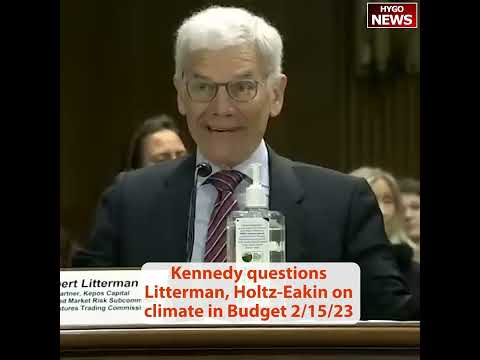
Kennedy Budget Hearing: How Much To Make USA Carbon Neutral By 2050? Witness: $50 Trillion
In February 2023 at a budget hearing, Louisiana Senator John Kennedy pressed climate witnesses for specific cost estimates of carbon neutrality goals. “How much will it cost to make the United States of America carbon neutral by 2050?” Kennedy asked. The first witness responded: “I don’t know, sir.” Kennedy pushed back: “So you’re advocating we do these things, but you don’t know the ultimate cost? Yes, absolutely. I certainly don’t know the ultimate cost, and it’s very uncertain. It depends on…” Kennedy turned to Douglas Holtz-Eakin: “Dr. Holtz, do you know how much it will cost?” Holtz-Eakin responded carefully: “It depends on innovations. It depends on…” Kennedy interrupted: “I’m just trying to lay a foundation here to understand your expert testimony. Dr. Holtz, do you know how much it will cost to make the United States of America carbon neutral by 2050?” Holtz-Eakin: “It depends how you do it. If we do it all in the federal budget with directed things, it’ll be super expensive. Public and private dollars.” Kennedy pressed: “So how much?” Holtz-Eakin gave number: “You’re going to look at $50 trillion.” Kennedy: “$50 trillion. Okay, thank you.”
The Kennedy Cost Question
Cost question:
Direct — Question.
Specific — Target.
Fundamental — Inquiry.
Substantive — Challenge.
Standard — Oversight.
Kennedy’s direct cost question was specific and fundamental substantive inquiry into carbon neutrality economics. Standard budget oversight role examining costs of proposed climate policies.
”Carbon Neutral by 2050”
Target:
Specific year — 2050.
Carbon neutral — Achieve.
Administration goal — Yes.
Legislation — IRA implements.
Target — Politically popular.
The “carbon neutral by 2050” target was specific year with carbon neutrality goal. Administration goal through IRA implementation. Politically popular target but with undetermined costs.
”I Don’t Know, Sir”
First witness:
Admission — Of uncertainty.
Honest — In some ways.
Problematic — For advocate.
Simple — Answer.
Revealing — Response.
First witness’s “I don’t know, sir” admission of uncertainty was honest in some ways but problematic for climate policy advocate. Simple revealing response about cost uncertainty.
”Advocating These Things But Don’t Know the Cost”
Kennedy challenge:
Logical — Challenge.
Advocate responsibility — Implied.
Cost consideration — Required.
Substantive — Inquiry.
Accountability — Through questioning.
Kennedy’s “advocating these things but don’t know the ultimate cost” logical challenge implied advocate responsibility for cost consideration. Substantive inquiry with accountability through questioning.
”Uncertain” and “Depends On”
Hedging:
Uncertainty — Acknowledged.
Variables — Cited.
Not answering — Essentially.
Standard — Academic response.
Policy limits — Revealed.
Witness hedging with “uncertain” acknowledgment and “depends on” variables wasn’t answering essentially. Standard academic response revealing policy formation limits when costs unknown.
The Douglas Holtz-Eakin Credentials
Holtz-Eakin:
Former CBO — Director.
Economic expert — Yes.
Conservative-leaning — Policy.
Respected — Figure.
Authority — On costs.
Douglas Holtz-Eakin’s credentials as former Congressional Budget Office director, economic expert with conservative-leaning policy work, respected figure gave authority on cost questions for this inquiry.
”It Depends on Innovations”
Hedging:
“Depends” — Qualifier.
Innovations — Variable.
Technology — Factor.
Future — Uncertain.
Responsible — Economist.
Holtz-Eakin’s “depends on innovations” hedging with qualifiers about technology innovations as variable was responsible economist response acknowledging future uncertainty in cost projections.
Kennedy’s Persistence
Persistence:
Direct question — Repeated.
Pressed for number — Specific.
Foundation laid — Insisted.
Professional — Questioning.
Substantive — Pressure.
Kennedy’s persistence through repeated direct question and pressure for specific number “laid foundation” insistence was professional substantive pressure. Pushed through hedging for concrete estimates.
”How You Do It”
Implementation:
Method matters — Yes.
Federal vs. private — Distinction.
Cost variation — Substantial.
Important — Factor.
Real — Variable.
Holtz-Eakin’s “it depends how you do it” implementation method distinction between federal vs. private dollars showed substantial cost variation. Important factor with real variable effect on total cost.
”All in the Federal Budget”
Federal:
Directed spending — Government.
“Super expensive” — Result.
Inefficient — Implied.
Higher costs — Yes.
Approach matters — Greatly.
“If we do it all in the federal budget with directed things, it’ll be super expensive” showed federal directed spending approach as super expensive. Inefficiency implied. Higher costs through that approach.
”Public and Private Dollars”
Combined:
Mixed approach — Lower cost.
Private participation — Essential.
Market mechanisms — Better.
Standard economics — Principle.
Efficiency — Gained.
Holtz-Eakin’s “public and private dollars” mixed approach recognized lower cost through private participation with market mechanisms. Standard economics principle of efficiency gained through market-based approaches.
”$50 Trillion”
Specific:
Number provided — Finally.
Substantial — Amount.
Over 30 years — Period.
Massive — Scale.
Memorable — Number.
Holtz-Eakin’s eventual “$50 trillion” specific number was substantial over 30-year period. Massive scale. Memorable number providing basis for policy discussion with real cost estimate.
The $50 Trillion Context
Context:
Entire US GDP — ~$25T annually.
30 years — Time frame.
Major economic — Share.
National scale — Investment.
Substantial — Perspective.
$50 trillion in context of entire US GDP (~$25T annually) over 30 years was major economic share. National scale investment substantial perspective for policy discussion.
”Okay, Thank You”
Kennedy conclusion:
Simple — Close.
Number obtained — Goal.
Moving on — Likely.
Foundation laid — Success.
Effective — Questioning.
Kennedy’s “$50 trillion. Okay, thank you” simple conclusion after obtaining number showed foundation laid successfully. Effective questioning producing concrete cost estimate.
The Cost Transparency Importance
Transparency:
Policy decisions — Informed.
Cost awareness — Essential.
Democratic debate — Valuable.
Accountability — Through numbers.
Substantive — Public value.
Cost transparency importance for informed policy decisions, essential cost awareness, valuable democratic debate, accountability through numbers provided substantive public value. Kennedy serving oversight function.
The Climate Policy Economics
Economics:
Long-term — Investment.
Benefits — Various.
Costs — Substantial.
Net present value — Calculations.
Complex — Analysis.
Climate policy economics involved long-term investment with various benefits and substantial costs requiring net present value calculations. Complex analysis beyond simple cost quotation.
The Private Sector Role
Private:
Innovation — Drives.
Investment — Willing.
Market solutions — Possible.
Profits — Motivation.
Public policy — Shapes.
Private sector role in innovation driving investment willingness created possible market solutions. Profit motivation. Public policy shapes environment for private investment. Essential participation.
The Federal Policy Choices
Choices:
Direct spending — Expensive.
Tax incentives — Efficient.
Regulatory — Standards.
Market mechanisms — Carbon pricing.
Mix — Needed.
Federal policy choices ranged from expensive direct spending to efficient tax incentives, regulatory standards, market mechanisms like carbon pricing. Mix needed for efficient approach. Political choice.
The Kennedy Policy Framework
Framework:
Fiscal conservatism — Priority.
Cost accountability — Demanded.
Market solutions — Preferred.
Questioning — Oversight.
Professional — Approach.
Kennedy’s policy framework with fiscal conservatism priority demanded cost accountability. Market solutions preferred. Professional questioning approach. Standard conservative oversight role.
The Hearing Context
Context:
Budget Committee — Likely.
Policy analysis — Subject.
Climate policy — Focus.
Expert testimony — Required.
Substantive — Debate.
Hearing context was likely Budget Committee examining climate policy analysis. Expert testimony required. Substantive debate about costs of carbon neutrality goals.
The Witness Selection
Selection:
Panel — Multiple views.
Climate advocate — Present.
Economist conservative — Present.
Balance — Attempted.
Expert level — High.
Witness selection had panel with multiple views including climate advocate and conservative economist. Balance attempted. High expert level enabling substantive questioning by Kennedy.
The Political Communication Success
Success:
Concrete number — Obtained.
Framework — Political.
Memorable — Hearing.
Clip-worthy — Moments.
Effective — Work.
Political communication success through concrete number obtained, memorable hearing, clip-worthy moments, effective oversight work demonstrated quality Congressional function.
The Democratic Counter-Arguments
Counter-arguments:
Benefits — Real.
Climate costs — Of inaction.
Economic damage — Without action.
Long-term — Savings.
Benefits vs. costs — Complex.
Democratic counter-arguments included real benefits, climate costs of inaction, economic damage without action, long-term savings, complex benefits vs. costs analysis. Full picture beyond cost focus.
The Benefits Side of Ledger
Benefits:
Health — Improvements.
Environmental — Gains.
Economic — Transformation.
Long-term — Value.
Substantive — Return.
Benefits side of ledger included health improvements, environmental gains, economic transformation, long-term value, substantive return on climate investment. Honest analysis required both sides.
The Innovation Factor
Innovation:
Technology costs — Declining.
Scale effects — Real.
Learning curves — Applied.
Cost reduction — Over time.
Historical — Pattern.
Innovation factor with declining technology costs through scale effects and learning curves reduced costs over time. Historical pattern of renewable energy cost reduction supported innovation factor.
The Policy Implementation Reality
Reality:
Mixed approach — Usually.
Public leadership — With private.
Market mechanisms — Used.
Subsidies — Applied.
Practical — Approach.
Policy implementation reality was mixed approach usually with public leadership complemented by private investment. Market mechanisms used. Subsidies applied. Practical approach standard.
The Cost-Benefit Analysis Required
Required:
Full accounting — Needed.
Climate damage — Quantify.
Benefits quantify — Also.
Honest assessment — Substantive.
Democratic — Debate value.
Cost-benefit analysis required full accounting quantifying climate damage and benefits. Honest substantive assessment for democratic debate value. Beyond simple cost focus.
The IRA Investment Context
IRA:
$369 billion — Climate.
Tax credits — Primary.
Private investment — Leveraged.
Public-private — Model.
Substantial — Start.
Inflation Reduction Act $369 billion climate investment through tax credits primary mechanism leveraged private investment. Public-private model. Substantial start on carbon neutrality investment.
The Kennedy Hearing Effectiveness
Effectiveness:
Cost extracted — $50T.
Framework established — Political.
Narrative — Created.
Memorable — Moment.
Quality — Oversight.
Kennedy hearing effectiveness extracted $50T cost establishing political framework. Memorable moment created narrative. Quality oversight function demonstrated through substantive questioning.
The Media Coverage Potential
Coverage:
Specific number — Newsworthy.
Political framing — Available.
Conservative media — Amplify.
Viral potential — Real.
Clip-worthy — Yes.
Media coverage potential through specific newsworthy number with available political framing attracted conservative media amplification. Real viral potential in clip-worthy moments.
The Political Framework Building
Framework:
Big-government cost — Narrative.
Market solutions — Preferred.
Fiscal conservatism — Demonstrated.
2024 campaign — Material.
Conservative — Positioning.
Political framework building around big-government cost narrative with preferred market solutions demonstrated fiscal conservatism. 2024 campaign material created. Conservative positioning established.
The Climate Policy Debate Substance
Substance:
Cost concerns — Valid.
Benefits real — Also.
Implementation — Matters.
Honest analysis — Needed.
Complex — Policy.
Climate policy debate substance had valid cost concerns alongside real benefits. Implementation mattered. Honest analysis needed beyond simple political framing. Complex policy requiring nuanced engagement.
The Congressional Oversight Function
Function:
Budget accountability — Core.
Cost analysis — Required.
Expert examination — Standard.
Substantive — Questioning.
Democratic — Value.
Congressional oversight function as core budget accountability through cost analysis and expert examination was standard. Substantive questioning provided democratic value in policy formation.
The Witness Testimony Dynamics
Dynamics:
Experts hedge — Appropriately.
Simplicity — Wanted.
Complexity — Reality.
Tension — Real.
Standard — Dynamic.
Witness testimony dynamics had experts appropriately hedging while simplicity was politically wanted against complexity reality. Real tension in standard dynamic between expert testimony and political questioning.
The Kennedy Expert Questioning Style
Style:
Direct — Approach.
Persistent — Follow-up.
Substantive — Inquiry.
Sometimes folksy — Language.
Effective — Technique.
Kennedy’s expert questioning style with direct approach, persistent follow-up, substantive inquiry, sometimes folksy language was effective technique. Characteristic senator questioning approach.
The $50 Trillion Acceptance
Acceptance:
Number became — Frame.
Political — Value.
Quoted — Frequently.
Narrative — Building.
Effective — Frame.
$50 trillion acceptance became frame with political value through frequent quoting. Narrative building effectiveness. Effective political frame despite significant uncertainties in estimate.
The Policy Framework Implications
Implications:
Cost awareness — Established.
Alternative approaches — Considered.
Efficient policy — Priority.
Market-based — Favored.
Substantive — Framework.
Policy framework implications through established cost awareness led to considered alternative approaches with efficient policy priority. Market-based solutions favored through cost framework substantively.
The Long-Term Climate Policy Evolution
Evolution:
IRA implementation — Ongoing.
Costs tracked — Actual.
Adjustments — Needed.
Technology evolution — Changing.
Policy — Dynamic.
Long-term climate policy evolution through IRA implementation had costs tracked actually with needed adjustments. Technology evolution changing dynamics. Dynamic policy requiring ongoing management and adaptation.
The 2024 Campaign Dimension
Dimension:
Climate policy — Issue.
Cost focus — GOP.
Benefits focus — Dems.
Both valid — Potentially.
Political — Battle.
2024 campaign dimension had climate policy as issue with cost focus from GOP and benefits focus from Democrats. Both potentially valid. Political battle over framing and priorities.
The Intellectual Honesty Challenge
Challenge:
Uncertainty real — Policy.
Estimates range — Wide.
Political use — Simplification.
Honest analysis — Needed.
Difficult — Balance.
Intellectual honesty challenge had real policy uncertainty with wide estimate ranges used politically through simplification. Honest analysis needed but difficult balance between political and analytical needs.
The Public Understanding Importance
Importance:
Democratic debate — Value.
Informed citizens — Essential.
Substantive — Discussion needed.
Cost transparency — Critical.
Benefits clarity — Also.
Public understanding importance for democratic debate value required informed citizens through substantive discussion. Cost transparency critical alongside benefits clarity for full democratic engagement.
The Expert vs. Political Communication
Communication:
Expert hedging — Appropriate.
Political simplification — Strategic.
Tension — Real.
Both needed — Sometimes.
Balance — Difficult.
Expert vs. political communication tension had appropriate expert hedging vs. strategic political simplification. Real tension. Both needed sometimes for different purposes. Difficult balance in public discourse.
Key Takeaways
- Senator Kennedy asked at budget hearing: “How much will it cost to make the United States of America carbon neutral by 2050?”
- First witness admitted: “I don’t know, sir.”
- Kennedy pushed: “So you’re advocating we do these things, but you don’t know the ultimate cost?”
- Douglas Holtz-Eakin hedged: “It depends on innovations.”
- Kennedy persisted: “Dr. Holtz, do you know how much it will cost to make the United States of America carbon neutral by 2050?”
- Holtz-Eakin gave estimate: “You’re going to look at $50 trillion.”
- Kennedy concluded: “$50 trillion. Okay, thank you.”
Transcript Highlights
The following is transcribed from the video audio (unverified — AI-generated from audio).
- How much will it cost to make the United States of America carbon neutral by 2050?
- I don’t know, sir.
- So you’re advocating we do these things, but you don’t know the ultimate cost?
- Dr. Holtz, do you know how much it will cost to make the United States of America carbon neutral by 2050?
- It depends how you do it. If we do it all in the federal budget with directed things, it’ll be super expensive.
- Public and private dollars. Sorry? Public and private dollars. You’re going to look at $50 trillion. $50 trillion. Okay, thank you.
Full transcript: 155 words transcribed via Whisper AI.