 HYGO News
 Zelensky Kicked Out of White House; Press Staff Eat His Lunch; Graham: 'Never Been More Proud of the President'
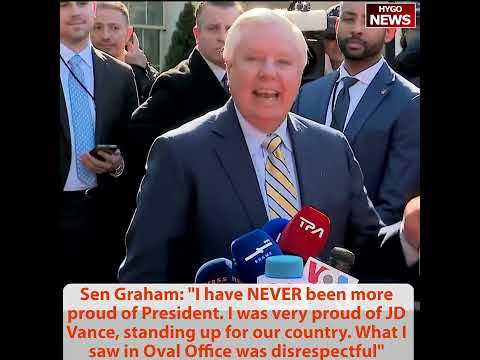
Zelensky Kicked Out of White House; Press Staff Eat His Lunch; Graham: “Never Been More Proud of the President”
In the most dramatic diplomatic moment of the Trump second term, President Trump expelled Ukrainian President Zelensky from the White House on February 28, 2025, after the Oval Office confrontation that had been broadcast worldwide. A reporter at the scene described the aftermath: “The president has kicked Zelensky out of the White House. His delegation right now is telling him that he’s got to go home.” The planned working lunch sat untouched in the hallway — “and the press staffers are going to be eating that lunch.” Trump issued a public statement: “He disrespected the United States of America in its cherished Oval Office. He can come back when he is ready for Peace.” Senator Lindsey Graham declared: “I have never been more proud of the President.”
The Expulsion
A reporter who had gone to the press area for a situation update relayed what officials were describing in real time.
“This is what I was told,” the reporter said. “The president has kicked Zelensky out of the White House. His delegation right now is telling him that he’s got to go home.”
The reporter described the assessment of officials who had been in the room during the confrontation. “The president felt disrespected. Officials in the room felt that beyond the language barrier that we’ve heard some discussion about, Zelensky’s body language — shrugging and eye-rolling — was ungrateful, disrespectful,” the reporter said.
The detail about body language added a dimension that the audio transcript of the confrontation could not fully capture. While Zelensky’s words had been assertive but within the bounds of diplomatic exchange, his physical demeanor — described as “shrugging and eye-rolling” — had conveyed a dismissiveness that officials interpreted as contempt for the American position.
The reporter conveyed Trump’s message. “The president feels that Zelensky is not ready for peace, and he can come back when he’s ready to talk about peace, but he’s not in that position right now,” the reporter said. “And Zelensky is being told he’s got to go.”
The conditional framing — “he can come back when he is ready for peace” — left the door open for a future meeting while making clear that the terms of engagement had changed. Zelensky’s return to the White House would require a fundamental shift in attitude: acceptance that the war needed to end through negotiation, gratitude for American support, and willingness to engage constructively with the peace process rather than demanding continued unconditional aid.
The Uneaten Lunch
The most symbolically loaded detail was what happened to the working lunch that had been prepared for the two delegations.
“The lunch that they were supposed to have is sitting right outside the hallway,” the reporter said. “And the press staffers are going to be eating that lunch.”
The image was devastating in its simplicity. A working lunch prepared for the leaders of the United States and Ukraine — complete with whatever diplomatic formalities the White House kitchen had prepared — was being consumed by journalists because the guest of honor had been expelled before the meal was served. The uneaten lunch became an instant metaphor for the collapse of the meeting: food prepared for diplomacy consumed by the press corps instead.
The detail circulated instantly on social media, where it was treated with a mixture of amusement and astonishment. The visual of White House press staff eating the lunch that Zelensky had been kicked out before attending was the kind of detail that transcended policy analysis and spoke to the human drama of the moment.
Trump’s Public Statement
Trump formalized the expulsion with a statement that left no ambiguity about the reason.
“He disrespected the United States of America in its cherished Oval Office,” Trump wrote. “He can come back when he is ready for Peace.”
The statement was notable for its brevity. Two sentences. No elaboration, no diplomatic hedging, no face-saving language for Zelensky. The word “cherished” applied to the Oval Office elevated the offense from a personal slight to an insult against the institution of the American presidency itself. Zelensky had not merely disrespected Trump; he had disrespected the room where every president since 1909 had conducted the nation’s business.
The capital-P “Peace” in the closing sentence was also deliberate. This was not about a meeting or a handshake or a photo opportunity. It was about Peace — the objective that Trump had been pursuing since inauguration and that Zelensky’s conduct in the Oval Office had, in Trump’s view, obstructed.
Graham: “Never Been More Proud”
Senator Lindsey Graham, who had been a strong supporter of Ukraine aid throughout the Biden years, offered his reaction immediately after the expulsion.
“Somebody asked me, am I embarrassed about Trump?” Graham said. “I have never been more proud of the President. I was very proud of JD Vance, standing up for our country.”
Graham then described what he had witnessed. “What I saw in the Oval Office was disrespectful,” he said.
He went further than Trump in suggesting the consequences could be permanent. “I don’t know if we can ever do business with Zelensky again,” Graham said.
The Graham endorsement was politically significant because he had been one of the Senate’s most vocal advocates for Ukrainian military aid. His willingness to side with Trump over Zelensky — after years of championing Ukraine’s cause — demonstrated that even the most pro-Ukraine voices in the Republican Party viewed Zelensky’s Oval Office behavior as beyond the pale.
Graham’s praise for Vance was also notable. The vice president’s intervention during the confrontation — telling Zelensky it was “disrespectful” to attack the administration in the Oval Office and demanding he show gratitude — had earned him respect from hawks who had previously been skeptical of his non-interventionist foreign policy views. Vance’s willingness to confront Zelensky face-to-face proved that his skepticism of unlimited Ukraine aid was rooted in American interests, not in sympathy for Russia.
The Greeting Before the Storm
The compilation also included footage of Trump greeting Zelensky at the White House before the meeting — a warm arrival that made the subsequent expulsion even more dramatic by contrast. The initial handshake and welcome gave no indication of the confrontation that would follow, underscoring how rapidly the dynamic shifted once the cameras captured the Oval Office exchange.
The Global Shockwave
The expulsion of a wartime allied leader from the White House was an event without modern precedent. No sitting president had ever publicly expelled a visiting head of state in this manner. The action sent shockwaves through global capitals, where leaders recalibrated their understanding of the Trump administration’s approach to diplomacy.
For allies, the message was clear: American support came with expectations of respect and cooperation, and leaders who failed to meet those expectations — regardless of their country’s circumstances — would face consequences. For adversaries, the message was different but equally significant: Trump was not bound by diplomatic convention when he believed American interests or dignity were being disrespected.
The minerals deal that Zelensky had been scheduled to sign remained unsigned. Whether and when it would be completed depended entirely on Zelensky’s willingness to return to Washington on Trump’s terms — ready for peace, ready to show gratitude, and ready to engage as a partner rather than a critic.
Key Takeaways
- Trump expelled Zelensky from the White House after the Oval Office confrontation, with officials citing “shrugging and eye-rolling” body language as “ungrateful, disrespectful.”
- Trump issued a two-sentence statement: “He disrespected the United States of America in its cherished Oval Office. He can come back when he is ready for Peace.”
- The planned working lunch sat uneaten in the hallway and was consumed by White House press staffers.
- Senator Graham said “I have never been more proud of the President” and questioned whether “we can ever do business with Zelensky again.”
- The minerals deal remained unsigned, with Zelensky’s return contingent on his willingness to engage in peace negotiations on Trump’s terms.