 HYGO News
 Xi visit dances and fanfare but Biden didn't get the same kind of fanfare reception in Saudi Arabia
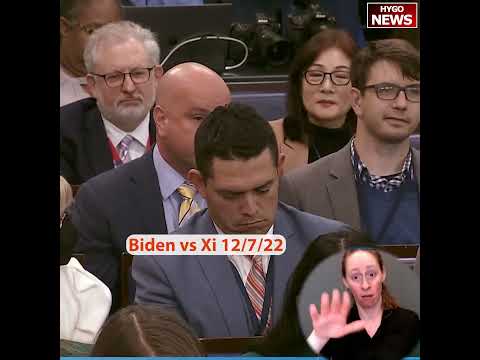
Reporter Asks KJP If Biden Feels “Slighted” by Saudi Arabia’s Lavish Welcome for Xi vs. Biden’s Cooler Reception — “We’re Going to Keep Moving”
On 12/8/2022, a reporter asked White House Press Secretary Karine Jean-Pierre whether President Biden felt “slighted” by the contrast between Saudi Arabia’s lavish ceremonial welcome for Chinese President Xi Jinping’s visit and the notably cooler reception Biden had received when he visited Saudi Arabia in July 2022. “There were dances and fanfare around the visit from President Xi. Coming in the president didn’t get the same kind of reception in Saudi Arabia. I’m wondering if there’s any slight,” the reporter asked. KJP appeared confused, asked for the question to be repeated, then claimed Biden had met Saudi leaders “in Bali” (actually a G20 sideline meeting) before declining to engage: “We’re going to keep moving. Go ahead.” The exchange captured the awkward geopolitical reality that Saudi Arabia, traditionally a U.S. ally, was publicly embracing Beijing as an alternative partner.
The Xi Visit Context
The reporter’s question referenced Xi Jinping’s state visit to Saudi Arabia that was underway at the time. “More on President Xi is now in Saudi Arabia speaking with the king in the crown prince. There was much fanfare around his visit,” the reporter said.
Xi’s December 2022 visit to Saudi Arabia had been a significant diplomatic event. Saudi Arabia had organized an elaborate ceremonial reception for the Chinese leader that included:
Traditional Saudi sword dances — Performed for Xi by male dancers in formal attire.
Lavish airport reception — Crown Prince Mohammed bin Salman (MBS) personally welcoming Xi.
Extensive state dinners — Hosted by the royal family.
Multiple high-profile meetings — With King Salman and Crown Prince MBS.
Large business delegation — Dozens of major contracts signed during the visit.
Arab-China summit — With multiple Arab nations participating.
The visit was historically significant — one of the most elaborate state receptions Saudi Arabia had given a foreign leader in years. The ceremony signaled Saudi Arabia’s deliberate courtship of China as a strategic partner and its willingness to publicly embrace Beijing despite American concerns.
The Biden Reception Contrast
The reporter’s comparison referenced Biden’s July 2022 Saudi visit. “Coming in the president didn’t get the same kind of reception in Saudi Arabia. I’m wondering if there’s any slight,” the reporter said.
Biden’s July 2022 visit had been significantly more subdued. The reception had included:
No elaborate ceremonial welcome — Unlike Xi’s reception.
Less senior Saudi greeting — Biden had been greeted by a provincial governor, not the king or MBS.
The awkward fist-bump — Biden had fist-bumped MBS rather than shaking hands, creating iconic imagery that generated extensive criticism.
Limited cultural display — No traditional dances or ceremonial presentations.
Shorter and more businesslike meetings — Without the pomp accompanying Xi.
No major deal announcements — In contrast to the many business contracts signed during Xi’s visit.
The contrast was deliberate and meaningful. Saudi Arabia was sending a clear diplomatic signal: China was being treated as a premier strategic partner while the U.S. relationship was being managed at a lower temperature.
The Geopolitical Significance
The reception contrast had substantial geopolitical implications. Saudi Arabia’s relationship with the United States had been strained since Biden took office. Key friction points included:
Biden’s “pariah” comments about Saudi Arabia — During his 2020 campaign, Biden had vowed to make Saudi Arabia a “pariah” over the Khashoggi murder.
Human rights criticism — Biden had emphasized human rights concerns in ways that displeased the Saudi leadership.
Oil production disputes — OPEC+ production cuts had frustrated American requests for increased output.
Yemen war policy changes — The administration had shifted support for Saudi military operations in Yemen.
Delayed major arms sales — Some weapons sales had been restricted over human rights concerns.
By contrast, China offered Saudi Arabia:
No human rights criticism — Beijing didn’t comment on Saudi internal affairs.
Expanded commercial relationships — Chinese investment in Saudi Vision 2030 projects.
Alternative security partnerships — Without the Saudi-U.S. historical constraints.
Support on Middle East regional issues — Including facilitated Iran talks.
Technology sharing — Including in sensitive areas where U.S. had restricted transfers.
The elaborate Xi reception was Saudi Arabia’s public demonstration of these shifting preferences.
KJP’s Confusion
KJP’s response was notably disengaged. “Sorry, say that one more time,” KJP said.
The request for repetition was a familiar KJP technique for buying time to compose responses to uncomfortable questions. But it was also possible KJP genuinely hadn’t fully processed the question. The complexity of the geopolitical situation — comparing ceremonial receptions and inferring diplomatic meaning — may have required more processing than immediate briefing-pace response allowed.
The reporter patiently repeated and expanded. “So there were dances and fanfare around the visit from President Xi. Coming in the president didn’t get the same kind of reception in Saudi Arabia. I’m wondering if there’s any slight,” the reporter said.
”They Met in Bali”
KJP’s initial substantive response was factually confused. “They met in Bali, right? When the president went to Saudi Arabia to visit the NBS and the crown prince,” KJP said.
The “Bali” reference was to the G20 summit that had just occurred in mid-November 2022. Biden had met with various world leaders at the summit, including a significant sit-down with Xi Jinping. But KJP appeared to be conflating multiple events:
The July Saudi visit — Where Biden had gone to Saudi Arabia and met MBS.
The Bali G20 — Where Biden had met various leaders on the sidelines.
The current Xi-Saudi visit — Which was happening in real time.
The “NBS” reference was a mispronunciation of “MBS” (Mohammed bin Salman). “When the president went to Saudi Arabia to visit the NBS and the crown prince” was confusingly phrased — MBS was the crown prince, so saying “to visit the NBS and the crown prince” was redundant or confused.
The overall response suggested KJP wasn’t prepared to address the specific comparison the reporter had raised. She was pulling together recollections of different events in a way that didn’t produce a coherent answer.
”Does He Feel Slighted at All?”
The reporter tried to focus on the specific question. “Does he feel slighted at all?” the reporter asked.
This was the core question. Regardless of the factual specifics of various meetings, the reporter wanted to know whether Biden personally felt disrespected by the contrast in Saudi receptions.
The question had diplomatic implications:
If Biden felt slighted — The administration might take retaliatory actions or signal displeasure.
If Biden dismissed the comparison — The administration was willing to tolerate Saudi signaling.
If Biden acknowledged but didn’t respond — The administration was registering the slight without acting.
If the administration didn’t have a position — The situation was more awkward than it needed to be.
”We’re Going to Keep Moving”
KJP declined to engage. “We’re going to keep moving. Go ahead,” KJP said.
The “keep moving” phrase was KJP’s standard technique for terminating unwanted exchanges. By moving to the next reporter, she avoided having to provide an answer on a sensitive diplomatic question.
The termination had several effects:
No administration position registered — The White House didn’t say whether Biden felt slighted.
No comparison engaged — The Xi-Biden reception contrast wasn’t addressed substantively.
No Saudi pressure applied — The administration didn’t use the briefing to signal dissatisfaction.
Continued relationship management deferred — The awkward question was simply avoided.
For the Saudi government, the U.S. non-response was probably acceptable. Saudi leaders could have preferred a strong U.S. reaction (confirming American investment in the relationship) or accepted a muted reaction (allowing them to proceed with China courtship without U.S. retaliation). The muted U.S. response accommodated the Saudi strategy.
The Broader U.S.-Saudi Drift
The December 2022 Xi visit was one data point in a broader pattern of U.S.-Saudi relationship drift. Throughout 2022, tensions had been building:
OPEC+ October cut — A major production decrease that infuriated the administration just before midterms.
Saudi neutrality on Ukraine — With limited support for Western sanctions and positions.
Russia relationship maintained — Saudi Arabia continued extensive engagement with Moscow.
Nuclear program concerns — Various reports about Saudi nuclear ambitions.
Qatar relationship warming — With the U.S. designating Qatar a major non-NATO ally.
The cumulative effect was a U.S.-Saudi relationship that was no longer the exclusive strategic partnership it had been for decades. Saudi Arabia was diversifying its foreign relationships, and the United States was only one of several significant partners rather than the dominant one.
The Xi visit reception crystallized this reality in a visually striking way. Americans watching the contrast between Xi’s elaborate Saudi welcome and Biden’s more restrained July reception could see the relationship shift clearly. KJP’s inability to address the comparison left that visual impression unaddressed by administration messaging.
The Diplomatic Reception Protocol
Reception protocols in state visits communicate meaning. Differences in:
- Senior officials present at arrival — Senior officials mean higher priority
- Ceremonial elements included — Elaborate ceremonies mean closer relationships
- State dinner hosting — Royal hosting means special importance
- Business delegation size — Larger delegations mean more commercial interest
- Public visibility — More public displays mean more political investment
…all signal relationship priorities.
Saudi Arabia’s elaborate Xi reception and comparatively muted Biden reception sent clear signals. These signals were diplomatic communications that U.S. analysts understood even if White House briefings didn’t engage with them publicly.
Key Takeaways
- A reporter compared the lavish Saudi reception for Chinese President Xi Jinping’s December 2022 visit with the subdued welcome Biden received during his July 2022 Saudi trip.
- The reporter asked whether Biden felt “slighted” by Saudi Arabia’s elaborate ceremonial honors for Xi.
- KJP appeared confused initially, asking for the question to be repeated.
- She offered a garbled answer referencing “Bali” (likely the G20 summit) and called the crown prince “NBS” before conflating multiple events.
- KJP terminated the exchange with “We’re going to keep moving. Go ahead” — declining to address whether Biden or the administration had a position on the reception contrast.
Transcript Highlights
The following is transcribed from the video audio (unverified — AI-generated from audio).
- More on President Xi is now in Saudi Arabia speaking with the king in the crown prince.
- There was much fanfare around his visit. Does the president feel slighted at all with his visit, which didn’t get as much pomp and circumstance?
- Sorry, say that one more time.
- There were dances and fanfare around the visit from President Xi. Coming in the president didn’t get the same kind of reception in Saudi Arabia.
- They met in Bali, right? When the president went to Saudi Arabia to visit the NBS and the crown prince.
- Does he feel slighted at all? — We’re going to keep moving. Go ahead.
Full transcript: 113 words transcribed via Whisper AI.