 HYGO News
 Why would you do that? You accused people you don't even know very vile things
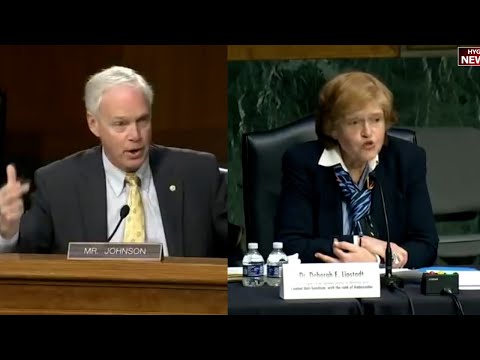
Senator Johnson Confronts Biden Nominee Who Called Him a White Supremacist on Social Media: “You Don’t Even Know Me”
On 2/9/2022, Senator Ron Johnson of Wisconsin confronted a Biden nominee during a confirmation hearing over social media posts in which the nominee had accused Johnson and other Republicans of white supremacy and nationalism. Johnson asked the nominee directly: “You don’t know me. You’ve never talked to me. You’ve never met me. You don’t know what’s in my heart, do you?” The nominee eventually apologized, but Johnson said “somebody with a 30-year professional career ought to know better” and announced he could not support the nomination.
”You’ve Engaged in the Malicious Poison”
Johnson opened by describing his JOSA Project in Milwaukee — a partnership with inner-city pastor Jerome Smith to help people of all races turn their lives around. He connected it to Biden’s inaugural pledge to unify and heal the nation, which the nominee agreed had not been achieved.
Then Johnson pivoted. “A way not to heal, I think, is what’s happening on social media. It was interesting to hear Senator Schumer talk about the malicious poison,” Johnson said. “And what’s happening on social media so often is just malicious.”
Johnson set up his argument carefully. “If somebody came up to you privately, quietly, and said, you’re a racist, you’re a white supremacist, you’re a white nationalist — by the way, I do not believe you are, I would never assume that — how would you feel?” he asked.
“First of all, I would say they’re wrong. Second of all, I would disagree with them,” the nominee said. “And as I said earlier, I want to reiterate that even in my critiques of people, I’m very careful never to ascribe to the person.”
“But that’s not true,” Johnson fired back. “What you just testified there is false."
"You Don’t Know What’s in My Heart”
Johnson confronted the nominee with her own tweets. “First of all, you don’t know me. You don’t know a lot of the people that you have accused online in front of millions of people,” Johnson said. “You have engaged in the malicious poison. You’ve accused people you don’t know of very vile things.”
“Wouldn’t you agree that calling somebody a racist is just under murder and rapist? Calling somebody a racist is a serious and vile accusation you can hurl against somebody — somebody you don’t even know,” Johnson pressed.
“You’ve never talked to me. You’ve never met me. You don’t know what’s in my heart, do you?” Johnson asked.
“No, I have no idea. No, I do not know what’s in your heart at all,” the nominee admitted.
“So why would you go on social media and make those charges?” Johnson asked.
”Pure and Simple — White Supremacy”
Johnson held up the nominee’s tweet. “You said it’s ‘pure and simple’ — white supremacy and nationalism. And then you refer to articles that continue the charge,” Johnson said. “Do you feel bad about that at all? Do you retract that? What’s your current position on this?”
The nominee attempted to deflect. “As far as I can tell, I don’t call people personally—”
“No, I mean, we all know the tweet. It’s right here,” Johnson interrupted.
The Apology
The nominee eventually offered an apology. “As I said earlier, it was not nuanced. I would not do diplomacy by tweet,” she said. “While I may disagree with what you said specifically, and I think that’s a legitimate difference, I certainly did not mean it. And I’m sorry if it was taken — and I’m sorry if I made it in a way that it could be assumed to be at the person personally."
"I Accept Your Apology, But…”
Johnson accepted the apology but drew a broader point. “I appreciate your apology and I’ll accept your apology. It’s more than, for example, what the chairman of this committee has done and other members who’ve also callously and cavalierly hurled those same charges that I would consider malicious poison to our body politic today,” Johnson said.
“But I think somebody that has had a 30-year professional career ought to know better. And when you’re being nominated and considered for confirmation to a position of diplomacy representing the United States, I certainly cannot support your nomination,” Johnson concluded. “I hope my other colleagues won’t either. You’re just simply not qualified for it. But I wish you the best in life, and I do accept your apology.”
The JOSA Project
Johnson’s questioning was made more powerful by the contrast he drew with his own community work. He described the JOSA Project as connecting people “of all races, all genders, people some of them formerly incarcerated, some just down in their life — alcohol, drug abusers — people who want to turn their lives around by improving their attitude and committing to success.”
“We’ve literally transformed hundreds of lives. I wish it was thousands, I wish it was tens of thousands, but literally hundreds of lives,” Johnson said. He asked the nominee if this sounded like a good way to heal the nation. “Absolutely,” she agreed. “You can make broad policy pronouncements, but unless you’ve changed facts on the ground, nothing’s going to change.”
The exchange highlighted the gap between politicians who do community work across racial lines and the social media culture of labeling opponents as racists without personal knowledge.
Key Takeaways
- Johnson confronted a Biden nominee who had tweeted that he was a white supremacist and nationalist, telling her: “You don’t know me. You’ve never met me. You don’t know what’s in my heart.”
- The nominee admitted she did not know what was in Johnson’s heart and apologized, saying her tweet “was not nuanced” and she “would not do diplomacy by tweet.”
- Johnson described his JOSA Project in Milwaukee — a partnership with an inner-city Black pastor that has “transformed hundreds of lives” across racial lines.
- Johnson accepted the apology but said “somebody with a 30-year professional career ought to know better” and announced he could not support the nomination.
- The nominee agreed the nation was not more unified a year after Biden’s inaugural address pledging to heal divisions.
Transcript Highlights
The following is transcribed from the video audio (unverified — AI-generated from audio).
- You don’t know me. You’ve never talked to me. You’ve never met me. You don’t know what’s in my heart, do you? No, I do not know what’s in your heart at all.
- So why would you go on social media and make those charges? You’ve accused people you don’t know of very vile things.
- Calling somebody a racist is just under murder and rapist. It’s a serious and vile accusation — somebody you don’t even know.
- It was not nuanced. I would not do diplomacy by tweet. I’m sorry if I made it in a way that it could be assumed to be at the person personally.
- I appreciate your apology. But somebody with a 30-year professional career ought to know better. I certainly cannot support your nomination.
- We’ve literally transformed hundreds of lives. Absolutely. You can make broad policy pronouncements, but unless you’ve changed facts on the ground, nothing’s going to change.
Full transcript: 1517 words transcribed via Whisper AI.