 HYGO News
 Why Should The American People Have Confidence In National Security Advisors?
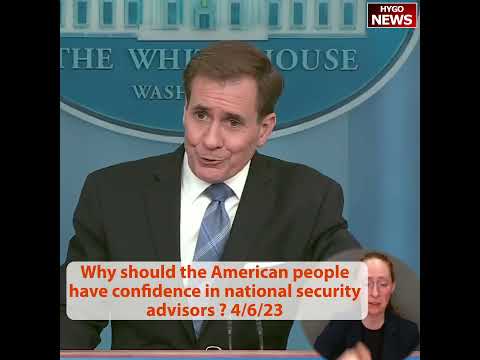
Why Should The American People Have Confidence In National Security Advisors?
A reporter asked NSC spokesman John Kirby during an April 2023 White House briefing a fundamental question about the Biden administration’s Afghanistan withdrawal review: given that the report laid out substantial failures, “Why should the American people have confidence in all of those national security advisors?” Kirby responded that President Biden “does have trust and confidence in his national security team” despite some assessments proving “faulty” and “wrong,” maintaining they remain “an extraordinarily talented group of leaders.”
The Confidence Question
- American public trust: American public trust.
- Leadership credibility: Leadership credibility.
- Report revelations: Report revelations.
- Accountability gap: Accountability gap.
- Justification need: Justification need.
Kirby’s Trust Defense
- “Does have trust”: Explicit trust confirmation.
- Full confidence: Full confidence framing.
- “Asked a lot of questions”: Presidential engagement.
- “Passed to him”: Advice receipt.
- “Faulty” admission: Faulty assessment admission.
The “Faulty” Admission
- Assessment failures: Explicit assessment failures.
- “Proved to be wrong”: Proved to be wrong.
- Professional errors: Professional errors.
- Analytical shortcomings: Analytical shortcomings.
- Institutional problems: Institutional problems.
The “Talented Group”
- “Extraordinarily talented”: “Extraordinarily talented” framing.
- Professional praise: Professional praise.
- Institutional protection: Institutional protection.
- Career defense: Career defense.
- Political messaging: Political messaging.
The Presidential Engagement
- Question asking: Presidential question asking.
- Active engagement: Active engagement claim.
- Decision-making: Decision-making process.
- Due diligence: Due diligence claim.
- Accountability shield: Accountability shield.
The Team Composition
- Sullivan NSA: Jake Sullivan as National Security Advisor.
- Austin Defense: Lloyd Austin as Defense Secretary.
- Blinken State: Antony Blinken as Secretary of State.
- Milley JCS: Mark Milley as Chairman, Joint Chiefs.
- Haines DNI: Avril Haines as DNI.
The Institutional Defense
- Team defense: Team defense approach.
- Institutional continuity: Institutional continuity.
- Experience emphasis: Experience emphasis.
- Professional standing: Professional standing.
- Political protection: Political protection.
The Trust Paradox
- Failed advice: Failed advice given.
- Continued trust: Continued trust maintained.
- Accountability absence: Accountability absence.
- Political convenience: Political convenience.
- Institutional preservation: Institutional preservation.
The Reporter’s Challenge
- Substantive question: Substantive question.
- Confidence question: Confidence question.
- Public trust: Public trust concern.
- Report reference: Report reference.
- Professional journalism: Professional journalism.
The Public Trust Challenge
- Polling concerns: Polling concern pattern.
- Institutional credibility: Institutional credibility.
- Political implications: Political implications.
- Historical impact: Historical impact.
- Democratic accountability: Democratic accountability.
The Accountability Disconnect
- Failure acknowledgment: Failure acknowledgment.
- No consequences: No apparent consequences.
- Continued employment: Continued employment.
- Career protection: Career protection.
- Systemic issues: Systemic issues.
The Political Strategy
- Team protection: Team protection strategy.
- Political defense: Political defense.
- Institutional stability: Institutional stability.
- Future reliance: Future reliance.
- Legacy management: Legacy management.
The Historical Precedents
- Past crises: Past crisis responses.
- Presidential teams: Presidential team turnover.
- Accountability patterns: Accountability patterns.
- Institutional learning: Institutional learning.
- Professional expectations: Professional expectations.
The “Asked Lot of Questions”
- Due diligence: Due diligence framing.
- Active leadership: Active leadership claim.
- Decision ownership: Decision ownership.
- Process defense: Process defense.
- Engagement emphasis: Engagement emphasis.
The Message Consistency
- Trust emphasis: Trust emphasis.
- Talent emphasis: Talent emphasis.
- Institutional defense: Institutional defense.
- Political positioning: Political positioning.
- Future-focused: Future-focused messaging.
The Afghanistan Specifics
- Policy failure: Policy failure reality.
- Strategic miscalculation: Strategic miscalculation.
- Tactical challenges: Tactical challenges.
- Casualty outcomes: Casualty outcomes.
- International implications: International implications.
The Intelligence Community
- Assessment failures: Assessment failures.
- Analytical limitations: Analytical limitations.
- Professional challenges: Professional challenges.
- Institutional reform: Institutional reform needs.
- Accountability questions: Accountability questions.
The Military Leadership
- Command decisions: Command decisions.
- Professional judgments: Professional judgments.
- Operational planning: Operational planning.
- Execution challenges: Execution challenges.
- Professional accountability: Professional accountability.
The Diplomatic Failure
- State Department: State Department decisions.
- Evacuation planning: Evacuation planning.
- Afghan ally: Afghan ally processing.
- Embassy operations: Embassy operations.
- International coordination: International coordination.
Key Takeaways
- Reporter asked why American people should have confidence in national security advisors given the report’s revelations.
- Kirby insisted Biden “does have trust and confidence in his national security team.”
- He acknowledged assessments “proved faulty” and “proved to be wrong.”
- Kirby maintained the team remains “extraordinarily talented.”
- No accountability measures were announced for intelligence or security officials.
- The exchange highlighted the tension between acknowledged failures and maintained team confidence.
Transcript Highlights
The following quotations are drawn from an AI-generated Whisper transcript of the briefing and should be considered unverified pending official transcript release.
- “The President does have trust and confidence in his national security team.” — John Kirby
- “He did ask a lot of questions. And there were some assessments passed to him that proved faulty, that proved to be wrong.” — John Kirby
- “He continues to conclude that this is an extraordinary, extraordinarily talented group of leaders.” — John Kirby
- “I appreciate the fact that lessons have been learned. And I assume that the President still has full confidence in his national security team.” — Reporter framing
- “Why should the American people have confidence in all of those national security advisors, given what this report lays out?” — Reporter question
- “I gave him the advice, which is pointed out in his summary.” — Kirby framing
Full transcript: 107 words transcribed via Whisper AI.