 HYGO News
 Why not US oil, comfortable pay migrants, nobody elected Biden FDR, mandate not affect supply chain
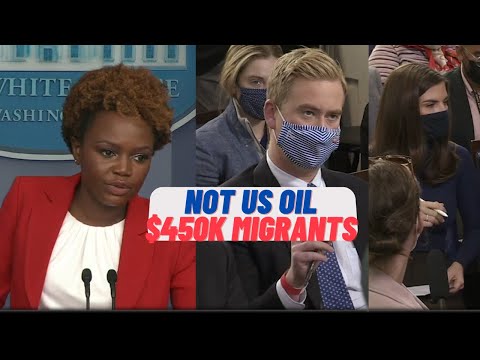
White House Dodges on US Oil Production, Defends Migrant Payments, Dismisses Supply Chain Mandate Concerns
On November 4, 2021, the White House press briefing produced a series of contentious exchanges that touched on several of the Biden administration’s most vulnerable issues simultaneously: the refusal to increase domestic oil production while blaming OPEC for high gas prices, the reversal on whether the administration would pay settlements to illegal immigrants separated at the border, the claim that vaccine mandates would not affect supply chains, and a stinging rebuke from a fellow Democrat who said “nobody elected him to be FDR.” The briefing came just two days after Democrats lost the Virginia governor’s race, adding political urgency to every question.
Why Not Increase US Oil Production?
When a reporter noted that OPEC members themselves had pointed out that the United States had plenty of spare capacity to increase oil production, the press secretary deflected to market principles rather than policy.
“The U.S. operates on a competitive free market system, as you know, Steve, and individual companies make their own decisions,” she said. She then redirected to OPEC: “OPEC Plus is a collection of countries that set supply levels themselves. They have the capacity and the power now to act and make sure this critical moment of global recovery is not impaired.”
The framing drew immediate criticism. Republicans argued that the administration was simultaneously claiming it could not control domestic production decisions by private companies while actively using executive authority to restrict new drilling, cancel pipeline permits, and impose regulatory barriers that discouraged domestic investment in oil and gas capacity. The press secretary’s insistence that “OPEC Plus production is what impacts global oil prices” sidestepped the question of why the administration was not taking steps to increase the American share of global supply.
When asked whether the administration would release oil from the Strategic Petroleum Reserve, the press secretary said: “I don’t have anything specifics, but we are going to use every tool at our disposal to make sure that we address this."
"Perfectly Comfortable” Paying Migrants
The most explosive exchange of the briefing centered on reports that the Biden administration was negotiating settlements of up to $450,000 per person for illegal immigrants who had been separated from family members at the border under the Trump administration’s zero-tolerance policy.
The issue had erupted the previous day when a reporter asked Biden directly about the $450,000 figure and Biden had called it “garbage” and said “that’s not going to happen.” But at the briefing, the press secretary appeared to reverse that position.
“If it saves taxpayer dollars and puts the disastrous history of the previous administration’s use of zero tolerance and family separation behind us, the President is perfectly comfortable with the Department of Justice settling with the individuals and families who are currently in litigation with the U.S. government,” she said.
When pressed on the contradiction between Biden’s “garbage” comment and the administration’s actual position, the press secretary explained that Biden “was reacting to the dollar figure” specifically, not to the concept of settlements. She noted that “DOJ made clear to the plaintiffs that the reported figures are higher than anywhere that a settlement can land.”
A reporter pressed the obvious follow-up: “Up to $450,000 each, possibly a million dollars per family. Do you think that that might incentivize more people to come over illegally?” The question went unanswered directly, with the press secretary referring further questions to the Department of Justice.
”Nobody Elected Him to Be FDR”
The briefing also addressed a politically damaging quote from a member of Biden’s own party. Representative Abigail Spanberger (D-VA) told the New York Times: “Nobody elected him to be FDR. They elected him to be normal and stop the chaos.”
The remark came in the aftermath of the Virginia election loss and reflected growing frustration among moderate Democrats that Biden’s legislative agenda had expanded far beyond what voters had expected.
The press secretary attempted to deflect: “If you — it’s been reported, you know, the way that we see it, one of the best arguments for the Build Back Better Act is that 17 Nobel Prize winners in economics agree that it will reduce inflationary pressures.”
Senator Joe Manchin made a similar point on CNN: “We don’t have the numbers that FDR had or that Lyndon Baines Johnson had in order to get some major, major legislation done.” The comments from both Spanberger and Manchin suggested that the White House had overread its mandate from the 2020 election and was pursuing an agenda that exceeded what the party’s narrow majorities could sustain.
Vaccine Mandate Won’t Affect Supply Chains
With the supply chain crisis dominating headlines, a reporter asked about the intersection of the administration’s vaccine mandate for private employers and the potential loss of workers in transportation and logistics.
The question was direct: would firing thousands of unvaccinated truck drivers worsen the supply chain disruptions that were already causing shortages and price increases across the economy?
The press secretary was equally direct: “If you’re asking, like, if we think the rules impact supply chain, the answer is no, we don’t think that it will.”
The assertion was met with skepticism from critics who pointed to reports of trucking companies, airlines, and other logistics firms warning of staff shortages if vaccine mandates were enforced without exemptions. The supply chain crisis was already one of the primary drivers of inflation, and the prospect of removing additional workers from an already strained transportation network raised questions about the administration’s willingness to acknowledge trade-offs between its public health and economic goals.
Virginia Election Aftermath
The briefing took place with the Virginia governor’s race result still reverberating through Washington. The press secretary confirmed that Biden had not yet spoken to Governor-elect Glenn Youngkin but said “the President congratulates Governor-elect Youngkin on his win.”
She acknowledged the outcome: “Obviously, the President campaigned for his friend Terry McAuliffe. He would have preferred a different outcome, but the will of the people is clear. It was not a good night.”
The understatement of “not a good night” belied the political significance of the result. Biden had won Virginia by 10 points in 2020, and the loss of the governorship signaled the depth of the backlash against the administration’s direction on education, the economy, and the scope of federal spending.
Key Takeaways
- The White House deflected questions about why the administration would not increase domestic oil production, citing “free market” principles while simultaneously pressuring OPEC to pump more and refusing to commit to a Strategic Petroleum Reserve release.
- After Biden called reports of $450,000 settlements for separated illegal immigrants “garbage,” his press secretary said the next day that the President was “perfectly comfortable” with DOJ settling with the families, clarifying that Biden’s objection was to the specific dollar figure, not the concept.
- The press secretary dismissed concerns that vaccine mandates would worsen supply chain disruptions, said she did not know if Biden had seen a Democratic congresswoman’s warning that “nobody elected him to be FDR,” and acknowledged that the Virginia election “was not a good night.”