 HYGO News
 why Democrats wouldn’t negotiate at all over that debt ceiling?
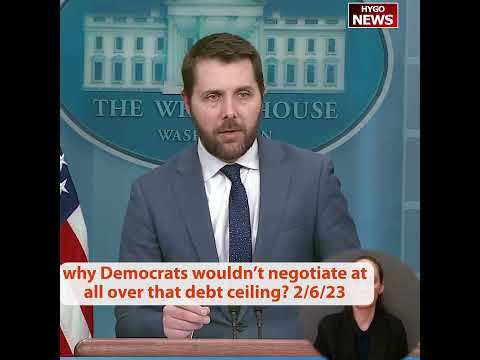
Deese: Debt Ceiling Must Be Separated From Budget Conversation — Biden Will Release Budget Next Month
In February 2023 amid the debt ceiling standoff, a reporter asked NEC Director Brian Deese why the Biden administration refused to negotiate on debt ceiling despite Speaker McCarthy’s position that concessions would be necessary. “Speaker McCarthy clearly believes Democrats in the White House will give Republicans some concession for raising the debt limit. I’m wondering why Democrats wouldn’t negotiate at all over that debt ceiling,” the reporter asked. Deese’s response maintained the two-track separation argument: “So we’ll just circle back, I think I’ve answered elements of this before. It’s important to distinguish between two things. One is the full faith and credit of the United States government. For House Republicans to put out their budget plan and then to have a conversation around those two.” He previewed Biden’s budget release: “You’ve heard the President and the administration both commit that we will do that. We’ll put out a budget, we’ll put out a very detailed budget here in the next month. And our hope and expectation is that the House Republicans will do the same.”
The McCarthy Position Invoked
McCarthy position:
Concessions expected — For debt ceiling.
Negotiation demand — Clear.
Political reality — Stated.
House leadership — Position.
Standard leverage — Claimed.
Speaker McCarthy’s position that Democrats would give Republicans concessions for raising debt ceiling was explicit political leverage claim. This was standard House leadership negotiating position using debt ceiling as pressure point.
”Why Wouldn’t Democrats Negotiate”
The question:
Direct — Ask.
“At all” — Absolutism.
Democratic position — Questioned.
Political reasoning — Sought.
Accountability — Required.
The reporter’s question directly challenged Democratic “no negotiation” absolutism. “Why wouldn’t Democrats negotiate at all” required political reasoning justification. Accountability for the absolute position was being sought.
”Circle Back”
Deese opening:
“Circle back” — Standard phrase.
“Answered before” — Reference.
Pattern — Of prior responses.
Deflection — Partial.
Familiar — Ground.
Deese’s “circle back” opening was familiar conversational construct. Referencing prior answers was attempt to make this familiar territory. This was standard political response technique.
”Two Things Distinguished”
The distinction:
Debt ceiling — Full faith and credit.
Budget — Spending conversations.
Separate tracks — Claimed.
Democratic framing — Standard.
Logical structure — Imposed.
Deese’s two-thing distinction was standard Democratic framing. Debt ceiling (already-incurred obligations) was distinguished from budget (future spending). The argument imposed logical structure on politically complicated situation.
”Full Faith and Credit”
Full faith framing:
Standard phrase — For U.S. debt.
Obligation — Already incurred.
Cannot be negotiated — Argument.
Constitutional — Some argue.
Emphasis — Absolute.
The “full faith and credit” framing emphasized debt ceiling’s relationship to already-incurred obligations. Argument was that paying existing debts couldn’t be subject to negotiation — it was fundamental obligation, not bargaining chip.
The Budget Conversation
Budget:
Separate process — Annual.
Spending levels — Debated.
Policy priorities — Considered.
Negotiation appropriate — Standard.
Congressional role — Central.
Budget conversation was separate annual process where spending levels were debated, policy priorities considered, negotiation was standard, Congressional role was central. This was normal political process, distinct from debt ceiling.
”Put Out a Very Detailed Budget”
Biden budget preview:
“Very detailed” — Claim.
“Next month” — March 2023.
Commitment — Made.
Substantive — Proposal.
Expectation — From Deese.
Deese’s budget preview committed to “very detailed” budget release “next month” — March 2023. This was substantive proposal Biden would put forward. Expectation was set for concrete budget document with details.
”House Republicans Will Do the Same”
Republican expectation:
Symmetry requested — Fairness.
Republican budget — Demanded.
Public scrutiny — Invited.
Political pressure — Applied.
Challenge — Issued.
Deese’s expectation that “House Republicans will do the same” was political pressure. If Biden put out detailed budget, Republicans should too. Symmetry was requested. Public scrutiny would follow. Challenge was issued to Republican leadership.
The 2011 Lesson Underlying
2011 lesson:
Obama negotiated — Then.
Debt ceiling — Tied to cuts.
Budget Control Act — Result.
Sequestration — Cascading.
Political damage — Lasting.
The 2011 lesson underlying Democratic position was Obama’s negotiation that led to Budget Control Act with sequestration cascading effects. Democrats learned not to negotiate debt ceiling. That lesson drove current administration position.
The Political Strategy
Strategy:
No negotiation — Publicly.
Pressure Republicans — Goal.
Force clean raise — Demand.
Budget talks — Separate.
Brinksmanship — Calculated.
Democratic political strategy was to maintain “no negotiation” position publicly while pressuring Republicans into clean debt ceiling raise. Budget talks would be separate. Brinksmanship was calculated. Standard approach.
The McCarthy Coalition Management
Coalition management:
Freedom Caucus — Demanding.
Moderate members — Concerned.
Narrow majority — 5 votes.
Speaker election — 15 rounds.
Fragile position — Real.
McCarthy’s coalition management was difficult. Freedom Caucus was demanding cuts. Moderate members were concerned about default. Narrow majority meant 5 votes. Speaker election had taken 15 rounds. McCarthy’s position was fragile.
The Debt Ceiling Mechanics
Mechanics:
Statutory limit — Total debt.
Treasury — Extraordinary measures.
X-date — When limit hit.
Summer 2023 — Expected.
Default consequences — Severe.
The debt ceiling mechanics involved statutory limit on total debt, Treasury extraordinary measures to extend before limit hit, X-date when measures exhausted, summer 2023 expected timing, severe default consequences.
The Default Consequences Real
Consequences:
Treasury default — Unprecedented.
Market chaos — Likely.
Interest rates — Spike.
Economic damage — Substantial.
Global implications — Serious.
Default consequences were genuinely severe. Treasury default would be unprecedented. Market chaos likely. Interest rates would spike. Economic damage substantial. Global implications serious because dollar was reserve currency.
The Brinksmanship Reality
Brinksmanship:
Both sides — Positioning.
Deadline approaches — Eventually.
Compromise — Usually.
Political theater — Part.
Resolution — Expected.
Debt ceiling brinksmanship was historically recurring political theater. Both sides positioned. Deadline approached. Compromise usually occurred. Resolution expected even if uncertain. This was standard pattern.
The Eventual Resolution
Resolution:
Fiscal Responsibility Act — June 2023.
Biden-McCarthy — Deal.
Spending caps — Agreed.
Ceiling raised — Two years.
Compromise — Necessary.
The eventual resolution in June 2023 was Fiscal Responsibility Act with Biden-McCarthy deal. Spending caps were agreed. Ceiling raised for two years. Compromise was necessary. Default was averted.
The Biden FY2024 Budget
Biden budget:
March 2023 release — Planned.
Detailed proposal — $6.9 trillion.
Priorities — Various.
Opposition expected — GOP.
Public message — Via budget.
Biden’s FY2024 budget would be released March 2023 as detailed proposal at $6.9 trillion. Priorities included various Democratic goals. Opposition expected from GOP. Budget served as public message about administration priorities.
The Republican Budget Demand
Republican response:
Freedom Caucus — Would demand cuts.
Specifics avoided — Sometimes.
Political position — Not formal plan.
Politically difficult — Specifics.
Standard gap — Between rhetoric and plan.
Republican response challenge was that Freedom Caucus would demand cuts but specifics were politically difficult. Standard gap between rhetorical demands and formal plan was real. Republican budget would be politically tricky.
The Clean Raise Demand
Clean raise:
No conditions — Attached.
Historic precedent — Sometimes.
Trump era — Clean raises.
Democratic argument — Standard.
Political frame — Normalized.
Democratic “clean raise” demand meant no conditions attached. Historic precedent included some clean raises. Trump era had clean raises under Democratic House. Democratic argument was standard. Political framing normalized demand.
The Market Implications
Market implications:
Treasury yields — Affected.
Stock market — Watching.
International concern — Real.
Economic uncertainty — Growing.
Risk premium — Building.
Market implications of debt ceiling standoff were real. Treasury yields were affected. Stock market watched closely. International concern grew. Economic uncertainty increased. Risk premium built into markets as deadline approached.
The Economic Damage From Continued Standoff
Damage:
Confidence — Eroding.
Investment — Delayed.
Uncertainty costs — Real.
Before default — Even.
Political cost — For all.
Economic damage from continued standoff was real even before any default. Confidence eroded. Investment decisions delayed. Uncertainty costs real. Political cost accumulated for all involved. Resolution had urgency.
The Press Briefing Pressure
Briefing pressure:
Daily questions — About ceiling.
Answers templated — Often.
Pattern visible — Repeated.
Substance sometimes — From Deese.
Strategic messaging — Primary.
The press briefing pressure was daily with ceiling questions. Answers were templated often. Pattern visible through repetition. Some substance from Deese in comparison to KJP deflections. Strategic messaging was primary.
The Negotiation vs. Budget Distinction
Distinction:
Conceptually clean — Democrats.
Practically messy — Reality.
Congressional process — Combined.
Budget talks — Precede.
Ceiling raise — Linked.
The Democratic negotiation vs. budget distinction was conceptually clean but practically messy. Congressional process often combined these. Budget talks preceded ceiling raise historically. Linkage was real in practice.
The Historical Negotiation Patterns
Historical patterns:
Multiple past ceilings — Negotiated.
2011 — Major negotiation.
2013 — Fiscal cliff.
Various others — Standoffs.
Resolution — Usually compromises.
Historical ceiling negotiation patterns included 2011 major negotiation, 2013 fiscal cliff, multiple other standoffs. Resolution usually came through compromises even when one side had claimed no-negotiation position.
The Political Reality Check
Reality check:
No-negotiation claim — Strong publicly.
Eventually gives — Historically.
Political theater — Part.
Eventual compromise — Expected.
Deese message — Administrative position.
The political reality check was that no-negotiation claims were strong publicly but eventually gave way historically. Political theater was part of process. Eventual compromise was expected. Deese’s message was administrative position for now.
The Democratic Internal Dynamics
Democratic dynamics:
Party unity — Maintained.
Messaging discipline — Strong.
Leadership aligned — Biden-Schumer.
Moderate concerns — Managed.
Strategy execution — Professional.
Democratic internal dynamics showed party unity maintained, strong messaging discipline, leadership aligned between Biden and Schumer, moderate concerns managed. Strategy execution was professional.
The Republican Internal Dynamics
Republican dynamics:
Freedom Caucus — Dominant.
McCarthy constrained — By them.
Moderate concerns — Present.
Unity — Tested.
Coalition fragile — Real.
Republican internal dynamics had Freedom Caucus dominant, McCarthy constrained by them, moderate concerns present, unity tested, coalition fragile. Managing internal politics was McCarthy’s challenge.
The Brian Deese Professionalism
Professionalism:
Measured responses — Consistent.
Substantive engagement — Usually.
Professional demeanor — Maintained.
Economic expertise — Brought.
Respected — By press.
Brian Deese’s professionalism through measured responses, substantive engagement, maintained professional demeanor, economic expertise brought to briefings, was respected by press corps. Quality administration representation.
The Longer-Term Outcome
Longer-term:
June 2023 deal — Reached.
Default averted — Successfully.
Spending caps — Accepted.
Both sides — Claimed victory.
Process worked — Eventually.
The longer-term outcome was June 2023 Fiscal Responsibility Act reaching deal, successfully averting default, spending caps accepted, both sides claiming victory, process working eventually. Political system resolved the crisis.
Key Takeaways
- A reporter asked Deese why Democrats wouldn’t negotiate debt ceiling when McCarthy clearly believed concessions were expected.
- Deese maintained separation: “It’s important to distinguish between two things. One is the full faith and credit of the United States government.”
- He separated budget from debt ceiling: “For House Republicans to put out their budget plan and then to have a conversation around those two.”
- He previewed Biden’s budget release: “We’ll put out a very detailed budget here in the next month.”
- He challenged Republicans: “Our hope and expectation is that the House Republicans will do the same.”
- The no-negotiation position would eventually give way to June 2023 Fiscal Responsibility Act compromise.
Transcript Highlights
The following is transcribed from the video audio (unverified — AI-generated from audio).
- Speaker McCarthy clearly believes Democrats in the White House will give Republicans some concession for raising the debt limit.
- I’m wondering why Democrats would negotiate at all over that debt ceiling.
- So we’ll just circle back, I think I’ve answered elements of this before. It’s important to distinguish between two things.
- One is the full faith and credit of the United States government.
- For House Republicans to put out their budget plan and then to have a conversation around those two.
- You’ve heard the President and the administration both commit that we will do that. We’ll put out a budget, we’ll put out a very detailed budget here in the next month. And our hope and expectation is that the House Republicans will do the same.
Full transcript: 126 words transcribed via Whisper AI.