 HYGO News
 Why are we shooting them down all of a sudden? didn’t pose a military threat
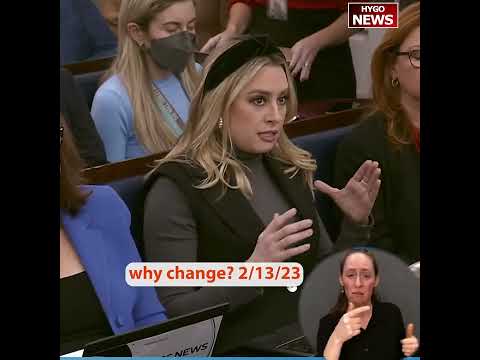
Reporter Presses Kirby: What Changed? NORAD Commander Said Balloons Didn’t Pose Military Threat
In February 2023, a reporter pressed National Security spokesperson John Kirby about the apparent shift in shoot-down policy following multiple object takedowns. “We’re looking for these more, so we’re finding more… One reason, but what we’re getting at is, you know, why are we all of a sudden shooting them down?” the reporter asked. The reporter cited NORAD commander’s earlier testimony: “The NORAD commander, for instance, said that when the first spy balloon was crossing over American and then Canadian airspace, one of the reasons that he couldn’t take action because his assessment was that it didn’t pose a military threat or have hostile intent and so he couldn’t take action there. It seems like maybe that protocol has changed or his ability to make that call where there’s not an imminent threat militarily or physically might have changed. So can you explain to us what changed? Why are we shooting them down all of a sudden?” Kirby’s response: “I kind of feel like I took care of that in my opening statement, but I think we need to separate the Chinese spy balloon. We knew what it was. We knew where it was going.”
The Protocol Change Question
Protocol question:
Previous — No action.
Now — Immediate action.
What changed — Central.
Policy shift — Evident.
Accountability — Sought.
The protocol change question was central. Previous was no action because no military threat. Now was immediate action on similar objects. What changed was central inquiry. Policy shift evident. Accountability sought.
The NORAD Commander Reference
NORAD reference:
General VanHerck — Earlier.
Testimony basis — Cited.
Rules of engagement — Discussed.
Military threat — Required.
Hostile intent — Needed.
Reporter’s reference to NORAD commander General VanHerck’s earlier testimony was substantively grounded. Rules of engagement previously required military threat or hostile intent. This was legal/operational framework.
”Didn’t Pose a Military Threat”
Prior standard:
Military threat — Required.
Hostile intent — Needed.
Balloons passing — Not meeting.
Action — Prevented.
Framework — Limited.
The prior standard requiring balloons to pose military threat or hostile intent before action meant balloons passing through airspace without meeting these criteria couldn’t be engaged. Framework limited action possibilities.
”Protocol Has Changed”
Change noted:
Policy change — Observed.
Lower threshold — Now.
Faster action — Current.
Different rules — Applied.
Change — Requires explanation.
The reporter’s observation that “protocol has changed” with lower threshold, faster action, different rules applied was substantive policy change requiring explanation. Administrative accountability for shift was appropriate inquiry.
”Ability to Make That Call”
Authority:
Decision authority — Question.
Imminent threat — Absent.
Physical threat — Missing.
Different authority — Now.
Policy shift — Visible.
“Ability to make that call where there’s not an imminent threat militarily or physically might have changed” questioned decision authority. Different authority operating now without imminent threats. Visible policy shift.
”What Changed”
Direct question:
Central — Inquiry.
Substantive — Required.
Accountability — Sought.
Specific — Answer needed.
Professional — Asking.
“What changed” was central direct question. Substantive answer required. Accountability sought. Specific answer needed rather than deflection. Professional asking of legitimate policy question.
”Took Care of That in My Opening Statement”
Kirby response:
Prior coverage — Claimed.
Opening statement — Referenced.
Partial deflection — Element.
Full answer — Not repeated.
Standard — Deferral.
Kirby’s “I kind of feel like I took care of that in my opening statement” was partial deflection deferring to prior coverage rather than repeating full answer. Standard briefing technique of referring to earlier material.
”Separate the Chinese Spy Balloon”
Categorical distinction:
China balloon — Different category.
Other objects — Different.
Known vs. unknown — Distinction.
Different — Treatment.
Rationale — Building.
Kirby’s “need to separate the Chinese spy balloon” established categorical distinction. Chinese balloon was different from other objects. Known vs. unknown distinction. Different treatment justified. Rationale building.
”Knew What It Was”
Knowledge:
Balloon identified — Yes.
Source known — Chinese.
Purpose known — Surveillance.
Specific intelligence — Provided.
Different — From others.
The “we knew what it was” framing emphasized balloon was identified Chinese surveillance with specific intelligence. Different from other objects where identity wasn’t known. This distinction justified different response patterns.
”Knew Where It Was Going”
Flight path:
Tracked — Successfully.
Path anticipated — Yes.
Counter-measures — Possible.
Different — From other objects.
Informed — Response.
“We knew where it was going” showed tracked successful path. Counter-measures possible with flight path known. Different from other objects where paths were being tracked in real-time. Informed response possible.
The Real Protocol Shift
Real shift:
Smaller objects — Engaged now.
No hostile intent — Needed now.
Lower threshold — For action.
Faster response — Default.
Policy — Actually changed.
The real protocol shift was that smaller objects were being engaged, no hostile intent threshold needed, lower threshold for action, faster response default. Policy had actually changed after political pressure from balloon incident.
The Political Pressure Driver
Political driver:
GOP criticism — Balloon delay.
Biden defensiveness — Post-balloon.
Quick action — Politically valuable.
Policy adjustment — Occurred.
Visible — Change.
Political pressure driver was clear. GOP criticism of balloon delay. Biden defensiveness post-balloon. Quick action was politically valuable after criticism. Policy adjustment occurred. Visible policy change.
The Civilian Aviation Priority
Priority:
40,000 feet — Commercial altitude.
Civilian flight safety — Real.
Alaska object — At commercial altitude.
Justification — Different from balloon.
Valid — Safety concern.
Civilian aviation priority was real 40,000 feet commercial altitude concern. Alaska object at commercial altitude had different justification from balloon. Valid safety concern for immediate action.
The Detection Sensitivity Change
Sensitivity:
Radars adjusted — Post-balloon.
More detection — Resulting.
Smaller objects — Caught.
Previously invisible — Now visible.
Increased — Activity.
Detection sensitivity change with radars adjusted post-balloon meant more detection resulted. Smaller objects caught. Previously invisible objects now visible. Increased detection activity explained some increase in events.
The Hobby Balloon Possibilities
Hobby:
Small balloons — Many fly.
Hobbyists — Active.
Weather research — Various.
Now detected — Previously not.
Benign — Mostly.
Hobby balloon possibilities meant many small balloons flew. Active hobbyists globally. Various weather research. Now detected when previously not. Mostly benign objects possibly being shot down.
The Lake Huron Object Criticism
Lake Huron:
Octagonal object — Downed.
Turned out — Possibly hobby.
Criticism — Sharp.
Overshoot — Possible.
Political — Debate.
Lake Huron octagonal object downing turned out possibly hobby balloon. Sharp criticism for overshoot in policy. Political debate about policy calibration. Not all objects required immediate engagement.
The Rules of Engagement Question
ROE:
Clear criteria — Needed.
Fluid now — Apparently.
Pentagon authority — Clarification.
Presidential direction — Role.
Policy — Evolving.
Rules of engagement question about clear criteria needed was substantive. Fluid now apparently. Pentagon authority clarification needed. Presidential direction role. Policy was evolving rapidly.
The Military-Civilian Decision Balance
Balance:
Military recommendation — Primary.
Presidential decision — Final.
Political input — Real.
Professional advice — Weighted.
Balance — Dynamic.
Military-civilian decision balance had military recommendation primary, presidential decision final. Political input real. Professional military advice weighted. Dynamic balance between civilian and military input.
The Kirby Deflection Effectiveness
Deflection:
“Took care of that” — Claim.
Not really — Answered.
Substance avoided — Partially.
Professional tone — Maintained.
Pattern — Visible.
Kirby’s deflection with “took care of that” claim didn’t really answer the substantive question. Substance partially avoided. Professional tone maintained. Pattern of deferring to prior statements visible.
The Reporter’s Persistence
Persistence:
Specific question — Real.
NORAD testimony — Cited.
Substantive — Inquiry.
Professional — Follow-up.
Quality — Journalism.
Reporter’s persistence with specific question citing NORAD testimony was substantive inquiry. Professional follow-up. Quality journalism pushing through standard deflections to real issues.
The Policy Evolution Reality
Evolution:
Pre-balloon — Different.
Post-balloon — Changed.
Learning curve — Visible.
Adjustment — Real.
Not admitted — Fully.
Policy evolution reality was pre-balloon protocols different from post-balloon adjusted protocols. Learning curve visible. Real adjustment. Not fully admitted as change by administration messaging.
The Administrative Messaging Strategy
Strategy:
Continuity — Framed.
Change minimized — Rhetorically.
Success emphasized — Instead.
Political — Protection.
Standard — Spin.
Administrative messaging strategy framed continuity, minimized change rhetorically, emphasized success instead. Political protection through messaging. Standard spin rather than acknowledging clear policy change.
The NORAD Commander’s Honesty
VanHerck honesty:
Direct — Statement.
Military truth — Told.
Contradicted — White House.
Professional — Value.
Complicated — White House.
NORAD commander General VanHerck’s direct statements to Congress about previous non-action reasons were professional military truth-telling. This contradicted White House spin of continuity. Complicated administrative messaging but had professional value.
The Press Corps Research
Research:
Prior testimony — Reviewed.
Inconsistencies — Identified.
Accountability — Through research.
Professional — Journalism.
Quality — Work.
Press corps research reviewing prior testimony and identifying inconsistencies with current administration statements was accountability through research. Professional journalism. Quality accountability work through preparation.
The Object Recovery Uncertainty
Recovery:
Alaska object — Not recovered yet.
Yukon object — Canada.
Lake Huron — Deep water.
Identification — Pending.
Speculation — Filling gap.
Object recovery uncertainty meant Alaska object not recovered yet, Yukon object in Canada, Lake Huron in deep water. Identification pending. Speculation filling gap where facts absent.
The Multiple Stakeholders
Stakeholders:
Military — Pentagon.
Intelligence — Multiple agencies.
White House — Policy direction.
Congress — Oversight.
Public — Concerned.
Multiple stakeholders in situation included military Pentagon, multiple intelligence agencies, White House policy direction, Congressional oversight, concerned public. Complex stakeholder management.
The 2024 Campaign Implications
Campaign:
National security — Issue.
Biden handling — Evaluated.
Pattern criticism — Real.
Republican attacks — Continuing.
Electoral — Dimension.
2024 campaign implications of balloon and object handling included national security issue, Biden handling evaluation, real pattern criticism, continuing Republican attacks, electoral dimension. Long-term political dimension.
The Substantive Policy Questions
Questions:
Criteria clarity — Needed.
Threshold — Defined.
Authority — Specified.
Coordination — Established.
Long-term — Approach.
Substantive policy questions included criteria clarity needed, defined threshold for engagement, specified authority levels, established coordination, long-term approach to airspace security. Real policy questions.
The Answer Quality Assessment
Quality:
Partial — Answers.
Deflection elements — Present.
Some substance — Provided.
Professional — Delivery.
Not comprehensive — Though.
Answer quality assessment showed partial answers with deflection elements present, some substance provided, professional delivery. Not comprehensive though. Standard political communication trade-offs.
The Kirby Professional Limits
Professional limits:
Spokesperson role — Limited.
Classified — Some details.
Substance — What can be said.
Politics — Navigation.
Credible — Usually.
Kirby’s professional limits as spokesperson included role limitations, classified details restrictions, substance limits on what could be said publicly, political navigation required. Usually credible.
The Institutional Adjustments Real
Adjustments:
NORAD — Reform.
Detection — Enhanced.
Protocols — Updated.
Authority — Clarified.
Learning — Applied.
Institutional adjustments were real with NORAD reform, enhanced detection, updated protocols, clarified authority, applied learning. Real institutional change through incident.
The Long-Term Policy Resolution
Resolution:
Eventually — Clarified.
Policy — Established.
Criteria — Defined.
Institution — Reformed.
Lessons — Learned.
Long-term policy resolution eventually clarified with established policy, defined criteria, reformed institution, applied lessons learned. Resolution through institutional reform process.
Key Takeaways
- A reporter cited NORAD commander’s testimony: balloons “didn’t pose a military threat or have hostile intent and so he couldn’t take action.”
- The reporter observed: “Protocol has changed or his ability to make that call where there’s not an imminent threat militarily or physically might have changed.”
- The question: “What changed? Why are we shooting them down all of a sudden?”
- Kirby deflected: “I kind of feel like I took care of that in my opening statement.”
- He distinguished Chinese balloon: “We need to separate the Chinese spy balloon.”
- He cited specifics on balloon: “We knew what it was. We knew where it was going.”
Transcript Highlights
The following is transcribed from the video audio (unverified — AI-generated from audio).
- We’re looking for these more, so we’re finding more… One reason, but what we’re getting at is, you know, why are we all of a sudden shooting them down?
- The NORAD commander, for instance, said that when the first spy balloon was crossing over American and then Canadian airspace, one of the reasons that he couldn’t take action because his assessment was that it didn’t pose a military threat or have hostile intent and so he couldn’t take action there.
- It seems like maybe that protocol has changed or his ability to make that call where there’s not an imminent threat militarily or physically might have changed.
- So can you explain to us what changed? Why are we shooting them down all of a sudden?
- I kind of feel like I took care of that in my opening statement, but I think we need to separate the Chinese spy balloon.
- We knew what it was. We knew where it was going.
Full transcript: 198 words transcribed via Whisper AI.