 HYGO News
 White House's O'Brien Says Trump Hopes All US Troops Home by May From Afghanistan, Iraq
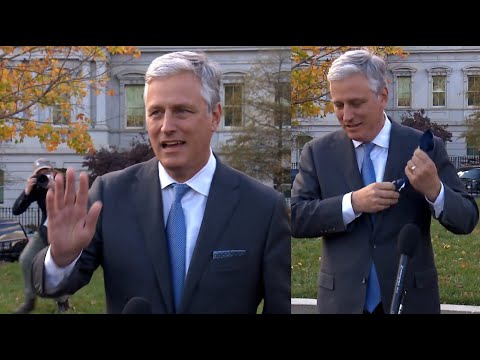
White House’s O’Brien Says Trump Hopes All US Troops Home by May From Afghanistan and Iraq
On November 17, 2020, White House National Security Adviser Robert O’Brien announced that Acting Secretary of Defense Christopher Miller had ordered major troop reductions in Afghanistan and Iraq, cutting forces in both countries to 2,500 personnel by January 15, 2021 — five days before the presidential inauguration. O’Brien went further, declaring that “by May, it is President Trump’s hope that they will all come home safely and in their entirety.” The announcement represented the most aggressive withdrawal timeline Trump had set during his presidency and came during the post-election transition period, raising questions about constraining the incoming administration’s options.
The Drawdown Announcement
O’Brien opened his remarks by confirming the Pentagon’s decision. “Effective January 15, 2021, American troops in both countries will go to 2,500 personnel,” he said. The reduction would cut Afghanistan forces from more than 4,500 to 2,500 and Iraq forces from approximately 3,000 to 2,500.
He framed the remaining mission narrowly: those 2,500 troops in each country would “defend our embassies and the other agencies of the U.S. government doing important work in those countries. They’ll enable our American allies in their important missions in those countries. They’ll defend our diplomats and they’ll deter our foes.”
O’Brien emphasized that the policy was not new, saying he had discussed the specific numbers publicly at the University of Nevada, Las Vegas in October: “This has been the President’s policy since he took office.”
The Peace-Through-Strength Framework
O’Brien presented the withdrawal as the culmination of a broader foreign policy vision. “Four years ago, President Trump ran on a promise to put a stop to America’s endless wars. Today, the Pentagon, President Trump, is keeping that promise to the American people,” he said.
He argued that Trump had achieved the withdrawal conditions through a “peace-through-strength approach” rather than unilateral retreat. Central to this argument was the military rebuilding effort. O’Brien said the military “had been decimated by defense sequestration under the Obama administration” and that Trump had rebuilt it while simultaneously requiring allies to increase their contributions.
On NATO burden-sharing, O’Brien cited a specific figure: “America’s NATO allies are now spending $400 billion in additional defense spending over the next 10 years. And they’ve contributed more troops to conflict zones in places like Iraq and Afghanistan.” He noted he had just completed a phone call with NATO Secretary General Jens Stoltenberg to thank him for the alliance’s continued contributions.
Counterterrorism Achievements
O’Brien cited several specific counterterrorism accomplishments as justification for drawing down. He said Trump had “empowered our great armed forces to defeat 100 percent of the ISIS Caliphate,” which he noted was “the size of Great Britain stretching across Syria and Iraq when President Trump took office.”
He referenced the October 2019 raid that killed ISIS leader Abu Bakr al-Baghdadi and said the U.S. military and intelligence services had “wiped out most of the leadership” of al-Qaeda, “striking that organization, which perpetrated 9/11, in Mali, Yemen, Afghanistan, Syria, and other locales.”
O’Brien also connected the withdrawals to Middle East diplomatic achievements. “From the historic Abraham Accords to the peace deal with the Taliban that has led to inter-Afghan negotiations, the world is safer because of the Trump administration’s policies,” he said.
The Reagan Comparison
O’Brien offered a sweeping assessment of Trump’s foreign policy legacy, comparing it to that of Ronald Reagan. “Critics have said that the President would not be able to rebuild our military, strengthen our alliances, wreak havoc on the terrorists, bring peace to the Middle East, and end our forever wars. Yet he has done that and positioned us to win the coming Great Power competition,” O’Brien said.
“Any one of these achievements would merit tremendous praise. Taken together, President Trump’s foreign policy and national security record is comparable only to Ronald Reagan in the past two generations.”
Context: The Doha Agreement
The drawdown announcement was tied to the February 2020 Doha Agreement between the United States and the Taliban, which had set a May 1, 2021, deadline for the complete withdrawal of American forces from Afghanistan in exchange for Taliban commitments on counterterrorism and intra-Afghan peace negotiations.
The January 15 interim reduction to 2,500 troops represented a significant step toward that deadline. However, military leaders and bipartisan voices in Congress had expressed concern about withdrawing before conditions-based benchmarks were met, noting that the Taliban had not fulfilled all of its commitments under the agreement.
The timing of the announcement — during the presidential transition, with the outcome of the election still being contested in some quarters — added a political dimension. The drawdown would present President-elect Biden with a significantly reduced force posture when he took office on January 20, effectively constraining his options for the early months of his administration.
Key Takeaways
- National Security Adviser O’Brien announced troop reductions to 2,500 in both Afghanistan and Iraq by January 15, 2021, with Trump’s stated hope that all forces would be home by May, aligning with the Doha Agreement’s withdrawal deadline.
- O’Brien framed the withdrawal as the result of a peace-through-strength strategy, citing $400 billion in additional NATO defense spending, the destruction of the ISIS caliphate, the killing of al-Baghdadi, and the Abraham Accords as achievements that made the drawdown possible.
- The announcement came during the presidential transition period, with military leaders and bipartisan members of Congress raising concerns about withdrawing before conditions-based benchmarks were met and about constraining the incoming administration’s options.