 HYGO News
 What's the plan? Additonal resources needed. Ask GOPs assist
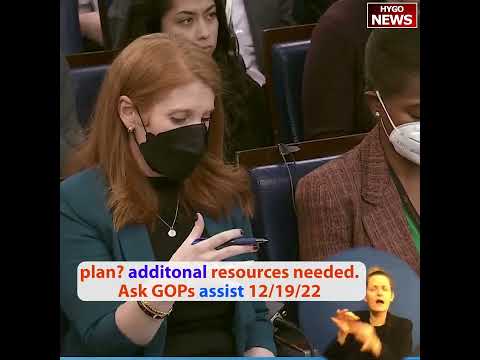
El Paso Mayor: Wednesday Migrant Influx Will Be “Incredible” and “Huge” — KJP Asked for Specific Plan, Responds With Funding Request and GOP Blame
On 12/19/2022, a reporter asked White House Press Secretary Karine Jean-Pierre about El Paso Mayor Oscar Leeser’s warning that the Wednesday (December 21) migrant influx would be “incredible” and “huge” and that the city wasn’t prepared with current resources. “Can you walk us through what the plan is to help that city?” the reporter asked. KJP didn’t detail a specific plan for El Paso. Instead, she said: “Let me just give you what the DHS is doing. We need Congress to provide us the additional resources we’ve requested to do this in a safe, orderly and humane way.” She then pivoted to the familiar Republican blame framing: “If they are serious, Republicans in Congress are serious about securing the border, then they should assist in making sure the men and women at the DHS have what they need.”
The Mayor’s Warning
The reporter cited El Paso Mayor Leeser’s specific warning. “The mayor of El Paso said over the weekend that the influx of migrants on Wednesday will be incredible. He said it will be huge and that they’re not prepared to deal with it with the current resources that they have,” the reporter said.
The mayor’s language was notable:
“Incredible” — Strong descriptor of scale.
“Huge” — Reinforcing magnitude.
“Not prepared” — Direct admission of inadequacy.
“Current resources” — Specifically federal support.
Democratic mayor — Cross-partisan credibility.
These weren’t political attacks from Republicans. A Democratic mayor of a major border city was saying:
The federal approach was inadequate — To anticipated needs.
The situation would be severe — Beyond normal handling.
Preparation was lacking — Despite federal claims.
Wednesday would be chaotic — At scale.
Mayor Leeser’s warnings carried weight precisely because of his party affiliation and experience. He wasn’t grandstanding — he was expressing genuine concern based on what he was seeing in his city.
”Walk Us Through the Plan”
The reporter’s question was operationally specific. “Can you walk us through what the plan is to help that city?” the reporter asked.
“Walk us through” implied:
Step-by-step explanation — Of specific plan.
Operational detail — Not just framing.
Accountability — About what would be done.
El Paso specific — Not general border.
Wednesday specific — Imminent event.
This was the kind of question that deserved specific answers:
Federal personnel — Going to El Paso when?
Resources — What kind and quantity?
Coordination — With local authorities?
Timeline — For deployment.
Contingencies — For different scenarios?
The reporter was asking for operational briefing, not political framing. The administration should have been prepared to provide substantive detail about El Paso plans given the mayor’s public warning.
”Let Me Just Give You What DHS Is Doing”
KJP opened with a framing promise. “Absolutely. So let me just give you what the DHS is doing,” KJP said.
The “let me give you” framing suggested:
Specific information coming — Operational content.
DHS-led response — Administrative focus.
Prepared answer — To follow.
Substantive engagement — With question.
Detailed response — Expected.
But what followed wasn’t specific DHS operational detail. It was the same funding request framing used elsewhere.
The Immediate Pivot
KJP immediately pivoted to funding. “We need Congress to provide us the additional resources we’ve requested to do this in a safe, orderly and humane way,” KJP said.
The pivot took only one sentence after promising DHS specifics. Rather than explaining what DHS was actually doing, KJP shifted to:
Congressional responsibility — For providing resources.
Future funding — Not current plans.
Administration needs — Rather than actions.
Characterization of approach — “Safe, orderly, humane.”
Standard talking point — Consistent across briefings.
The mismatch between “let me give you what DHS is doing” and actual content about Congressional funding requests was stark. KJP had promised specifics and delivered generalities.
The El Paso Gap
Notably absent from KJP’s response:
El Paso-specific plans — Despite question focus.
Wednesday preparations — Despite imminent deadline.
Resource deployment — To specific city.
Timeline — For federal support.
Coordination details — With local authorities.
Capacity arrangements — For anticipated volumes.
El Paso’s mayor had publicly warned of severe problems. The reporter had asked specifically about plans for El Paso. KJP’s response didn’t address El Paso specifically at all. The city’s specific needs weren’t addressed in the administration’s messaging.
The “Safe, Orderly, Humane” Framing
KJP’s standard framing — “safe, orderly, and humane” — appeared again. This framing had three components:
Safe — For migrants and Americans.
Orderly — Avoiding chaos.
Humane — Treating people well.
These were appropriate values for border policy. But they were values, not plans. Committing to these values didn’t describe operational arrangements for El Paso or any other specific location.
The framing had been used repeatedly by the administration throughout 2022. Each use was politically appropriate but didn’t substitute for specific operational planning.
”If They Are Serious”
KJP used the familiar “if they are serious” framing. “If they are serious, Republicans in Congress are serious about securing the border, then they should assist in making sure the men and women at the DHS have what they need to get the…,” KJP said, trailing off.
The repetition of “if they are serious” across multiple briefings had become predictable:
Same phrasing — In nearly every border-related exchange.
Political messaging — Rather than substantive engagement.
Predictable deflection — Reporters knew to expect it.
Rhetorical load — Carrying political weight.
Diminished effectiveness — Through overuse.
By December 2022, the “if Republicans are serious” framing had been repeated so often that it had lost much of its rhetorical power. Reporters and audiences heard it as predictable deflection rather than substantive engagement.
”Men and Women at DHS”
KJP referenced DHS personnel. “Make sure the men and women at the DHS have what they need to get the…,” KJP said.
The “men and women at DHS” framing was humanizing:
Personalizing — Beyond abstract department.
Value-based — Respecting federal workers.
Appropriate acknowledgment — Of challenging work.
Political messaging — Showing support.
Emotional resonance — Framing responsibility to workers.
This framing was appropriate but didn’t address the specific question. DHS personnel needing resources didn’t answer what plan existed for El Paso’s Wednesday influx.
The Incomplete Sentence
KJP’s sentence trailed off. “Make sure the men and women at the DHS have what they need to get the…,” KJP said, without completing.
The incomplete ending had several possible explanations:
Clip cutoff — Video editing.
Interruption — By next question.
Mental trailing — Under pressure.
Running out of talking points — Having used standard messaging.
Lack of specific content — To complete.
Whatever the cause, the incomplete sentence fit the overall pattern. KJP’s response had promised DHS specifics, delivered standard funding framing, and ended without specific operational content.
The Pattern Limitation
KJP’s response exemplified a limitation in administration messaging. On:
Specific location questions — Administration had general answers.
Operational questions — Administration had framing answers.
Timeline questions — Administration had “more to come” answers.
Sustainability questions — Administration had funding request answers.
El Paso specifically — Administration had Congressional blame answers.
The mismatch between questions and answers reflected administration communications strategy. Messaging was designed to make political points, not to inform the public about specific operational arrangements.
The Wednesday Deadline
The briefing occurred on Monday, December 19. The anticipated Title 42 end was Wednesday, December 21. The mayor’s “Wednesday influx will be incredible” warning was about an event 48 hours away.
For such an imminent event, operational planning should have been detailed. The administration’s inability to walk through specific El Paso plans 48 hours before the event suggested:
No specific El Paso plan — Existed.
Plan existed but wasn’t sharable — Possibly.
Plan was generic — Across border.
Plan depended on Congressional action — That wouldn’t happen by Wednesday.
Plan was inadequate — For anticipated scale.
Each possibility was problematic. None supported the administration’s “prepared” messaging.
The Supreme Court Rescue
As noted in related briefings, the Supreme Court intervened that same day (December 19). Chief Justice Roberts’s stay prevented Title 42 from ending on Wednesday as scheduled. The anticipated El Paso influx didn’t occur on December 21.
This judicial intervention effectively rescued the administration from the specific situation KJP was being asked about. El Paso didn’t face the Wednesday crisis because Title 42 remained in effect. Whether El Paso would have been overwhelmed wasn’t tested.
But the rescue was temporary. Title 42 would end eventually. El Paso’s fundamental vulnerabilities — limited capacity, inadequate federal support — weren’t addressed by Court intervention. The underlying questions about administration preparation remained.
The Biden January 2023 Visit
Biden eventually visited El Paso in January 2023. The visit:
Was brief — Few hours.
Was managed — Limited migrant exposure.
Came after pressure — Not proactive.
Generated limited engagement — With community.
Didn’t address systemic issues — Fully.
The eventual visit was partly response to continued pressure like this December 19 briefing. Mayor Leeser’s warnings, reporter questions, and political dynamics forced administrative engagement that earlier weeks had avoided.
The Messaging Failure
This briefing represented a significant messaging failure for the administration:
Question was specific — About El Paso plans.
Answer was general — About funding requests.
Mayor was clear — About inadequacy.
Administration couldn’t match — Mayor’s specificity.
Public wasn’t served — With relevant information.
When the administration couldn’t answer specific questions about El Paso despite the mayor’s public warnings, the administration’s credibility on border preparation suffered. Reporters, viewers, and border communities could see the pattern:
Administration claimed preparation — Without demonstrating it.
Specific challenges were identified — Without specific responses.
Funding requests served as substitute — For operational plans.
Republican blame substituted — For accountability.
Over time, this pattern eroded confidence in administration messaging on border issues. The December 2022 briefings were a particular low point in the demonstrable gap between claims and operational reality.
Key Takeaways
- A reporter cited El Paso Mayor Oscar Leeser’s warning that Wednesday’s migrant influx would be “incredible” and “huge” and that the city wasn’t prepared.
- The reporter asked KJP to “walk us through what the plan is to help that city.”
- KJP promised “what DHS is doing” but immediately pivoted to Congressional funding requests.
- Her response addressed administration needs rather than El Paso operational plans.
- KJP used the familiar “if Republicans are serious” framing that had been repeated across many briefings.
- Her response ended without completing the sentence.
- The Supreme Court intervened that same day, extending Title 42 and postponing the Wednesday influx — effectively rescuing the administration from the specific situation.
Transcript Highlights
The following is transcribed from the video audio (unverified — AI-generated from audio).
- The mayor of El Paso said over the weekend that the influx of migrants on Wednesday will be incredible.
- He said it will be huge and that they’re not prepared to deal with it with the current resources that they have.
- Can you walk us through what the plan is to help that city?
- Let me just give you what the DHS is doing.
- We need Congress to provide us the additional resources we’ve requested to do this in a safe, orderly and humane way.
- If they are serious, Republicans in Congress are serious about securing the border, then they should assist.
Full transcript: 133 words transcribed via Whisper AI.