 HYGO News
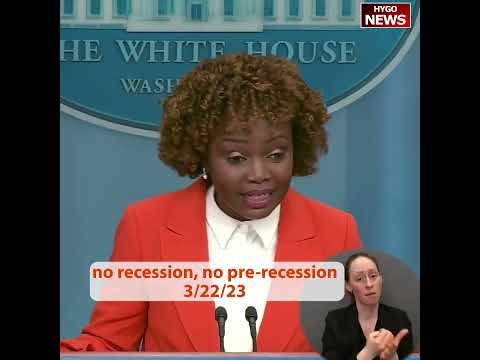
 WH: We Do Not See A Recession Or A Pre-Recession. We See A Strong Economy
By HYGO News
Published
· Updated
WH: We Do Not See A Recession Or A Pre-Recession. We See A Strong Economy
White House Press Secretary Karine Jean-Pierre pushed back against recession speculation during a March 2023 briefing by flatly declaring that the administration saw neither a recession nor even a “pre-recession,” but rather “a strong economy” that was the result of President Biden’s policies. The statement came amid ongoing banking system stress from the SVB and Signature Bank collapses and continued Federal Reserve tightening, with markets and economists increasingly pricing in elevated recession risks.
The Recession Risk Context
- Banking crisis fallout: SVB and Signature failures triggered broad banking stress.
- Credit tightening: Banking stress expected to tighten credit conditions broadly.
- Fed tightening: Continued Federal Reserve interest rate increases.
- Yield curve inversion: Treasury yield curve inversion historically preceded recessions.
- Economist forecasts: Many economists predicted imminent recession risk.
Jean-Pierre’s Flat Denial
- Direct denial: “We do not see a recession or a pre-recession.”
- Strong economy claim: Administration saw “a strong economy” instead.
- Presidential credit: Attributed economic conditions to Biden’s work.
- Process confidence: Emphasized presidential “confidence in the process.”
- Policy attribution: Framed economic conditions as policy success.
The “Strong Economy” Positioning
- Labor market: Tight labor markets with historically low unemployment.
- Job growth: Sustained monthly job creation above expectations.
- Wage growth: Real wage gains for first time in pandemic recovery.
- GDP growth: Sustained positive GDP growth.
- Consumer spending: Continued strong consumer spending patterns.
The Pre-Recession Concept
- Economic definition: Pre-recession typically refers to signals suggesting imminent contraction.
- Leading indicators: Multiple leading indicators had shown deterioration.
- Manufacturing slowdown: Manufacturing indices showed contraction.
- Housing market: Significant housing market cooling had occurred.
- Yield curve signals: Multiple Treasury yield curve inversions signaled concern.
Banking Crisis Impact
- Credit availability: Banking stress likely tightens available credit.
- Regional bank pressure: Regional banks face deposit flight pressure.
- Commercial real estate: Commercial real estate sector particularly vulnerable.
- Small business lending: Small businesses heavily dependent on regional banks.
- Economic transmission: Banking stress transmits to real economy via credit.
The Federal Reserve Interaction
- Independent policy: Fed continued rate hiking campaign.
- Dual mandate: Fed balancing price stability and employment.
- Market expectations: Markets priced in possible rate cuts later in year.
- Financial conditions: Banking stress tightened financial conditions beyond Fed actions.
- Policy coordination: Administration and Fed carefully coordinated messaging.
Economic Data Context
- Q1 2023 GDP: First quarter 2023 GDP ultimately showed continued growth.
- Unemployment rate: Unemployment remained near historical lows.
- Consumer price index: CPI continued moderating from 2022 peak.
- Retail sales: Retail sales continued showing strength.
- Manufacturing sector: Manufacturing sector showed continued stress.
Administration Messaging Discipline
- Optimism emphasis: Administration consistently emphasized positive economic indicators.
- Policy credit: Claimed credit for economic conditions.
- Risk minimization: Minimized public discussion of downside risks.
- Comparative framing: Framed administration record favorably.
- Forward-looking: Emphasized future economic trajectory.
The Political Calculus
- 2024 election: Economic narrative central to 2024 election messaging.
- Voter perception: Voter economic perceptions remained pessimistic.
- Credit allocation: Political credit allocation for economic outcomes remained contested.
- Real vs. perceived: Gap between economic indicators and voter perception.
- Narrative control: Administration sought to control economic narrative.
Inflation Fighting Balance
- Rate hike continuation: Fed continued inflation-fighting rate hikes.
- Banking stress trade-off: Banking stress complicated Fed calculus.
- Administration position: Administration supported Fed independence.
- Labor market impact: Labor market showed remarkable resilience despite tightening.
- Soft landing hope: Administration emphasized possibility of economic “soft landing.”
Historical Context
- Post-pandemic recovery: Pandemic recovery created unprecedented economic conditions.
- Inflation dynamics: Inflation dynamics differed from prior episodes.
- Labor market resilience: Labor market showed unusual resilience.
- Supply chain normalization: Supply chain disruptions gradually resolving.
- Structural factors: Multiple structural factors affected economic dynamics.
Key Takeaways
- Jean-Pierre flatly denied that the administration saw recession or pre-recession conditions.
- The press secretary declared the economy “strong” despite banking crisis and inflation concerns.
- She attributed economic conditions directly to President Biden’s policy work.
- The statement came amid banking system stress and continued Fed tightening.
- Administration messaging emphasized optimism over acknowledging downside risks.
- The response reflected political necessity of defending administration economic record.
Transcript Highlights
The following quotations are drawn from an AI-generated Whisper transcript of the briefing and should be considered unverified pending official transcript release.
- “We do not see a recession or a pre-recession. We see a strong economy.” — Karine Jean-Pierre
- “The President has complete confidence in the process and in his economic policy.” — Karine Jean-Pierre
- “When we look at how strong the economy is, it’s because of the President’s work, what he’s been able to do.” — Karine Jean-Pierre
- “It’s because of the work that this President has done.” — Karine Jean-Pierre
- “Does the President still have the same level of confidence that he’s had that the U.S. will get through this banking crisis, get through this high inflation without going into a recession?” — Reporter question
- “We’re building, we do not see a recession or a pre-recession.” — Karine Jean-Pierre
Full transcript: 102 words transcribed via Whisper AI.