 HYGO News
 West Wing meltdown? No insight, diplomacy failure with fossil fuel companies?
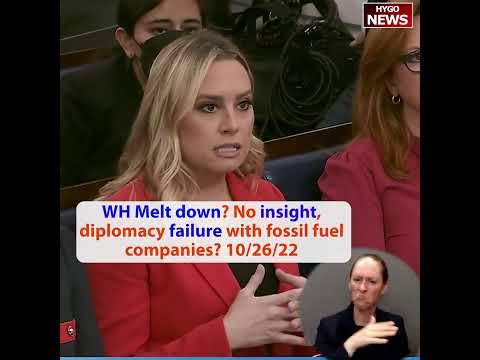
Reporter Asks If OPEC+ Surprise Cut Caused a “West Wing Meltdown” and Whether It’s a “Failure of Diplomacy”; Kirby: “We Didn’t Have a Meltdown”
On 10/26/2022, Fox News reporter Jacqui Heinrich asked NSC Coordinator John Kirby whether the administration had “sufficient insight” into Saudi Arabia’s intentions, given reports that OPEC+‘s production cut “came as a surprise and caused a bit of a meltdown in the West Wing.” Heinrich pressed further: “Is that at all a failure of our diplomacy or foreign policy?” Kirby denied the meltdown — “First of all, we didn’t have a meltdown” — and insisted the administration maintained “ongoing discussions” with OPEC+ members. But his earlier admission that the U.S. had asked OPEC+ to delay its cut until after the midterms, combined with reports that the administration had believed it had a deal to boost production, painted a picture of diplomatic failure the denial couldn’t erase.
”A Bit of a Meltdown in the West Wing”
Heinrich’s question built on media reporting that described chaos inside the White House when OPEC+‘s October production cut was announced. “Do you feel that the administration has sufficient insight into what foreign governments are going to do, given the reporting that the U.S. thought that there was a deal to boost production through the end of the year?” Heinrich asked.
“That the decision from the Saudis and OPEC+ came as a surprise and caused a bit of a meltdown in the West Wing,” Heinrich continued. “And your answer just now, saying you don’t have insight into what they might be doing — is that at all a failure of our diplomacy or foreign policy?”
The question was constructed to connect three damaging dots. First, the administration believed it had secured a deal for increased production — suggesting it was either misled by the Saudis or misread the diplomatic signals. Second, the actual decision — a 2-million-barrel-per-day cut — was the opposite of what was expected, catching the White House off guard. Third, Kirby had just admitted moments earlier that the U.S. lacked “insight into what their future decisions will or won’t be” — an extraordinary admission from a national security official about America’s most important Middle Eastern energy partner.
”We Didn’t Have a Meltdown”
Kirby’s denial was categorical but unconvincing given the surrounding context. “No. I mean, there’s a lot there. First of all, we didn’t have a meltdown,” Kirby said.
The denial was notable for what it didn’t deny. Kirby didn’t say the OPEC+ cut wasn’t a surprise. He didn’t say the administration had anticipated it. He didn’t say the U.S. had adequate intelligence about Saudi intentions. He specifically denied the “meltdown” characterization — the emotional reaction — while leaving the substantive failures unaddressed.
Reports from multiple outlets described senior White House officials as blindsided and furious after the OPEC+ announcement. The response — threatening to reevaluate the U.S.-Saudi relationship, exploring legislative options for NOPEC (No Oil Producing and Exporting Cartels Act), and public finger-pointing at MBS — was consistent with an administration that had been caught off guard, not one that had anticipated and planned for the cut.
”We Can’t Predict Perfectly”
Kirby attempted to normalize the intelligence gap. “While we don’t — we can’t predict perfectly what OPEC+ is going to decide to do, we’re not part of that cartel,” Kirby said. “It’s not like we don’t have ongoing discussions with the Saudis and with other members of OPEC. We do. And we try to get the best information we can.”
The acknowledgment that the U.S. “can’t predict perfectly” what OPEC+ would do was accurate but understated. The issue wasn’t imperfect prediction — it was a fundamental misreading of Saudi intentions. The administration had reportedly believed, based on Biden’s July visit to Jeddah, that Saudi Arabia would cooperate on production through the end of 2022. Instead, the Saudis sided with Russia on the largest production cut since the pandemic.
The failure wasn’t one of prediction — it was one of diplomacy. Biden had traveled to Saudi Arabia, set aside his “pariah” rhetoric, executed the fist bump with MBS, and believed he had secured cooperation. The OPEC+ cut demonstrated he had secured nothing. The Saudis had taken the meeting, accepted the diplomatic rehabilitation that Biden’s visit provided, and then acted against American interests at the first opportunity.
The Diplomatic Timeline
The sequence of diplomatic failures leading to this exchange was extensive:
January 2021: Biden took office pledging to make Saudi Arabia a “pariah” over the Khashoggi murder and to end U.S. support for the Saudi-led war in Yemen.
2021-2022: As gas prices rose, Biden’s anti-Saudi posture became politically untenable. The administration quietly began engaging with Riyadh on energy cooperation.
July 2022: Biden traveled to Jeddah, fist-bumped MBS, and reportedly discussed oil production. The visit was criticized across the political spectrum as a capitulation that yielded no concrete commitments.
October 5, 2022: OPEC+ announced a 2-million-barrel-per-day production cut — the largest since the pandemic and a direct rebuke of Biden’s diplomatic effort.
October 2022: Reports emerged that the administration had asked OPEC+ to delay the cut until after the midterms. The Saudis refused.
October 26, 2022: Kirby denied a “West Wing meltdown” while admitting the U.S. lacked insight into Saudi decision-making.
The trajectory — from “pariah” to fist bump to production cut to “we didn’t have a meltdown” — represented one of the most complete diplomatic failures of the Biden presidency.
”We’re Not Part of That Cartel”
Kirby’s note that “we’re not part of that cartel” was technically accurate but pointed to a deeper problem. The United States was the world’s largest oil producer. If the U.S. had maximized domestic production — by encouraging drilling on federal lands, approving pipeline infrastructure, and signaling long-term support for the oil and gas industry — it would have had far less reason to care about OPEC+ decisions.
Biden’s energy policies had created the dependency that made the OPEC+ cut so damaging. By discouraging domestic production through regulatory uncertainty, lease moratoriums, pipeline cancellations, and rhetoric about “ending fossil fuel,” the administration had increased American vulnerability to foreign supply decisions. The result was a president who had to travel to Saudi Arabia to beg for oil and then watch helplessly as the Saudis cut production anyway.
The “we’re not part of that cartel” defense was true. The follow-up question — “then why does the cartel’s decision matter so much?” — pointed to the administration’s own energy policy failures as the answer.
The Intelligence Question
Heinrich’s question about “sufficient insight” touched on a national security dimension beyond energy policy. If the United States intelligence community and diplomatic corps could not accurately assess the intentions of Saudi Arabia — a longtime ally with deep financial, military, and intelligence ties to the U.S. — what did that say about America’s ability to anticipate the actions of adversaries like China, Russia, or Iran?
The OPEC+ cut had been discussed and coordinated among multiple member states before the announcement. The intelligence community presumably had sources within OPEC+ member governments. The fact that the administration was still surprised — or at least appeared surprised — raised questions about either intelligence collection capabilities or the administration’s willingness to accept intelligence that contradicted its diplomatic assumptions.
Key Takeaways
- A reporter asked if the OPEC+ surprise cut caused a “West Wing meltdown” and represented a “failure of diplomacy”; Kirby denied both.
- He admitted the U.S. “can’t predict perfectly” what OPEC+ will do — despite Biden traveling to Saudi Arabia specifically to secure production cooperation.
- Reports indicated the administration believed it had a deal for increased production; the Saudis instead implemented the largest cut since the pandemic.
- Kirby acknowledged “ongoing discussions” with OPEC+ members while simultaneously admitting the U.S. lacked insight into their future decisions.
- The diplomatic trajectory — from “pariah” to fist bump to production cut to denied meltdown — represented a complete failure of Biden’s Saudi strategy.
Transcript Highlights
The following is transcribed from the video audio (unverified — AI-generated from audio).
- The U.S. thought there was a deal to boost production. The decision from the Saudis came as a surprise and caused a bit of a meltdown in the West Wing.
- Is that at all a failure of our diplomacy or foreign policy?
- First of all, we didn’t have a meltdown.
- We can’t predict perfectly what OPEC Plus is going to decide to do. We’re not part of that cartel.
- It’s not like we don’t have ongoing discussions with the Saudis and with other members of OPEC. We do.
- We try to get the best information we can.
Full transcript: 157 words transcribed via Whisper AI.