 HYGO News
 We can require businesses — even businesses must engage in speech which they disagree upon
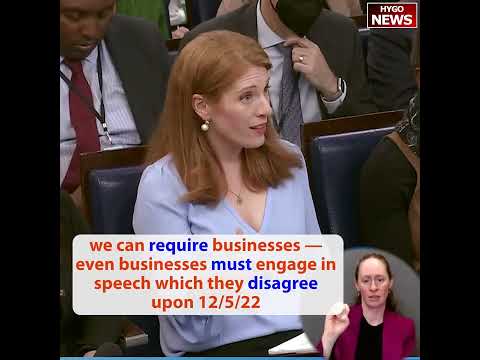
White House on 303 Creative Supreme Court Case: Government Can Require Businesses to “Engage in Speech Which They Disagree Upon”
On 12/5/2022, a reporter asked White House Press Secretary Karine Jean-Pierre about the Supreme Court arguments in 303 Creative v. Elenis — the case involving Colorado web designer Lorie Smith, who objected to being required to design wedding websites for same-sex couples. “The justices seem to be sympathetic toward her,” the reporter noted, asking for the administration’s view on the specific case and broader implications. KJP defended the administration’s position that businesses open to the public must serve all customers even if it required them to produce speech contrary to their beliefs: “The administration courts have recognized that we can require businesses open to public to service people regardless of their backgrounds, even when that means businesses must incidentally engage in speech which they disagree upon. So this is no reason to upend this balance right now.” The statement summarized the administration’s brief in the case — a position the Supreme Court would ultimately reject in its June 2023 ruling for Smith.
The 303 Creative Case
The reporter’s question referenced the Supreme Court oral arguments held that day. “The Supreme Court heard arguments today about a graphic designer who objected to designing websites for gay couples. The justices seem to be sympathetic toward her,” the reporter said.
303 Creative v. Elenis involved Lorie Smith, the owner of 303 Creative, a Colorado graphic design company. Smith wanted to expand into designing wedding websites but wanted to create only sites that aligned with her religious beliefs about marriage. Colorado’s public accommodations law prohibited such selective service based on sexual orientation of customers.
Smith had filed a pre-enforcement challenge, seeking a court ruling that the First Amendment allowed her to decline same-sex wedding commissions despite Colorado law. The case had worked its way through lower courts, with the Tenth Circuit ruling against Smith. The Supreme Court had taken up the case specifically on the free speech question — not the free exercise of religion issue that had dominated previous wedding vendor cases.
The Reporter’s Framing
The reporter noted the Court’s apparent reception. “The justices seem to be sympathetic toward her,” the reporter said.
This was an accurate observation. Reporters who had attended the oral arguments noted that the Court’s conservative majority — six justices — appeared receptive to Smith’s arguments. Questions from Justices Alito, Gorsuch, and Barrett had been notably friendly to her free speech claims. Chief Justice Roberts had also asked questions that seemed skeptical of Colorado’s position.
The reporter was implicitly asking the administration to address the likelihood that the Court would rule against the administration’s position. If the Court was going to side with Smith, the administration’s claims about required commercial speech were going to be limited by the ruling.
The Dobbs Reference
The reporter also referenced Dobbs. “We’ve heard the White House talk about the potential ripple effects after the dog’s ruling. Do you have a comment on this specific case and any concerns from the administration about the potential wider implications of this?” the reporter asked.
The “dog’s ruling” was a transcription error for “Dobbs ruling” — the Supreme Court’s June 2022 decision overturning Roe v. Wade. The reporter was noting that the administration had previously raised concerns about ripple effects from Dobbs affecting other constitutional rights. The question was whether 303 Creative similarly threatened other rights the administration supported.
This was a legitimate constitutional question. If the Court ruled that compelled speech in commercial contexts violated the First Amendment, the ruling could have implications for:
- Other anti-discrimination laws that required commercial engagement
- Required disclosures and warnings on various products
- Government mandates for specific corporate communications
- Various types of public accommodations rulings
The administration would have reason to worry about a ruling that limited government power to require commercial speech.
The Abstract Values
KJP opened with administration values. “We recognize the right to free speech and we support ensuring that no one is discriminated against or refused services because of who they love and who they are. And so as you know, we’ve been very clear about that,” KJP said.
The statement tried to balance two competing values:
- Free speech recognition
- Anti-discrimination commitment
This was the fundamental tension in the case. Could these two values both be fully honored, or did one have to yield to the other? The administration’s position was that they could both be honored by defining “speech” narrowly enough that most commercial anti-discrimination enforcement fell outside speech protection.
The “who they love and who they are” phrasing was notable. It framed the anti-discrimination interest in personal-identity terms rather than as regulation of commercial conduct. By emphasizing who customers are rather than what they are asking the business to do, KJP was positioning the issue as about customer identity rather than about compelled business speech.
”Must Incidentally Engage in Speech”
KJP’s key substantive statement was striking. “The administration courts have recognized that we can require businesses open to public to service people regardless of their backgrounds, even when that means businesses must incidentally engage in speech which they disagree upon,” KJP said.
The phrase “must incidentally engage in speech which they disagree upon” directly described the administration’s position:
- Businesses could be required to produce speech
- Even speech the business disagreed with
- The government could compel such speech as part of anti-discrimination enforcement
- This was constitutionally permissible
The “incidentally” qualifier was important. The administration was arguing that the speech was a side effect of the commercial transaction rather than the transaction’s primary purpose. A web designer creating a wedding website was primarily doing commerce (selling design services); the speech element (specific message content) was incidental.
But Smith’s argument was that creating a website was speech — with the business owner as the speaker. The government compelling her to create specific content meant the government was compelling her speech, not incidentally regulating her commerce.
The phrase “engage in speech which they disagree upon” was grammatically odd — “upon” would typically follow “agree upon,” not “disagree upon.” KJP’s phrasing was either mistaken or unusual.
”No Reason to Upend This Balance”
KJP’s conclusion was deferential to existing precedent. “So this is no reason to upend this balance right now,” KJP said.
The “balance” KJP referenced was the Court’s existing public accommodations jurisprudence, which had generally allowed states to require commercial service regardless of owner objections. Cases like Masterpiece Cakeshop (2018) had ruled narrowly for specific parties without broadly restricting anti-discrimination laws.
KJP was essentially asking the Court not to change the existing framework. This was the standard administration position when a case threatened a preferred legal framework — argue for stare decisis and against doctrinal change.
But the “no reason to upend” framing was confident in a way that didn’t match the reporter’s observation about justice sympathy. If the justices seemed sympathetic to Smith, then the Court might well find reason to “upend” the existing balance. KJP’s statement reflected what the administration wanted rather than what the Court might actually do.
The June 2023 Ruling
The 303 Creative case was decided in June 2023, with the Court ruling 6-3 in favor of Smith. Justice Gorsuch wrote for the majority, holding that the First Amendment prohibited Colorado from forcing Smith to create websites expressing messages she disagreed with.
The ruling largely rejected the administration’s position. Gorsuch’s opinion emphasized that:
Creative services are speech — Custom-designed creative work was protected expression.
Compelled speech is prohibited — The government couldn’t force commercial creators to produce specific messages.
Anti-discrimination laws have limits — Public accommodations laws couldn’t extend to compelling speech.
Identity of customers wasn’t the issue — Smith was willing to serve gay customers; she objected to being required to create specific content.
The ruling confirmed that the administration’s December 2022 position — that businesses could be required to engage in disagreeing speech “incidentally” — was not sustainable. The Court drew a clear line protecting commercial creative work as speech.
The Broader Implications
The 303 Creative ruling had implications beyond wedding vendors. The decision established that:
- State public accommodations laws could not compel speech
- Customer identity couldn’t override speech interests when speech was directly at issue
- The line between commerce and speech would be drawn in favor of speech for creative services
- First Amendment protection applied to commercial speakers, not just traditional media
These implications constrained government regulation of commercial communications in various contexts beyond wedding services. Various state laws that mandated specific content from businesses — warning labels, disclosure requirements, viewpoint-neutral communications — might face new scrutiny under 303 Creative’s logic.
The administration’s position in December 2022 had implicitly accepted broad government power over commercial speech. The Court’s June 2023 ruling limited that power. The administration’s dismissal of the “ripple effects” concern had underestimated how significantly the ruling would shift the legal landscape.
The Free Speech / Anti-Discrimination Tension
The exchange captured a fundamental political tension of the Biden era. The administration’s coalition included:
- LGBT advocates prioritizing anti-discrimination enforcement
- Free speech advocates protective of expressive freedom
- Religious liberty critics skeptical of faith-based exemptions
- Religious liberty supporters concerned about forced speech
- Business community wanting consistent legal rules
The administration’s position — that anti-discrimination enforcement could require disagreeing speech — aligned with the LGBT advocacy wing but created tension with free speech absolutists. The Court’s ruling favored the free speech side of the balance, forcing the administration to accept a narrower anti-discrimination enforcement power than it had argued for.
Key Takeaways
- A reporter asked KJP about the 303 Creative Supreme Court case involving a web designer’s refusal to create same-sex wedding websites.
- The reporter noted justices seemed sympathetic to Smith and asked about administration concerns about “ripple effects.”
- KJP defended the administration’s position: “We can require businesses open to public to service people regardless of their backgrounds, even when that means businesses must incidentally engage in speech which they disagree upon.”
- She declared “no reason to upend this balance right now,” defending existing public accommodations framework.
- The Supreme Court ruled against the administration’s position in June 2023, holding that the First Amendment protected commercial creators from compelled speech.
Transcript Highlights
The following is transcribed from the video audio (unverified — AI-generated from audio).
- The Supreme Court heard arguments today about a graphic designer who objected to designing websites for gay couples.
- The justices seem to be sympathetic toward her.
- We’ve heard the White House talk about the potential ripple effects after the Dobbs ruling.
- We recognize the right to free speech and we support ensuring that no one is discriminated against or refused services because of who they love and who they are.
- The administration courts have recognized that we can require businesses open to public to service people regardless of their backgrounds, even when that means businesses must incidentally engage in speech which they disagree upon.
- So this is no reason to upend this balance right now.
Full transcript: 152 words transcribed via Whisper AI.