 HYGO News
 WATCH: Even MSNBC Isn’t Buying Biden Advisor Ian Sams’s Spin On GarageGate
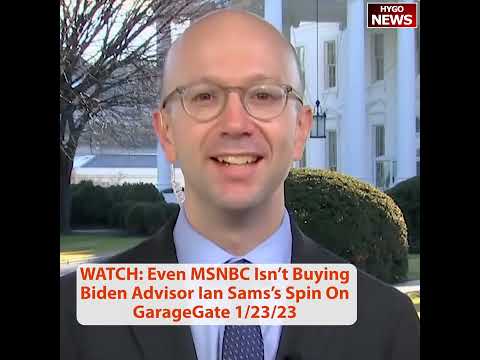
MSNBC Host Pushes Back on Ian Sams: “Does the DOJ Need to Tell the President Why He Has Classified Documents in His Home?”
In January 2023, even an MSNBC host pushed back on Biden advisor Ian Sams’s spin about the classified documents situation. “How could this happen? And do you agree having classified documents outside of where they should be is a serious issue?” the host asked. Sams gave the standard response: “The president takes this very seriously. As you heard him say multiple times in the last week… I think it’s really important to understand that’s exactly the type of thing a Justice Department investigation would be looking at.” The host was skeptical: “Does the DOJ need to tell the president why the president has classified documents in his home? I don’t understand that.” Sams continued his deflection, but the host pressed: “There are obvious possibilities here as to how in the world this could have happened.” The exchange showed even friendly media wasn’t accepting the standard “DOJ will figure it out” deflection.
The MSNBC Context
MSNBC was generally friendly territory for Democrats:
Democratic-leaning — Network.
Biden supportive — Typically.
Administrative access — Regular.
Coverage tone — Usually favorable.
Pushback unusual — Notable when occurs.
When even MSNBC was pushing back, this was significant signal. Friendly media was expected to accept administration framing generally. Open skepticism from such outlets was meaningful.
The Host’s Opening Question
The question was direct. “How could this happen? And do you agree having classified documents outside of where they should be is a serious issue?” the host asked.
The question:
Basic explanation — Sought.
Acknowledgment — Required.
Seriousness — Implied.
Accountability — Asked for.
Professional journalism — At work.
These were fundamental questions any reporter would ask. How could it happen? Is it serious? These questions cut through the spin and required substantive response.
The Sams Standard Response
Sams deployed standard template. “Yeah, look, the president takes this very seriously. As you heard him say multiple times in the last week,” Sams said.
The template:
“Takes very seriously” — Standard claim.
Biden’s public statements — Referenced.
Multiple repetitions — Emphasized.
No new information — Added.
Template deployment — Automatic.
Sams, as specialized spokesperson, was using the same template as KJP. This showed coordinated messaging discipline across administration spokespeople. The same language deployed everywhere.
The DOJ Investigation Deflection
Sams deployed DOJ investigation framing. “And you know, I understand the question about how this happened. And I think it’s really important to understand that’s exactly the type of thing a Justice Department investigation would be looking at,” Sams said.
The deflection:
Question acknowledged — Briefly.
DOJ focus — Shifted.
“Exactly the type of thing” — Generic.
Investigation scope — Broad.
Administration silence — Justified.
This was classic deflection — saying DOJ would figure it out rather than administration providing its own account. The appeal to investigation authority provided cover for not answering.
”That’s Why We’re Fully Cooperating”
Sams added cooperation framing. “That’s why we’re fully cooperating to understand how this happened. And the president is giving them access to what they need to answer,” Sams said.
The framing:
Cooperation emphasized — Administrative virtue.
Understanding goal — Shared with DOJ.
Access provided — To investigators.
Good citizen role — Claimed.
Partnership framing — With DOJ.
The “cooperating to understand how this happened” framing was strange — it suggested the administration itself didn’t understand. If Biden knew how documents got there, he wouldn’t need DOJ to figure it out.
The Host’s Direct Challenge
The host pushed back. “Does the DOJ need to tell the president why the president has classified documents in his home? I don’t understand that,” the host said.
The challenge:
Logical challenge — Direct.
Premise questioned — Of deflection.
Biden’s knowledge — Implied.
Common sense — Invoked.
Spin exposure — Attempted.
This was sharp journalism. The host was pointing out that Biden should know why documents were in his home. DOJ wasn’t needed to explain that to him. The deflection to DOJ investigation made no sense on this basic question.
”Joe, I Understand the Question”
Sams addressed the host. “Well, Joe, I understand the question and I think that it’s really just gets to the heart of the matter,” Sams said.
The response:
Personal address — “Joe.”
Understanding claimed — Of question.
“Heart of matter” — Characterization.
Rhetorical acknowledgment — Rather than substantive.
Engagement theater — Without engagement.
Sams was acknowledging the question’s significance without answering it. “Heart of the matter” framing was meta-commentary rather than substantive response. This was sophisticated deflection dressed as engagement.
”The DOJ Is the One Who’s Tasked”
Sams returned to DOJ framing. “The DOJ is the one who’s tasked with finding out all the facts here,” Sams said.
The response:
DOJ tasked — Designated authority.
Fact-finding — Their responsibility.
Administration deference — To process.
Own knowledge — Suppressed.
Process respected — Claimed.
By repeatedly invoking DOJ’s fact-finding role, Sams was creating the impression that administration itself couldn’t or shouldn’t have view about facts. But Biden presumably knew why documents were in his own home. The DOJ framing was becoming transparent deflection.
”Obvious Possibilities”
The host pushed further. “The question, though, I’m sort of stuck on here is I understand that there is an investigation. There’s a limit to what you can say and all that. But there are obvious possibilities here as to how in the world this could have happened,” the host said.
The push:
Investigation acknowledged — As limiting factor.
“Obvious possibilities” — Highlighted.
Common sense — Again invoked.
Limited speech — Accepted but challenged.
Substantive engagement — Sought.
The host was essentially saying: yes, investigation limits what you can say, but some basic acknowledgments could be made. Biden must have opinions about how documents got there. The extreme deflection was beyond legal necessity.
The “Obvious Possibilities”
What the host was alluding to:
Papers gathered — In VP transition.
Aide packed — Various possibilities.
Biden kept — Some papers.
Routine oversight — Possible cause.
Poor document control — Likely.
Several explanations existed for how documents might end up where they weren’t supposed to be. Administration refusing to engage with any of these possibilities was excessive caution. Some acknowledgment would have been reasonable.
The MSNBC Pushback Significance
Even MSNBC pushback was significant:
Friendly media — Skeptical.
Base audience — Getting questions.
Coverage tone — Shifting slightly.
Administrative difficulty — Growing.
Messaging limits — Exposed.
When friendly media starts asking tough questions, administrative messaging is in trouble. The standard deflections weren’t working even on networks disposed toward favorable coverage. This was concerning sign for administration.
The Sams Deployment Strategy
Sams’s role:
Classified documents specialist — Designated.
Media circuit — Doing rounds.
Same template — Deployed.
Identical framing — As KJP.
Limited new content — Provided.
Sams was essentially a second mouth for same messaging. Deploying him didn’t change the message, just moved it. This made the approach transparent — different face, same deflections.
The “Takes Seriously” Template Fatigue
The template was causing fatigue:
Repetition — Constant.
Content — Empty.
Credibility — Declining.
Media impatience — Growing.
Effectiveness — Diminishing.
Each deployment of “takes seriously” without substantive backup eroded its effectiveness. The template was becoming almost parody of itself. Even friendly reporters were noting the emptiness.
The Investigation Timeline
Investigation realities:
Could take year — Or more.
During which — Deflections continue.
Period lengthy — For administrative silence.
Media exhaustion — Likely.
Coverage shifts — Over time.
The deflection strategy required months of sustained approach. Whether it could be maintained that long without complete credibility loss was uncertain.
The Biden Personal Knowledge
Biden’s personal knowledge:
How documents ended up — Presumably known.
Specific circumstances — Biden’s own experience.
Personal accounts — Available.
But not being shared — Strategically.
Legal advice — Preventing sharing.
Biden knew what happened with his own papers. He could describe how documents ended up where they did. His silence wasn’t because he didn’t know — it was strategic choice not to share. The DOJ framing obscured this reality.
The Public Interest
Public interest included:
How it happened — Legitimate question.
Presidential accountability — Expected.
Transparency — Democratic norm.
Basic understanding — Desired.
Policy implications — Relevant.
The public had legitimate interest in understanding what happened. Basic accountability expected some answers. The refusal to provide any substantive account was accountability gap.
The 2024 Campaign Implications
For 2024:
Messaging challenges — Growing.
Media environment — Shifting.
Democratic concerns — Accumulating.
Republican advantage — Real.
Campaign setup — Difficult.
The classified documents issue was becoming major 2024 factor. If administration couldn’t explain events even to friendly media, campaign would face sustained challenge. The messaging challenges foreshadowed campaign difficulties.
The Standards Question
Standards question:
Spokesperson role — Includes engagement.
Complete silence — Undermines briefing.
Media function — Limited.
Accountability — Weakened.
Democratic norms — Tested.
What standards should apply to press engagement during investigations was worth considering. Some deference to legal process was appropriate. Total silence on obvious questions went beyond necessity.
The Comparison to Trump Documents
The parallel continued:
Trump documents — Similar pattern.
Trump refusals — Similar in type.
Both protected — By legal arguments.
Different cooperation levels — Claimed.
Media coverage — Different by outlet.
The parallel with Trump was awkward for administration. Trump had refused to engage similarly. Administration couldn’t claim moral high ground while deploying similar silence tactics.
The Media Strategy Assessment
The media strategy had:
Discipline — Impressive.
Consistency — High.
Coordination — Across spokespeople.
Limits — Reached.
Adaptation needed — Eventually.
The administration’s media discipline was remarkable but approaching effectiveness limits. Consistent deflection without adaptation was losing credibility. Strategy update was needed but wasn’t coming quickly.
The Long-Term Effects
Long-term effects:
Trust damage — Permanent possibly.
Credibility gap — Widening.
Media relationships — Strained.
Public perception — Negative shift.
Recovery challenges — Increasing.
Some damage was becoming permanent. Trust rebuilding would take time and effort beyond current strategy. The longer the pattern continued, the harder recovery would be.
Key Takeaways
- An MSNBC host pressed Biden advisor Ian Sams on basic questions about how classified documents ended up at Biden’s home.
- Sams deployed standard administration template: “The president takes this very seriously” and referenced DOJ investigation.
- The MSNBC host pushed back sharply: “Does the DOJ need to tell the president why the president has classified documents in his home? I don’t understand that.”
- Sams addressed host personally: “Joe, I understand the question and I think that it’s really just gets to the heart of the matter.”
- The host noted “obvious possibilities” for how it could have happened — pointing out the extreme deflection went beyond legal necessity.
- Even friendly MSNBC wasn’t accepting the standard “DOJ will figure it out” framing — sign the administration’s messaging limits were being reached.
Transcript Highlights
The following is transcribed from the video audio (unverified — AI-generated from audio).
- How could this happen? And do you agree having classified documents outside of where they should be is a serious issue?
- Yeah, look, the president takes this very seriously. As you heard him say multiple times in the last week.
- I think it’s really important to understand that’s exactly the type of thing a Justice Department investigation would be looking at.
- Does the DOJ need to tell the president why the president has classified documents in his home? I don’t understand that.
- Well, Joe, I understand the question and I think that it’s really just gets to the heart of the matter.
- There are obvious possibilities here as to how in the world this could have happened.
Full transcript: 198 words transcribed via Whisper AI.